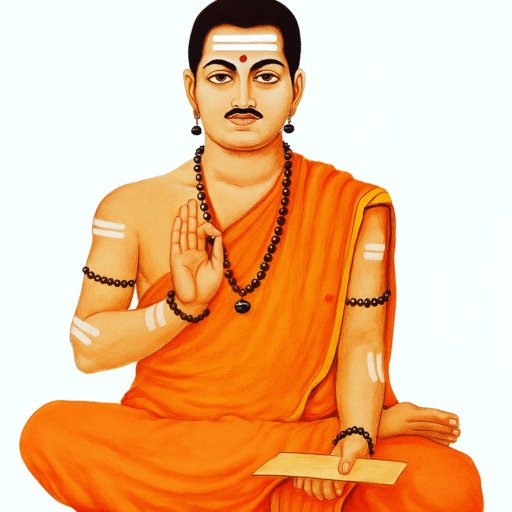

Poetic Rendering

As a dog’s tongue,
again and again,
returns to lick the ghee-pot,
so my mind,
O Lord, returns to the taste of the world.
It will not leave this shoreless sea of delusion.
O Kudalasangama,
sever this canine craving of mine
for it is Your very nature to redeem.
This vachana is a masterful exploration of the mechanics of addiction and the limits of willpower. Basavanna moves beyond a simple confession of weakness to anatomize the compulsive nature of desire. The metaphor of the dog illustrates a state of powerlessness; the animal is not making a conscious choice but is driven by an instinctual, repetitive reflex. By framing his own struggle in these terms, Basavanna acknowledges that the ego-intellect is often a helpless bystander to the deeper, habitual currents of the mind (vāsanās). His plea is therefore not for strength, but for divine intervention to break a cycle he cannot stop by himself.
Spiritual Context
Core Spiritual Principle: The deepest layers of conditioning (vasanas) that fuel worldly craving cannot be eradicated by willpower or intellectual understanding alone. They require a transformative power beyond the ego a power that can “sever” the root of the habit itself. This power is divine grace (prasada).
Cosmic Reality Perspective: From the non-dual view, the compulsive mind is a contracted, identified form of the divine energy (Shakti). The prayer is for this same energy to reconfigure itself from a state of bondage (licking the pot) to a state of liberation (freedom from craving). The Linga is not an external savior but the intrinsic capacity of consciousness to heal and free itself.
Historical Reality (Anubhava Mantapa Context): This vachana provides a profound psychological realism to the spiritual path. It acknowledges that the Sharanas were not immune to human weakness and that the path involves grappling with deep, subconscious drives. It normalizes the struggle and points to the community’s shared reliance on grace as the ultimate solution.
Interpretation
“As a dog’s tongue, again and again, returns to lick the ghee-pot…”: The metaphor is brutally effective. The “dog” is the ego-mind, operating on a pre-rational, sensory level. The “ghee-pot” is the object of worldly desire, promising richness and satisfaction but ultimately keeping the seeker bound in a repetitive, unfulfilling cycle. The “licking” is the compulsive thought or action that provides a momentary taste but no lasting nourishment.
“so my mind… returns to the taste of the world. It will not leave this shoreless sea of delusion.”: This acknowledges the sheer force of habit. The mind is not just tempted; it is compelled. The “shoreless sea” indicates that the individual feels lost and powerless to find their way out of this delusion through their own navigation.
“sever this canine craving of mine for it is Your very nature to redeem.”: This is the pivotal shift. The prayer is not “help me stop” but “You sever it.” This is total surrender. The final phrase is an act of supreme trust, grounding the plea in the very nature of the Divine as liberator (Mokshada).
Practical Implications: This vachana teaches that when one encounters a persistent, compulsive pattern, the most advanced practice is to stop fighting it with egoic will and to instead consciously surrender it. The act of sincere, heartfelt prayer itself begins to invite the grace that can reconfigure the underlying habit.
The Cosmic Reality
Anga (Human Dimension): The mind identified with its cravings, experiencing itself as a powerless victim of its own instincts.
Linga (Divine Principle): The conscious, liberating power that is the true nature of the mind, waiting to be invoked. Jangama (Dynamic Interaction): The cry for help. It is the bridge between the state of bondage and the state of freedom. The moment of prayer is the Jangama process in action, creating the opening for grace to flow.
Shata Sthala
Primary Sthala: Prasadi The entire vachana is a lived demonstration of the Prasadi stage. The devotee possesses nothing not even the power to control their own mind and therefore throws themselves entirely on the mercy and transformative power of the Divine.
Supporting Sthala: Bhakta The emotional intensity and the intimate confession comparing oneself to a dog show a level of vulnerability and trust that is characteristic of the deep, personal relationship of the Bhakta.
Practical Integration
Arivu (Awareness Practices): When you notice a compulsive thought or behavior pattern, instead of engaging in a battle of will, simply observe it and name it: “This is the licking tongue.” Then, in that moment of awareness, offer a short, silent prayer: “Koodalasangamadeva, sever this.
Achara (Personal Discipline): Your discipline becomes the discipline of surrender. When you fail, let your first response be a turn towards grace rather than self-condemnation. Acknowledge your powerlessness over the habit as the first step toward receiving power from a higher source.
Kayaka (Sacred Action): If your work is driven by compulsive ambition or anxiety, consciously offer that driving energy to the Divine. Pray that your work be purified of “canine craving” and become a pure offering.
Dasoha (Communal Offering): Share your struggles with trusted members of your community. The act of confessing our “canine” nature to others breaks the spell of shame and allows the collective grace of the Sangha to support your healing.
Modern Application
We are beset by addictions to technology, to validation, to consumerism, to negative thought patterns. We are told to use willpower, self-control, and discipline to overcome them, often leading to a cycle of failure, shame, and intensified craving.
This vachana offers a revolutionary approach to addiction and compulsive behavior. It liberates us from the toxic cycle of shame and willpower. It teaches that for deeply ingrained patterns, the solution is not to fight the mind with the mind, but to invoke a higher power. This provides a profound sense of hope and relief, redirecting our energy from a futile internal battle to a receptive openness to transformative grace.
Essence
I am not the master of this house.
A hungry dog lives in my mind,
and I have run out of scraps to throw.
O Owner of all, You quiet him.
Compulsive craving is a feedback loop a stuck, low-level program in the operating system of the mind (the Anga). The ego’s attempts to fix it are just other programs running within the same corrupted system. The plea for grace is a request for a “hard reset” or a “firmware update” from the source code itself (the Linga). It is an appeal to a level of consciousness that is not entangled in the loop to intervene and rewrite the fundamental pattern.
Imagine a needle is stuck in a groove on a record, repeating the same note over and over. The listener (the ego) is frustrated but cannot lift the needle from within the song. The prayer is to the person operating the record player (the Linga): “Please lift the needle and place it elsewhere, because I am trapped in this repetition and cannot free myself.”
We all have patterns we feel powerless to change. This vachana speaks to the universal experience of being a slave to our own desires and habits. It offers the profound truth that acknowledging our powerlessness is not a defeat, but the first step toward accessing a power far greater than our own. It is the gateway from a life of compulsive reaction to a life of graceful freedom.

Views: 12