Poetic Rendering

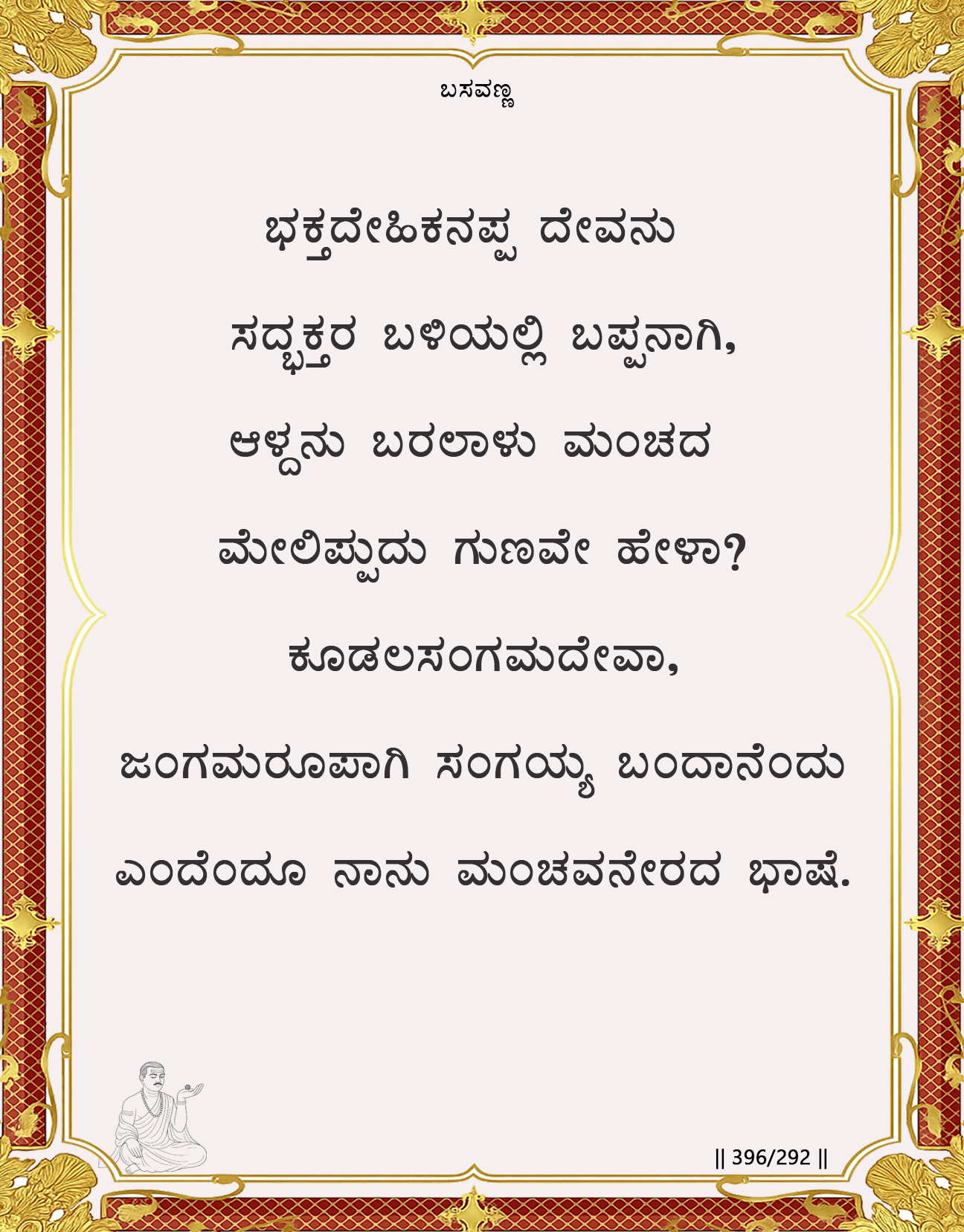
When the one who knows the Linga within
receives a knock at the door
and the Jangama arrives
how can I remain seated high upon a bed?
How could such pride be fitting?
Tell me, trulycan it ever be right?
O Koodalasangamadeva,
when the Jangama steps into my home,
it is You arriving
in a body woven of grace.
How then could I sit above the One
in whom You walk and breathe?
Never will I set myself higher
than the guest who bears Your presence.
This is my vow.
This vachana addresses the sacred etiquette of Lingayoga: the integration of inner worship (Linga) and outer reverence (Jangama). Basavanna asks whether it is appropriate for a seeker who has realized the Linga within to remain seated on an elevated bed when a Jangama the living embodiment of Shiva’s presence arrives. He concludes that it is not. To sit “high” before the Jangama is not merely social disrespect; it is a spiritual error that divides the inner and outer forms of the Divine. When the Jangama enters, it is Koodalasangamadeva Himself arriving in human form. Thus Basavanna vows never to place himself above the one who carries the living presence of Shiva. The vachana teaches humility, unity of inner realization and outer conduct, and the recognition of divinity in the embodied Guru.
Spiritual Context
Core Spiritual Principle: Unity of Inner Realization and Outer Conduct (Antaranga-Bahiranga Sahaja). True recognition of the inner Linga must manifest externally as reverence for its outer manifestation. Humility is not just an attitude but a physical expression of non-dual understanding.
Cosmic Reality Perspective: In non-dual Shiva-Shakti dynamics, the Jangama is Shakti fully embodied as a conscious vehicle for Shiva. The inner Linga is Shiva as the silent witness. To honor one but not the other is to fracture the non-dual reality. The appropriate response is to physically lower oneself, enacting the truth that all are equal in the presence of the Divine.
Historical Reality (Anubhava Mantapa Context): This vachana set the standard for guru-seeker etiquette in the Lingayoga community. It prevented the seeker’s inner realization from becoming an excuse for spiritual arrogance or social discourtesy. It reinforced that the community was built on mutual reverence, where even the most realized would bow to the divine in the other.
Interpretation
“When the one who knows the Linga within receives a knock at the door and the Jangama arrives”: The scenario tests the integration of knowledge (Jnana) into action (Kriya). Inner knowledge must translate into outer humility.
“How can I remain seated high upon a bed? How could such pride be fitting?”: The “bed” symbolizes a seat of comfort, status, and ego. To remain seated is to assert separateness and superiority, contradicting the non-dual truth.
“When the Jangama steps into my home, it is You arriving in a body woven of grace”: This is the key realization. The Jangama is not a separate person but a direct manifestation of Koodalasangamadeva. The home is not just a physical space but the heart of the devotee.
“How then could I sit above the One in whom You walk and breathe?”: To sit above is to place the ego above the Divine. The physical posture reflects inner orientation.
“Never will I set myself higher than the guest who bears Your presence. This is my vow.”: The vow (Vrata) is a conscious commitment to enact humility, making it a permanent aspect of conduct.
Practical Implications: One’s spiritual maturity is measured not by inner experiences alone but by how one treats others, especially those who represent the divine. Every encounter with a saintly person is an opportunity to practice non-duality through humility.
The Cosmic Reality
Anga (Human Dimension): The seeker with a realized inner state but still possessing a physical body and social habits. The challenge is to align the body’s actions with the inner truth.
Linga (Divine Principle): The omnipresent reality, both within as awareness and without as the sanctified guest. It is the common ground of being.
Jangama (Dynamic Interaction): The arrival and reception. This interaction is a sacred drama where the seeker’s response either affirms or denies the unity of Linga and Jangama. Proper response (standing, bowing) creates a harmonious flow of grace.
Shata Sthala
Primary Sthala: Sharana. The vow to never sit higher than the Jangama is an expression of taking refuge in the divine presence in the other. It is a discipline of the Sharana stage.
Supporting Sthala: Aikya. The recognition that the Jangama is Koodalasangamadeva himself indicates the non-dual vision characteristic of Aikya. The Sharana’s conduct is informed by this glimpse of unity.
Practical Integration
Arivu (Awareness Practices): In daily meditation, visualize the arrival of a sacred guest. Cultivate the inner feeling of reverence and the impulse to rise and bow. Extend this to all encounters by seeing the divine in everyone.
Achara (Personal Discipline): Establish a personal rule: when anyone enters your room, pause and stand up as a gesture of respect. This trains the mind to see each person as a potential Jangama.
Kayaka (Sacred Action): In your workplace or community, practice deferring to others’ wisdom, especially those who embody integrity and compassion. Let your actions show that you value their presence.
Dasoha (Communal Offering): In community gatherings, ensure that all are seated at the same level, or that elders and teachers are given the place of honor. Practice collective reverence for the divine in each other.
Modern Application
Spiritual Ego and Disrespect for Tradition. In modern spirituality, there is a tendency to emphasize inner experience while dismissing outer forms of respect, etiquette, and guru-disciple protocols as outdated or hierarchical. This can lead to a lack of humility and gratitude.
This vachana teaches Embodied Humility. It invites us to express our spiritual understanding through physical gestures of respect standing up, bowing, offering a seat to those who inspire us. It reminds us that true non-duality is not abstract but lived in relationship, transforming pride into graceful reverence.
Essence
The knock upon the door, the Guest is here,
The One who holds the Linga deep and clear.
What use this high seat where the ego reigns?
To sit above the God who walks in veins
Of grace? I rise, I bow, I make this vow:
The Guest is Lord, and I am here and now
The servant of the Presence in the form
A shelter from the pride that breeds the storm.
This vachana exemplifies the holographic principle of sacred etiquette. In a hologram, every part contains the whole. The Jangama is a holographic fragment containing the whole Linga. The seeker’s correct response (rising, bowing) is an acknowledgment of that wholeness in the fragment. Incorrect response (remaining seated) is a denial of the holographic nature, treating the fragment as less than the whole. The vow aligns the individual’s behavior with cosmic truth.
Imagine you have a precious gem (inner Linga). A friend brings an identical gem (Jangama) to show you. Would you keep your gem on a high pedestal and ignore your friend’s? No, you would bring yours down to compare and celebrate their equality. Similarly, the inner realization should make you humble, not arrogant, when meeting another who carries the same light.
We often use spiritual attainment to feel superior to others. This vachana warns that the highest realization demands the deepest humility. The test of true enlightenment is how you treat the guest at your door. The divine is not just in the solitude of your heart; it is in the eyes of the one who seeks your welcome.
Universal Message A Lesson for a Divided World
Across faiths and ages, the divine comes disguised and humanity fails to see.
- Christ said, “When you fed the hungry, you fed Me.”
- Kabir sang, “If God stands at your door and you sit within, who is the sinner?”
- Basavanna declares, “When Jangama comes, rise for it is Shiva who visits.”
In a world still divided by caste, class, and creed, this vachana is a mirror held to our unconscious arrogance. It asks: When divinity knocks, do you rise or remain reclining on your privilege?

Views: 21