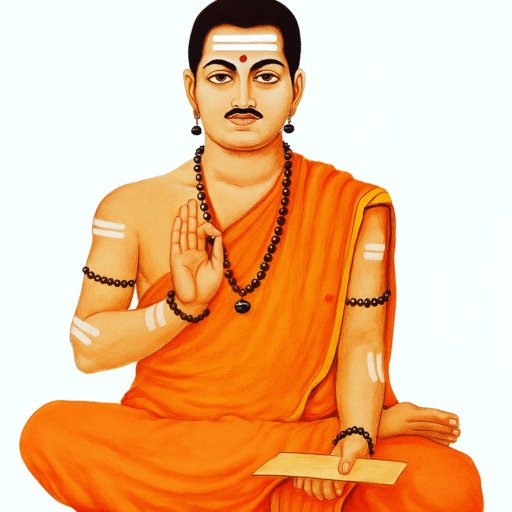

Poetic Rendering

When a true Sharana sleeps, it is sacred chant.
When he rises, it is the holy night of Shiva.
When he walks, the earth becomes a pilgrimage.
When he speaks, it is the eternal Veda of truth.
And the very body of the Sharana
is Kailasa, the mountain abode of God.
This vachana represents the culmination of spiritual transformation the complete sanctification of ordinary human existence into continuous divine manifestation. Basavanna reveals that enlightenment is not an escape from worldly life but its ultimate transfiguration, where every physiological function and daily activity becomes an expression of sacred reality. The teaching establishes that the realized being doesn’t visit temples but becomes the temple, doesn’t perform rituals but embodies worship, doesn’t seek God but manifests divinity through their very being.
Spiritual Context
Core Spiritual Principle: Divine Immanence as Transfiguration. The ultimate purpose of spiritual practice is not to leave the human condition but to transfigure it from within, revealing that every aspect of embodied existence is already and inherently a perfect expression of the divine when seen with awakened consciousness.
Cosmic Reality Perspective (non-dual, Shiva-Shakti dynamics): From the non-dual view, Shiva is the static, pure consciousness and Shakti is its dynamic, creative power. The Sharana’s body and its activities are Shakti in motion. In the state of Aikya, this Shakti is recognized not as separate from but as the active expression of Shiva. Thus, the body’s sleep is Shakti resting in Shiva (chant), waking is Shakti celebrating union with Shiva (Shivaratri), movement is Shakti exploring its own manifestation (pilgrimage), and speech is Shakti articulating Shiva’s truth (Veda).
Historical Reality (Anubhava Mantapa context): This vachana was the theological foundation for the radical social principle of Kayakave Kailasa (“Work is Worship”). It dismantled the priestly monopoly on sanctity by asserting that a Sharana laborer, through awakened consciousness, could make his workshop more sacred than a temple. It validated the dignity of all human activities and directly challenged caste-based purity laws that considered bodily functions polluting.
Interpretation
1.Sleep as Sacred Chant: Ordinary sleep represents withdrawal from external senses (Pratyahara). In the Sharana, this withdrawal is not into unconsciousness but into a deeper layer of communion. The rhythmic breath and heartbeat become the natural Japa (repetition) of the divine name, and the silence of the mind becomes the space where Nada (divine sound) is heard.
2.Waking as Shivaratri: Shivaratri symbolizes the night of overcoming darkness/ignorance. For the Sharana, every awakening from sleep is a victory of consciousness (Chit) over the inertia of Tamas (darkness). It is a daily celebration of the luminous Self emerging.
3.Walking as Pilgrimage: Pilgrimage (Tirtha-yatra) is traditionally a journey to a special place where the divine is concentrated. For the Sharana, wherever his foot falls is consecrated by the presence of the Linga within him. His movement through the world is a continuous circumambulation (Pradakshina) of the divine center he carries.
4.Speaking as Veda: The Veda is Shrutirevealed truth heard by the Rishis. The Sharana’s speech, arising from the silence of union, is a fresh revelation (Vachana) of that same eternal truth, contextualized for the present moment. His words carry the authority of direct experience (Anubhava), not scriptural citation.
5.Body as Kailasa: Kailasa is the mythic axis mundi, the meeting point of heaven and earth. The body, often seen as a prison (Deha-bandha), is revealed as this very axis. The microcosm (Pinda) perfectly mirrors the macrocosm (Brahmanda). The physical form is the temple where the divine permanently resides.
Practical Implications: Spirituality is demystified and brought into the absolute ordinariness of life. There is no need to seek sacred times or places. The practice becomes the continuous remembrance that one’s existence itself is the liturgy. This transforms potential guilt over “not doing enough spiritual practice” into the joy of realizing one is always already engaged in it.
The Cosmic Reality
Anga (Human Dimension): The biological organism with its circadian rhythms, locomotion, and communication the field of apparent limitation and mortality.
Linga (Divine Principle): The timeless, boundless reality of pure consciousness and blissthe source of all sanctity and meaning.
Jangama (Dynamic Interaction): The miraculous alchemy where the Anga is not negated but fully assumed and transfigured by the Linga. It is the living truth that matter is spirit incarnate, and spirit is matter realized. The Jangama is the seamless flow where biology becomes theology.
Shata Sthala
Primary Sthala: Aikya (Union). This is the definitive description of the Aikya stage. The Sharana does not do sacred things; he is sacredness in action. His being and the divine being are non-different, hence all his attributes and actions are divine attributes and actions.
Supporting Sthala: Pranalingi (Life-Force Union). The transfiguration of sleep (governed by Apana Vayu), waking (governed by Prana Vayu), and movement (governed by Vyana Vayu) shows that the entire vital energy system (Pancha Prana) has been united with and is consciously expressing the Linga.
Practical Integration
Arivu (Awareness Practices): Practice “Sacred Attribution.” Throughout the day, consciously re-label your activities with their divine significance. As you lie down: “This is sacred chant.” As you open your eyes: “This is Shivaratri.” As you walk: “This is pilgrimage.” As you speak: “May this be Veda.” This is not affirmation but recognition.
Achara (Personal Discipline): Let your discipline be the maintenance of this recognition. Create simple rituals that anchor you in this truth: a moment of gratitude upon waking, mindful breathing before speaking, feeling the contact of your feet with the earth as you walk.
Kayaka (Sacred Action): Perform all work with the understanding that your body-temple is engaged in divine service. The carpenter’s hands, the farmer’s stride, the teacher’s voiceall are expressions of Kailasa in action. Perfection in work becomes worship of the indwelling deity.
Dasoha (Communal Offering): Relate to others as moving temples. Honor the divine presence in their sleeping, waking, and speaking. Create community interactions that reflect this sanctity conversations that are Vedic (truthful and uplifting), gatherings that are pilgrimages (movements toward collective awakening).
Modern Application
Dissociation and the Desacralization of the Body. Modern life, especially digital culture, promotes a disembodied existence we live “in our heads,” treating the body as a tool or a burden. This leads to burnout, somatic disorders, and a profound sense of meaninglessness in daily routines. Wellness culture often commodifies the body without restoring its sacredness.
Re-enchantment of the Everyday. Use this vachana as a manual for Embodied Re-enchantment. Reclaim your biological rhythms as spiritual practice. Transform your morning routine from a groggy necessity into a celebration of consciousness (Shivaratri). Turn your commute into a mindful pilgrimage. Approach conversations as opportunities for truth (Veda). This practice heals the mind-body split and fills ordinary life with inherent meaning and purpose, making spirituality sustainable and integral.
Essence
Let them build temples of stone
my breath builds one with every sleep.
Let them observe holy nights on calendars
I observe one each time my eyes open to the light.
Let them travel to distant shrines
my every step consecrates the ground.
Let them recite ancient verses
my speech is the scripture being written now.
For this body, this simple human frame,
is the mountain where heaven and earth meet,
and I am the worship that is always happening there.
This vachana exemplifies the metaphysical principle of isomorphism between the microcosmic and macrocosmic states. In systems theory, isomorphism means a perfect correspondence of structure between different scales. Here, Basavanna maps the Sharana’s mundane states (sleep, wake, walk, speak) isomorphic ally onto cosmic sacred archetypes (chant, Shivaratri, pilgrimage, Veda). This reveals that human existence is not a lower, separate reality but a scale model containing the full pattern of the cosmos. The awakened being consciously lives this isomorphism, making the pattern visible.
Imagine a simple, clear drop of water. When you look at it closely under the right light, you can see the reflection of the entire skythe sun, the clouds, the vast blue. The drop doesn’t become the sky; it always contained it. Basavanna says the human being is that drop. Sleep, waking, walking, and speaking are the surface of the drop. The Sharana is one who has learned to seeand live asthe full reflection of the divine sky within the tiny human drop. His life is the proof that the microcosm is the macrocosm.
We often feel that our ordinary lives are insignificant, separate from the “great” spiritual realities described in myths and scriptures. This creates a longing for special experiences or escape. This vachana addresses that existential smallness directly. It declares that our ordinary life is the very stuff of the sacred myth. Our fatigue is the raw material for chant, our daily beginnings are the stuff of holy festivals, our errands are pilgrimages, and our conversations can be revelation. It fulfills the deep human yearning for meaning by showing that we don’t need to find meaning for our lives; our lives, exactly as they are, are the meaning. The temple isn’t somewhere else; you are it. The worship isn’t something you do later; you are the living act of worship, here and now.

Views: 12