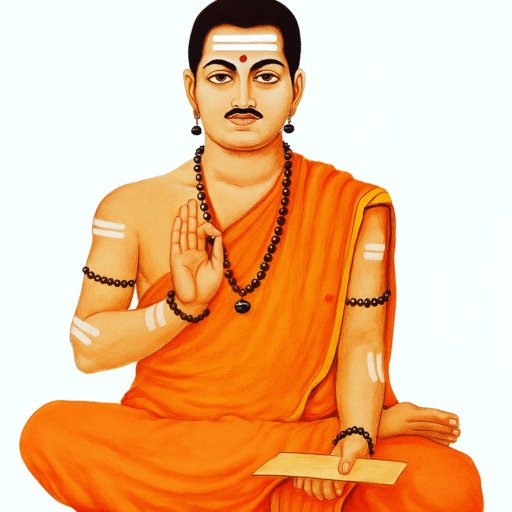

Poetic Rendering

There is an end to dance,
an end to song,
an end to ritual,
and even to daily worship of the Linga.
But when the Sharanas of Kudalasangama gather,
love has no boundary,
giving knows no measure
it flows without end.
Basavanna teaches that all forms of ritual music, worship, and even intense personal devotion have limits. But the fellowship of the Sharanas is boundless: in their company, love and generosity overflow naturally, beyond all measure.
Spiritual Context
Core Spiritual Principle: While individual spiritual practices are finite and can lead to exhaustion, the love and selfless sharing (Dasoha) experienced in authentic spiritual community (Satsangha) are a participation in the infinite. The Sangha is not a support group for individual practice, but a transcendent reality where individual limitations are overcome.
Cosmic Reality Perspective: The Linga is the infinite, boundless consciousness. Individual practice (Anga) is the finite effort to connect with this infinity. The Sangha of Sharanas (Jangama) is that infinity manifesting as a collective field of consciousness, where the finite ego dissolves and one drinks directly from the source.
Historical Reality (Anubhava Mantapa context): This vachana is a theological affirmation of the Anubhava Mantapa’s ultimate purpose. It declares that the community itself is the highest spiritual attainment a foretaste of liberation (Moksha) where the soul acts in spontaneous, unified love, freed from the calculative mind of the individual seeker.
Expanded Interpretation
1. The Catalogue of Finitude: Basavanna lists activities in an ascending order of spiritual intensity: Dance and Song: Aesthetic and emotional expression. The body and voice tire. Ritual and Daily Worship: Structured, disciplined practice. The will can falter. “Ceaseless worship of the Linga”: The pinnacle of individual effort. Even this most intense personal devotion has a limit, as it is still performed by the limited individual self (Jiva).
2. The Pivot: “But when the Sharanas… gather…” : The shift is from the individual (“I”) to the collective (“We”). The gathering is not a mere sum of individuals but the emergence of a new, collective consciousness.
3. The Dissolution of Limits: “what is ‘how much’, what is ‘this is mine’…” : In this collective field, the two primary constructs of the ego measurement (Maya) and ownership (Mamata) vanish. The flow of love and Dasoha is not a calculated act but a natural phenomenon, like a river flowing to the ocean.
4. The State of Flow: “it flows without end” : This describes a state of Ananda (bliss) and spontaneous righteousness. Action proceeds not from personal effort but from the shared divine life of the community.
Practical Implications: The seeker must understand that while personal discipline is essential, the ultimate goal is to transcend the individual perspective by fully merging with the spirit of the Sangha. The test of spiritual progress is one’s capacity for selfless, uncalculated giving and love within the community.
The Cosmic Reality
Anga (Human Dimension): The finite individual, capable of limited effort and subject to exhaustion. The Anga is the starting point.
Linga (Divine Principle): The infinite source, the ocean of consciousness and love. The Linga is the goal.
Jangama (Dynamic Interaction): The Sangha of Sharanas is the Jangama the dynamic, living river that carries the finite Anga into the infinite Linga. In this river, the distinctions between giver and receiver, and the very notion of individual effort, disappear.
Shata Sthala
Primary Sthala: Sharana. This vachana describes the lived reality of the Sharana, whose identity is so merged with the Sangha that they act from a collective, limitless consciousness, not from individual calculation.
Supporting Sthala: Aikya. The dissolution of “mine” and “how much” is the essence of the non-dual state of Aikya, where the individual soul realizes its identity with the whole.
Practical Integration
Arivu (Awareness): In community gatherings, practice letting go of the calculative mind. Observe the impulse to measure your contribution or your share, and consciously release it.
Achara (Personal Discipline): Let your discipline be to actively contribute to the collective spirit. Show up, participate, and give without keeping a mental account of what you have given or received.
Kayaka (Sacred Action): See your work as a contribution to the communal well-being. Offer the fruits of your labor to the Sangha’s shared resources without attachment.
Dasoha (Communal Offering): This vachana is the ultimate expression of Dasoha. It is not a single act but a continuous, unmeasured flow of sharing that becomes the very nature of the community.
Modern Application
We live in a hyper-individualistic culture where everything is measured and transactional. Our relationships, our work, and even our charity are often governed by a hidden calculus of “what’s in it for me?” This leads to loneliness, burnout, and a sense of life as a series of exhausting transactions.
This vachana offers liberation from the tyranny of the calculative mind. It invites us to experience the joy of a truly gift-based economy of the heart. It shows that in a genuine community built on shared values, we can tap into a source of energy and love that is infinitely renewable because it is not “ours” but belongs to the collective spirit. It is the path from exhaustion to rejuvenation, from isolation to belonging.
Essence
The dance will end, the song will cease,
The striving soul will find release.
But in the Saints’ united heart,
A boundless love plays its own part.
Metaphysically, this vachana describes the transition from Sakama Bhakti (devotion with desire for personal gain/merit) to Nishkama Bhakti (desireless devotion). The finite practices are Sakama they are done by the ego for a result. The boundless flow in the Sangha is Nishkama it is the spontaneous expression of the realized Self (Atman). The Sangha becomes a Sattvic field of such purity that individual karma is suspended, and actions arise directly from the divine will. This is a state of Sahaja Samadhi , natural and effortless God-consciousness in communion.
The most profound joy and the most powerful actions arise not from individual effort alone, but from participation in a collective purpose that transcends the self. In a true community, we discover resources of love and generosity we never knew we had, because we are tapping into a source greater than ourselves. The whole becomes infinitely more than the sum of its parts.

Views: 12