Poetic Rendering

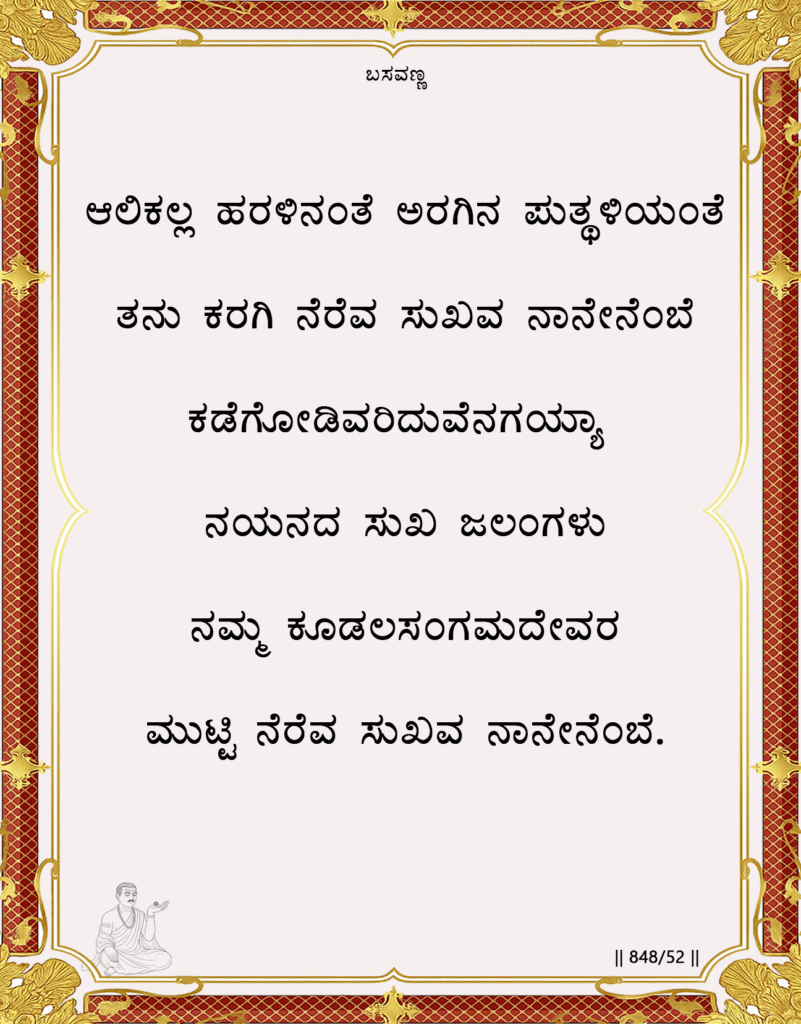
Hailstones fall glittering from the sky
hard, dazzling, pretending to be jewels
yet the moment the sun touches them,
they melt into mere water.
Wax stands firm in its borrowed shape,
but when the flame draws near,
it softens, collapses,
becoming nothing but fluid surrender.
So too, my hardened self
this pride, this name, this “I”
melts into helpless devotion
at the thought of Your grace.
And when that melting overtakes me,
tears rise unbidden
not from sorrow, not for the world to see,
but from the heart recognizing
its true Master.
What words remain,
O Kudalasangamadeva,
when the soul dissolves in You?
Even silence becomes
a complete offering.
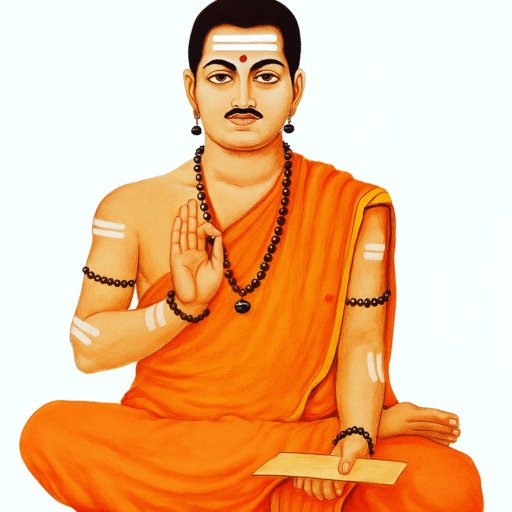
Basavanna teaches that the ego only appears solid like hail or wax until it is touched by divine grace. In the presence of Kudalasangamadeva, all pride and identity melt away, and the heart naturally overflows in silent devotion. True surrender is not an act of will but a transformation: a dissolving of the false self into the luminous truth of the Divine.
Spiritual Context
Core Spiritual Principle: Surrender (sharanagati) is not a disciplined action but a spontaneous, alchemical transformation of the ego when it comes into direct contact with the heat of divine grace. The endpoint of the path is not a strengthened self, but a dissolved one.
Cosmic Reality Perspective: In the non dual reality, the separate ego self (ahamkara) is the fundamental illusion that creates duality. The Linga (Divine Consciousness) is like the sun its very nature is to illuminate and dissolve the frozen constructs of the individual mind, just as sunlight melts hail. The resulting state is one of fluid unity, where the individual droplet of self merges back into the ocean of being.
Historical Reality (Anubhava Mantapa Context): This Vachana represents the pinnacle of the devotional (bhakti) path as practiced in the Anubhava Mantapa. It counters any path of spiritual achievement based on egoic effort. In a society structured by rigid ego identities of caste and ritual status, Basavanna points to a state where all such identities are rendered liquid and meaningless in the face of overwhelming divine love, accessible to all regardless of background.
Interpretation
1. “Hailstones fall glittering from the sky… they melt into mere water.” The first metaphor describes the ego’s inherent falsity and fragility. The hail appears solid and jewel like (the ego’s pride and self importance), but its true nature is water (consciousness). The “sun” of divine grace reveals this true nature by dissolving the temporary, hardened form.
2. “Wax stands firm in its borrowed shape… becoming nothing but fluid surrender.” The second metaphor describes the ego’s constructed identity. The wax holds a “borrowed shape” (the personality, the social self), but its essence is to flow. The “flame” of spiritual awakening (the Linga) melts it back to its essence. This is not destruction but a return to a natural, fluid state.
3. “So too, my hardened self… melts into helpless devotion…” The application to the self. The “hardened self” is the totality of the egoic structure pride, name, and the sense of “I” (aham). The “thought of Your grace” is the catalytic agent that initiates the melting. The result is “helpless devotion,” a state where the will of the separate self is rendered inoperative.
4. “tears rise unbidden… the heart recognizing its true Master.” These are not tears of sorrow but the physical manifestation of the inner melting. They are the ego liquefying and overflowing, a sign of the heart’s direct, non intellectual recognition (pratyabhijna) of its source.
5. “What words remain… Even silence becomes a complete offering.” The final stage. The dissolution is so complete that the faculty of speech, rooted in the ego, ceases. In this state, silence is not an absence but the most profound offering the offering of the surrendered self, which has become one with the object of its devotion.
Practical Implications: The seeker is guided to: Stop trying to “build” a spiritual ego and instead invite the grace that dissolves it. See moments of emotional overwhelm or helplessness not as failures but as potential portals to surrender. Value heartfelt tears of devotion and moments of wordless silence as higher states than eloquent prayers or rigorous debates.
The Cosmic Reality
Anga (Human Dimension): The Anga is the “hailstone” and the “wax” the conditioned self with its hardened boundaries and borrowed identity. Its ultimate purpose is to be melted, to return to its fluid, essential nature of pure consciousness.
Linga (Divine Principle): Kudalasangamadeva is the “sun” and the “flame” the active, transformative power of grace whose very nature is to illuminate, warm, and dissolve the illusion of separation.
Jangama (Dynamic Interaction): The Jangama is the process of melting itself. It is the heat of the relationship, the “thought of Your grace” that catalyzes the dissolution. The resulting “tears” and “silence” are the Jangama as the embodied expression of the union between the melted Anga and the luminous Linga.
Shata Sthala
Primary Sthala: Prasadi Sthala. The entire process described is the operation of grace (prasada). The melting of the ego is not a self willed act but a spontaneous occurrence upon receiving grace. The tears and silent offering are the fruits of that grace.
Supporting Sthala: Aikya Sthala. The culmination of this melting process is union. When the hail becomes water, it is non separate from the river. When the wax becomes fluid, it is one with the flame. The state where “the soul dissolves in You” is the definitive description of Aikya, or Oneness.
Practical Integration
Arivu (Awareness Practices): Meditation on Dissolution: Sit quietly and visualize the ego as a block of ice or a piece of wax. Invite the light and warmth of the Divine to gently melt it, feeling a sense of release and fluidity in the heart and mind.
Heart Centered Prayer: Move beyond verbal prayers. Sit in the presence of the Divine and simply feel, allowing any emotions especially tears of love or longing to arise naturally as an offering.
Achara (Personal Discipline):Practice humility in daily life. Deliberately put yourself in situations where your pride is challenged, and consciously offer that discomfort to the Divine, allowing the “hardness” to soften.
Kayaka (Sacred Action): Perform your work not as an expression of your personal capability, but as an offering that requires the dissolution of your ego. Let the work flow through you.
Dasoha (Communal Offering): Offer your vulnerability and open heart to the community. The shared experience of heartfelt devotion strengthens the collective field of grace, making it easier for all to surrender.
Modern Application
Modern society prizes individualism, self reliance, emotional control, and a curated personal brand. This leads to spiritual rigidity, loneliness, and an inability to be vulnerable, creating a soul that is hardened like hail, brilliant on the outside but frozen within.
This Vachana offers liberation from the exhausting project of maintaining the ego. It validates the healing power of vulnerability and the transformative potential of surrender. It shows that true strength is not found in rigidity but in the capacity to flow, to feel deeply, and to yield to a love greater than oneself. It is a call to exchange the brittle fortress of the ego for the fluid, boundless ocean of divine grace.
Essence
The jewel like hail, the sculpted wax
both illusions of a separate thing.
Your glance, a sun; Your love, a flame.
I, the melting.
Words, now a forgotten art.
The heart, a river finding its sea.
This silence, drenched in You,
is the only language left to me.
This Vachana presents a metaphysics of transformation where the seeker’s substance is fundamentally altered by the object of their devotion. It maps the journey from solidified duality to liquid non duality. Its multidimensional genius lies in describing a profound psychological process (the melting of the ego) as a theological principle (surrender to grace) and a phenomenological experience (tears, wordless silence). It reveals the Jangama as the dynamic state of being in which the Anga is perpetually dissolving into the Linga, where the very act of being becomes an offering.
The greatest freedom is not self mastery, but self surrender. Your true nature is not the rigid, separate personality you have constructed, but a fluid, loving consciousness that longs to merge with its source. Stop trying to hold your shape. Allow the warmth of divine love to touch you, and you will discover that in letting go of everything you thought you were, you become everything you are meant to be.

Views: 14