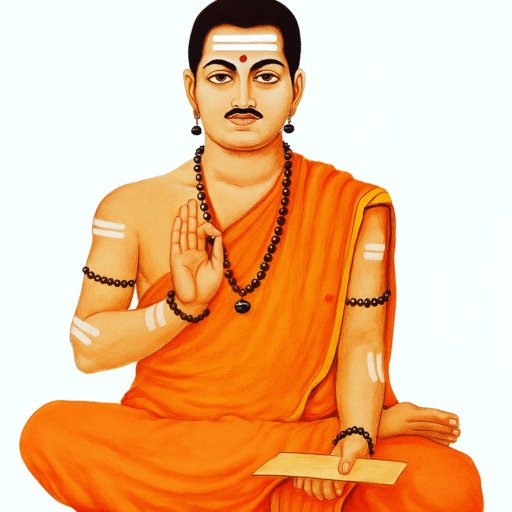

Poetic Rendering

When fire itself becomes the ground,
who can stand firm upon it?
When the earth trembles beneath the feet,
where is a stable place to rest?
When the bull drinks the water meant for the fields,
when the fence devours the crop it should protect,
when the wife steals from her own home,
when a mother’s milk turns poison in her child’s mouth
In such a world turned upside down,
for whom will You stand available,
O Kudalasangamadeva?
Basavanna describes a world where every natural and moral order collapses. Those meant to protect cause harm; those meant to nurture bring suffering. When all earthly structures betray their purpose, Basavanna turns to the Divine not simply to surrender, but to question: In such chaos, who is worthy of divine refuge? For whom will the Lord make Himself available?
This vachana highlights both the instability of worldly life and the profound moral call for inner sincerity, for only the truthful and steadfast will find the Divine standing with them when all else has fallen away.
Spiritual Context
Core Spiritual Principle: When the very fabric of society and nature the dharma that upholds the world is integrates, external supports become meaningless. In this “Kali Yuga” or age of strife, the only true refuge (sharana) is the Divine. However, this refuge is not automatic; it demands a corresponding inner integrity from the seeker.
Cosmic Reality Perspective: The Linga is the eternal, unchanging axis (sthambha) around which the universe revolves. The “world turned upside down” is the phenomenal realm in a state of maximum entropy and disorder. The Vachana asks: when the manifested world is in complete contradiction to its divine source, who has the discernment to turn away from the chaos and align themselves with the still center?
Historical Reality (Anubhava Mantapa Context): Basavanna lived in a time of significant social and religious upheaval. This Vachana reflects the perceived moral collapse of the orthodox social order, where Brahmins (the “fence”) exploited the people (the “crop”), and traditional structures of trust had broken down. It served as a call to his community to be the ones for whom God “stands available,” by embodying a new, truthful order.
Interpretation
1. “When fire becomes the ground… earth trembles…”: This describes the failure of the very elements. Fire, which should rise, is now the base. Earth, the symbol of stability, shakes. This represents the failure of the foundational laws of nature and reality as we know them.
2. Social & Moral Inversions: “the bull drinks the water…”: The bull, a symbol of diligent labor, becomes selfish, consuming the resource meant for collective growth. “the fence devours the crop…”: The protector (ruler, priest, law) becomes the predator, destroying what it is sworn to safeguard. “the wife steals from her own home…”: The betrayal of intimate trust, the breakdown of the family unit.” a mother’s milk turns poison…”: The ultimate perversion of nurture into destruction. The very source of life becomes an instrument of death.
3. “for whom will You stand available?”: This is not a cry of despair but a profound spiritual challenge. It implies that in a world where all roles are corrupted, God’s grace is not a blanket covering but a focused force. It will be “available” only to those who, amidst the chaos, have preserved their inner truth and have the courage to seek a refuge beyond the broken world.
The Cosmic Reality
Anga (Human Dimension): The Anga is humanity, disoriented and betrayed by a collapsing world. Its task is to recognize the failure of all external supports and to reorient itself entirely toward the one stable reality.
Linga (Divine Principle): The Linga is the only unwavering reality. It is the “true ground” that does not burn, the “stable earth” that does not tremble. It is the ultimate source of all natural and moral law.
Jangama (Dynamic Interaction): The Jangama is the relationship that is possible even in total chaos. The final question probes the nature of this relationship: What quality of consciousness in the Anga makes it capable of connecting with the Linga when the entire universe seems to be working against it?
Shatsthala
Primary Sthala: Sharana Sthala. This Vachana defines the ultimate necessity of this stage. When everything else is unreliable, one must become a Sharana one who takes sole refuge in the Divine.
Supporting Sthala: Aikya Sthala. The state of being for whom God “stands available” is the state of union, where the individual’s will is so aligned with the Divine that they become a stable center in the chaotic world.
Practical Integration
Arivu (Awareness Practices): Practice “Centering in Chaos.” When you feel overwhelmed by world events, personal betrayals, or a sense that things are “upside down,” close your eyes. Visualize the tumultuous world as a stormy ocean and your awareness of Koodalasangamadeva as a deep, still point at the ocean’s floor. Abide in that still point.
Achara (Personal Discipline): In a world of deceit, commit fiercely to personal integrity. Be the one who does not betray, who does not steal, who does not poison with words or actions. Become a living embodiment of the moral order you wish to see, making yourself a vessel for which the Divine can “stand available.”
Kayaka (Sacred Action): Do your work as an act of restoring order. Even if others are corrupt, let your own labor be honest and beneficial. Be the “bull” that plows the field, not one that drinks the water. Your right action becomes a sacred protest against the world’s inversion.
Dasoha (Communal Offering): Build a community that serves as a sanctuary of truth. In a world where “fences devour crops,” create a community that protects its members. Where “mother’s milk is poison,” offer the nourishing milk of sincere fellowship and support. Make your community the answer to the question a place where God’s presence is made available through mutual love and integrity.
Modern Application
Existential and Societal Whiplash. The modern experience is often one of radical disorientation: rapid technological change, collapsing trust in institutions (governments, media, science), the inversion of traditional values, and the pervasive sense of a “post-truth” world. This creates deep anxiety and a feeling that there is no solid ground to stand on.
This Vachana is startlingly relevant. It liberates us from seeking stability in systems that are inherently unstable. It directs us to find our center not in the world, but in the timeless truth of the Divine. It challenges us to be the ones who, through our own integrity and steadfast devotion, create pockets of sanity and sacred order, becoming the very people for whom grace becomes manifest in a chaotic age.
Essence
When ground is fire, and earth does shake,
When guardianship its trust does break,
When love itself begins to take
In this great, global, dark mistake,
Who will You, for their own sake,
Not finally, and fully, forsake?
1. The Principle of Failed Dharma: The metaphors describe a state where Dharmathe cosmic principle that sustains order and right functionhas collapsed. Each element and role operates in contradiction to its svadharma (own nature). This is a state of maximum spiritual entropy, where energy is chaotic and destructive rather than harmonious and life-supporting. The “fire as ground” represents a reality where transformative energy (tapas) has become the unstable foundation of life, and the “poisoned milk” signifies the corruption of life-giving nurture itself.
2. The Linga as the Strange Attractor: In a complex system hurtling toward disorder, a “strange attractor” is a pattern that draws chaotic energy into a new, complex order. The Linga is this metaphysical strange attractor. The question “for whom will You stand available?” is asking: whose consciousness has the requisite “initial conditions” of sincerity, discernment, and surrender to be drawn into this new, divine order amidst the surrounding chaos? The Linga remains the sole, uncorrupted reference point in a relativistic moral universe.
3. Jangama as the Covenant in Chaos: The functioning Jangama, in this context, is the active covenant between the Divine and the steadfast soul. It is the dynamic proof that even when the entire manifest universe seems to contradict the divine nature of order and love, the law of grace still operates for those who consciously align with it. The Vachana’s power lies in its unanswered question. The answer is performative and self-selecting: You, O Lord, will stand available for the one who, like the speaker of this Vachana, recognizes the universal betrayal and turns to You as the sole refuge. The act of asking this question from a place of profound discernment and desperate sincerity is itself the genesis of the Jangama. It is the first turn of the heart that reorients a consciousness from the collapsing external world toward the eternal internal anchor, Koodalasangamadeva. The one who sees the world is upside down is already looking for the right-side-up; in that looking, the connection is made.
When your world collapses when leaders betray, systems fail, and even loved ones cause harm do not despair. This breakdown of external order is the very condition that reveals the one, unshakable refuge. The Divine does not abandon the world, but becomes uniquely available to those who, amidst the ruins, stop seeking stability in the world and instead plant their feet on the ground of eternal truth. Your sincere heart, committed to integrity when all else is corrupt, becomes the sacred site where God stands revealed. In the darkest of times, your steadfast devotion is the question and the answer simultaneously.

Views: 21