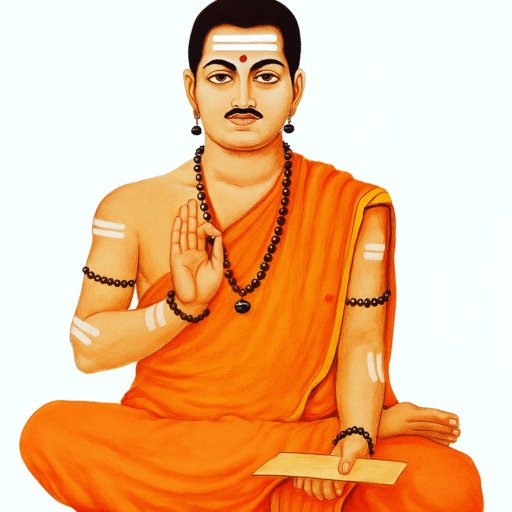

Poetic Rendering

Do not steal. Do not kill. Speak no harsh word.
Harbor no wrath. Bring no shame upon another.
Do not boast of yourself. Slander no one in secret.
This is the eternal path of purity, within and without.
This, and this alone, is the worship that pleases
the Lord Koodalasangamadeva.
This vachana is Basavanna’s definitive statement that true spirituality is inseparable from ethical integrity. He dismantles the entire superstructure of complex rituals and philosophical abstractions, reducing the path to God to a simple, universal, and non-negotiable code of conduct. For Basavanna, a religion that does not produce a morally flawless human being is a fraud. The “worship” that pleases God is not performed in a temple, but in the marketplace, the home, and the heart, through a life of radical honesty, non-violence, and humility.
Spiritual Context
Core Spiritual Principle: The foundation of the spiritual path is immaculate ethical conduct. God-realization is impossible without human perfection. Morality is not a preliminary step; it is the very substance of a God-conscious life.
Cosmic Reality Perspective: In the non-dual framework of Shivayoga, the Linga is the embodiment of perfect order, truth, and harmony (Rta). To live an unethical life is to be fundamentally out of alignment with the structure of reality itself. Ethical practice is the process of tuning the individual (Anga) to the frequency of the Divine (Linga).
Historical Reality (Anubhava Mantapa Context): This Vachana is the bedrock of the Lingayoga social revolution. It creates a community based on a shared, universal ethic that transcends caste rules. It declares that a butcher who speaks truth is closer to God than a Brahmin who performs rituals but harbors malice. It establishes character, not birth, as the true measure of a person.
Interpretation
“Do not steal. Do not kill. Speak no harsh word.”: These are the pillars of non-violence (Ahimsa) in action, deed, and speech. They govern one’s external relationship with the world, ensuring one does no harm.
“Harbor no wrath. Bring no shame upon another.”: These rules govern the internal landscape and social conduct. “Harbor no wrath” is internal purification, freeing the heart from the poison of anger. “Bring no shame upon another” is radical empathy and respect, protecting the dignity of every individual.
“Do not boast of yourself. Slander no one in secret.”: These target the subtlest expressions of the ego. Boasting is the overt inflation of the self; slander is the covert diminishment of others. Both are rooted in a sense of separation and are destructive to community harmony.
“This, and this alone, is the worship that pleases…”: This is the ultimate declaration. Basavanna systematically replaces all ritualistic worship (puja, yajna) with the continuous, living worship of ethical action. The temple is the world, and the ritual is right conduct.
Practical Implications: The seeker is called to a life of rigorous self-auditing. Every action, word, and thought must be measured against this ethical plumb line. Spiritual progress is measured not by mystical experiences, but by the increasing consistency of one’s integrity, honesty, and compassion in daily life.
The Cosmic Reality
Anga (Human Dimension): The individual who has committed to becoming a flawless ethical instrument. The body, speech, and mind are purified and dedicated to non-harming and truth.
Linga (Divine Principle): Koodalasangamadeva as Satya (Truth) and the fundamental moral order of the universe. The Linga is not pleased by flowers but by truthfulness; it is not appeased by ghee but by non-violence.
Jangama (Dynamic Interaction): The dynamic is the moment-to-moment ethical decision-making in the marketplace of life. It is the living practice of these vows in interaction with other beings. This ethical engagement is the true Jangama, the moving worship that connects the pure Anga to the divine Linga.
Shatsthala
Primary Sthala: Maheshwara. This Vachana is a perfect manual for the Maheshwara stage, which is defined by intense self-discipline and purification. These seven commandments are the core disciplines of this stage.
Supporting Sthala: Bhakta. The Bhakta’s devotion must be grounded in this ethical foundation. Without it, devotion is mere sentimentality, and the Bhakta cannot advance to the higher stages of internal purification.
Practical Integration
Arivu (Awareness Practices): Practice mindfulness of ethical moments. Constantly observe your intentions before acting, your words before speaking, and your thoughts about others. Use these vows as a constant mirror for self-reflection.
Achara (Personal Discipline): Adopt these seven principles as lifelong vows (vratas). Make a conscious commitment to them each day and review your adherence each night.
Kayaka (Sacred Action): Let your work be a field for practicing these ethics. Do not cheat, do not harm through your profession, speak honestly, and give credit to others. Dasoha (Communal Offering): The highest Dasoha is to create and protect an ethical community. Hold yourself and others accountable to these standards. Foster an environment where truth, non-violence, and dignity are paramount.
Modern Application
Ethical relativism, “fake news,” corporate and political corruption, online trolling, and a culture that often rewards ruthless ambition over integrity. The disconnect between spiritual beliefs and daily ethical conduct.
This Vachana is a timeless prescription for societal health. It calls for a spirituality of radical accountability. It is desperately relevant today, offering a clear, uncompromising code that can restore trust in relationships, integrity in business, and civility in public discourse. It teaches that if you want to find God, start by being a trustworthy, kind, and honest human being.
Essence
Not chant, nor rite, nor scripture’s scroll,
But a truthful speech, a self-controlled soul.
The purest worship, tried and true,
Is a life that’s just, and kind, and through.
The Deeper Pattern (The Subtle Body): This Vachana presents ethics as the Fundamental Operating System for consciousness. The seven prohibitions are not arbitrary rules but the necessary parameters for stable system function. A system running on malware of falsehood, viruses of hatred, and corrupted files of ego cannot process the high-frequency data of divine consciousness (Linga). Ethical living is the process of debugging the human software to eliminate these system errors, creating a stable, coherent platform (a pure Anga) capable of “installing” and running the “Linga OS”the direct experience of non-dual truth. This is not morality for social order, but metaphysical systems engineering.
In Simple Terms (The Gross Body): You cannot hear a whisper in a hurricane. The complexities of ritual and philosophy are the hurricane. The simple, profound ethical life is the act of stepping into the silent eye of the storm. In that pristine silence, the voice of God, which was always speaking, can finally be heard. Basavanna gives us the directions to that silent center: be honest, be harmless, be humble.
The Human Truth (The Causal Body): The most profound spiritual truth is also the simplest: how you treat others is the only worship that matters. Your integrity is your altar. Your kindness is your prayer. Before you seek to see God in visions, learn to see God in the face of the person you are tempted to deceive or disparage. The universe is built on a foundation of moral law, and to align with it is to come home.
“A life of truth, humility, and compassion is itself the worship that pleases God yesterday, today, and forever.”

Views: 24