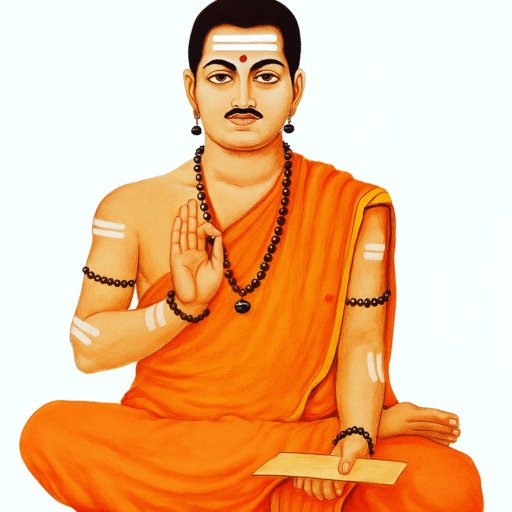

Poetic Rendering

When the Divine calls you inward
into the secret chamber of the heart,
and you behold that radiant vision with love
do not let lust sneak in and stain it.
Do not, O foolish mind,
turn this path into a playground of desire.
The food you eat sustains your life,
yet it also feeds the beast of craving
do not let that creature devour your focus.
Even when the senses burn brightest
and the body surges with untamed force,
know this, O Kudalasangama-deva:
You see it all
every struggle, every faltering step,
every act of restraint that adorns the devotee.
Basavanna reveals a profound psychological truth: as spiritual awareness deepens, the senses often intensify as well. The same life-energy that fuels devotion can easily be hijacked by lust. This is not a moralistic warning but an experiential one. He teaches that the inner experience of the Divine is sacred and must be protected from base impulses. He acknowledges that heightened spiritual energy often heightens physical sensitivity, and that true ornamentation for a devotee is not ecstasy but the discipline of restraint. He concludes by affirming that God is a witness to the entire struggle, not just the victories.
Spiritual Context
Core Spiritual Principle: Spiritual awakening involves the arousal of the total psycho-physical energy (Kundalini or Shakti). This same energy can express itself as divine love (bhakti) or as sensual craving (kama). The seeker’s task is to consciously channel this powerful energy upward toward the Divine, rather than letting it spiral downward into sensory indulgence.
Cosmic Reality Perspective: The Linga (Shiva) is the static, witnessing consciousness. The awakened energy (Shakti) is its dynamic counterpart. In the human being, the body’s vital force is this Shakti. Spiritual practice is the process of uniting this individual Shakti with the cosmic Shiva within. Lust is the misdirection of this sacred union energy toward external, fleeting objects.
Historical Reality (Anubhava Mantapa Context): This Vachana provides crucial, practical guidance for householders (grihasthas) on the path. It acknowledges that they live in the world with active senses and responsibilities, and teaches how to navigate spiritual intensity without resorting to extreme asceticism, by transforming energy through conscious restraint.
Interpretation
1. “the secret chamber of the heart… do not let lust sneak in and stain it.”: The heart (hridaya) is the sacred space where the divine vision (darshan) is revealed. “Lust” here represents any selfish, grasping energy that seeks to possess or commodify the spiritual experience for ego-gratification, thus polluting its purity.
2. “The food you eat… also feeds the beast of craving…”: This is a profound observation on the dual nature of sustenance. The same life-force (prana) that sustains the body for God’s service can also strengthen the ego’s desires. The practice is to eat consciously, as an offering (prasada), to nourish the divine purpose, not the “beast” of craving.
3. “the senses burn brightest… the body surges with untamed force…”: Basavanna does not deny the reality or power of these forces. He normalizes them as part of the human and spiritual experience, especially when spiritual energy is awakened.
4. “every act of restraint that adorns the devotee.”: This redefines spiritual beauty. The true “ornament” (abharan) of a seeker is not visionary experiences but the quiet, invisible discipline of self-restraint (sanyam). This restraint is what polishes the soul and makes it a fitting vessel for the Divine.
The Cosmic Reality
Anga (Human Dimension): The Anga is the field where this alchemy takes place. It is the crucible containing the raw materials of sensory energy and spiritual aspiration. Its work is to apply the heat of discipline to transmute the former into the latter.
Linga (Divine Principle): The Linga is both the goal and the witness. It is the “radiant vision” that inspires the journey and the compassionate awareness that “sees it all,” providing the context of love and understanding within which the struggle occurs.
Jangama (Dynamic Interaction): The Jangama is the conscious channeling of energy. It is the moment-by-moment choice to offer the “surging force” of the body back to the Divine, transforming a potential obstacle into the very fuel for the journey.
Shatsthala
Primary Sthala: Maheshwara Sthala. This stage is characterized by inner purification. Mastering the senses and redirecting primal energy is the core work of purifying the individual to become a true Maheshwaraa living embodiment of Shiva.
Supporting Sthala: Bhakta Sthala. The struggle itself, and the heartfelt confession to the Lord, is the activity of a sincere devotee. The Bhakta’s love is what motivates the difficult practice of restraint.
Practical Integration
Arivu (Awareness Practices): Practice “Energy Tracking.” When you feel a surge of any strong energybe it inspiration, anger, or desirepause. Do not act. First, feel the energy as a pure, non-personal force in the body. Then, consciously offer it inward toward the heart center or upward toward the crown, as an offering to the Linga.
Achara (Personal Discipline): Implement conscious moderation in all things, especially eating and sensory consumption. Before partaking, set an intention: “This is to sustain my body for Your service.” This simple act transforms consumption into a sacred ritual.
Kayaka (Sacred Action): Use physical work or exercise as a channel for the body’s “untamed force.” Transform restless energy into productive, mindful labor. Let the body sweat in service, thereby purifying and focusing its energies.
Dasoha (Communal Offering): Create a community where struggles with desire and energy are openly discussed without judgment. This demystifies the process and provides mutual support. The community’s collective energy can help stabilize individuals when their own energy feels overwhelming.
Modern Application
Hyper-Stimulation and Spiritual Bypassing. We live in a world designed to constantly trigger our desires and senses. Simultaneously, some spiritual circles promote a kind of bypassing, where primal human energies are denied or repressed, leading to inauthenticity and eventual explosion. This Vachana addresses both: it acknowledges the power of these forces while providing a path for their integration.
This Vachana liberates one from the shame and frustration of having a body with powerful instincts. It normalizes the struggle and provides a positive, transformative framework for it. Instead of fighting the energy, we are taught to redirect it. This is crucial for modern seekers who are trying to be spiritual while living fully engaged lives in a world of immense sensory temptation.
Essence
The light descends, the senses flare,
A sacred and a fierce affair.
The food that feeds, can feed a chain,
The bliss can turn to burning pain.
But in the fight to hold it true,
An ornament is fashioned new.
1. The Principle of Energy Conservation and Transformation: The “surging force” of the body is a form of psychic heat (tapas). It cannot be destroyed, only transformed. If not consciously redirected upward toward the “radiant vision” (a process called urdhvareta), it will discharge downward as lust and craving. The “restraint” is not a suppression but a focusing of this heat, using it to fuel the inner alchemical process that refines the soul.
2. The Linga as the Heat Sink and Witness: The Linga functions as an infinite “heat sink” for this psychic energy. By witnessing the struggle and receiving the offered energy, it provides a release valve that prevents internal combustion. The knowledge that “You see it all” is not merely comforting; it is structurally essential. It completes the circuit, allowing the energy to be safely discharged into the divine ground rather than being repressed or acted out destructively.
3. Jangama as the Alchemical Process: The functioning Jangama here is the entire alchemical operation of sublimation. It is the dynamic process where: Raw Material: The “untamed force” of the body. Vessel: The disciplined mind and body of the seeker. Fire: The practice of restraint (sanyam). Goal: The “ornament” of a purified being. The struggle itself is the fire that purifies. The Jangama is the conscious participation in this process, where the seeker, the Divine, and the raw energy collaborate to transmute the lead of primal impulse into the gold of conscious devotion.
Your desires are not your enemy; they are powerful, misdirected forms of your life force. Do not repress them or be ashamed of them. Instead, recognize their power and learn the art of sacred redirection. The energy you use to crave the world is the same energy you need to love the Divine. The struggle to master this is not a sign of failure but the very process that forges spiritual strength and beauty. Your discipline is your most beautiful adornment.

Views: 11