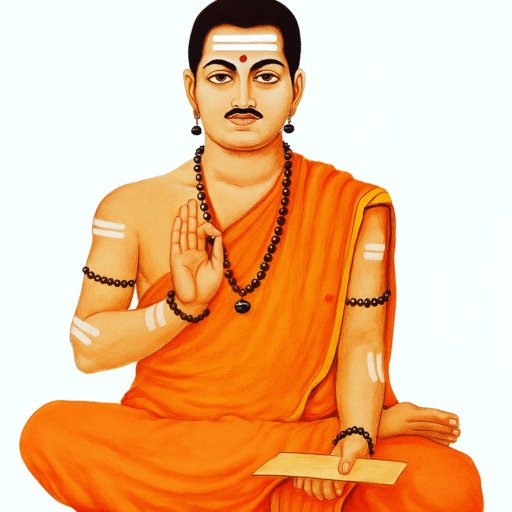

Poetic Rendering

If God were in stone, I would worship the mountain.
If God were in wood, I would worship the forest.
If God were in copper, I would polish the metal.
If God were in clay, I would shape and adore the earth.
But you, O Kudalasangamadeva
you dwell not in things made and unmade,
but in the breath within,
in the life that moves my very being.
This vachana marks one of Basavanna’s most direct rejections of externalized, object-bound worship. He names the materials of traditional idols stone, wood, metal, clay and questions the futility of seeking the Divine within perishable forms. The imagery of aragu (sealing wax or soft resin) underscores this impermanence: when heat comes, it melts just as man-made idols cannot endure the flame of truth. Basavanna’s point is radical yet profoundly spiritual God is not a thing to be touched, traded, or melted, but the living consciousness within. Kudalasangamadeva is not an idol to be served but the sovereign Self to be realized. The vachana thus shifts the axis of devotion from ritual to realization, from transaction to transformation. It is not a denial of divinity but a re-centering of it from the outer temple to the inner awareness.
Spiritual Context
Core Spiritual Principle: The Divine is not an object to be worshipped externally but is the very subject, the conscious life-principle (Prana-Chaitanya) that animates the individual. True worship is the recognition of this indwelling presence and the alignment of one’s life with it.
Cosmic Reality Perspective: The Cosmic Reality (Linga) is all-pervading consciousness (Chit). It cannot be confined to any form (Saguna) but is the formless (Nirguna) essence of all forms. To seek it in an idol is to mistake the container for the content.
Historical Reality (Anubhava Mantapa context): This vachana is a philosophical cornerstone of the Lingayat revolt against ritualistic idol worship. It democratized spirituality by making the Divine accessible to everyone, everywhere, without the need for temples, priests, or manufactured icons. The body itself became the moving temple.
Interpretation
1. “If God were in stone, I would worship the mountain…” : This is a logical deconstruction of idolatry. If the Divine principle were truly localized in a material, then the entire source of that material (the mountain, the forest) would be more worthy of worship than a small, carved fragment of it.
2. Systematic Rejection (Stone, Wood, Metal, Clay): By listing the primary materials of idol-making, Basavanna leaves no room for exception. He dismisses the entire enterprise as based on a flawed premise.
3. “But you, O Kudalasangamadeva you dwell not in things made and unmade…” : This is the pivotal turn inward. “Made” refers to man-made idols; “unmade” refers to natural objects. He states that God transcends both categories.
4. “…but in the breath within, in the life that moves my very being.” : This is the positive declaration. The “breath” (Prana) is the most immediate, intimate, and universal evidence of the life force. The “life that moves my very being” is consciousness (Chaitanya) itself. The Linga is identified not with a form, but with the very act of living and being aware.
Practical Implications: The seeker’s primary practice shifts from external ritual to internal awareness (Arivu). Worship becomes constant remembrance of the Linga as the source of one’s own breath and consciousness. The focus is on cultivating the direct experience of the indwelling God.
The Cosmic Reality
Anga (Human Dimension): The human body, not as a sinful vessel, but as the sacred temple (Vimana) whose inner sanctum is the heart, where the Linga resides as the breath and life.
Linga (Divine Principle): Kudalasangama Deva as the Antaratman (Inner Self) the formless, conscious energy that is the true source of the individual’s existence.
Jangama (Dynamic Interaction): The Jangama is the dynamic flow of breath (Prana) and the stream of awareness. It is the constant, living interaction between the body-temple (Anga) and the indwelling God (Linga), a relationship that is alive and moving, not static like an idol.
Shata Sthala
Primary Sthala: Prasadi. Recognizing the Linga as the inner life-force is the ultimate grace (Prasada). It is the realization that the very capacity to seek God is God’s presence within.
Supporting Sthala: Aikya. This vachana points directly to the state of Aikya (oneness). When the seeker realizes that the “life that moves my very being” is the Lord, the separation between Anga and Linga collapses.
Practical Integration
Arivu (Awareness): Practice mindfulness of the breath and the sense of “I am.” With each inhalation and exhalation, remember that this life-force is the presence of Kudalasangama Deva. This is the true Linga-puja (worship).
Achara (Personal Discipline): The discipline is to treat your own body and the bodies of others with reverence, as they are the living temples of the Divine. Maintain purity of body and mind to honor this indwelling presence.
Kayaka (Sacred Action): Since the Linga is within, all action performed with awareness becomes an offering to the inner Lord. Work becomes worship when done in the consciousness that the worker and the recipient of the action are both manifestations of the same indwelling God. Dasoha (Communal Offering): The highest Dasoha is to help others recognize the Divine within themselves. The community’s purpose is to reinforce this truth and support each member in this inner realization.
Modern Application
We live in an age of external seeking. We look for fulfillment, identity, and salvation in material possessions, career achievements, social media validation, and even in “spiritual” consumerism (buying crystals, attending expensive retreats). We have objectified the sacred and look for it everywhere but within.
This vachana is a radical call to end the search. It liberates by stating that what we are seeking is already the one who is seeking. Peace, purpose, and divinity are not “out there” to be acquired; they are the very substance of our aware being. The path is one of turning inward (Pratyahara) and recognizing the sovereign Self within.
Essence
Why seek in stone, in wood, in ore,
What dwells within forevermore?
Not in the made, the bought, the sold,
But in the breath, the life you hold.
Metaphysically, this vachana distinguishes between the supreme, non-dual Brahman (Nirguna) and its limited, conceptual forms (Saguna). The “mountain” and “idol” represent Saguna worship. Basavanna points directly to the Nirguna reality the Atman that is one with Brahman which is known not through the senses but through direct self-awareness (Atma Sakshatkara). The “breath” is the bridge between the individual body (Annamaya Kosha) and the vital energy (Pranamaya Kosha), leading to the innermost consciousness (Vijnanamaya and Anandamaya Koshas).
The ultimate truth and the source of all peace is not a separate being to be found, but your own deepest nature to be realized. All external quests are ultimately projections of this inner longing for Self-knowledge. The kingdom of heaven is truly within.

Views: 3