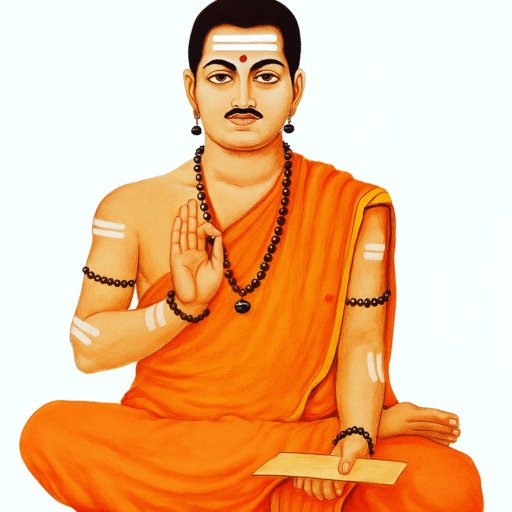

Poetic Rendering

What kind of faith can it be
that carries no pulse of compassion?
Compassion is the food we owe all beings,
the root from which all righteousness rises.
Without compassion,
there is no path, no light,
no Kudalasangama at all
only the echo of a name
emptied of its truth.
Basavanna declares compassion (daye) to be the very foundation of all true spirituality. Any path, ritual, doctrine, or sect that lacks compassion is not simply incomplete it is fundamentally false, because it contradicts the very nature of the Divine. Since the divine presence pervades all beings, harming or ignoring any form of life is equivalent to rejecting God. Thus, compassion is not an optional virtue but the essential proof of alignment with Kudalasangama, the ground of all being.
Spiritual Context
Core Spiritual Principle: Compassion is the ultimate litmus test for spiritual truth. Doctrines, rituals, and states of consciousness that do not result in an overflow of compassionate kindness towards all beings are, by definition, false or incomplete. The Divine is Compassion; therefore, to know the Divine is to be compassionate.
Cosmic Reality Perspective: From the non-dual (Advaita) perspective, all is Shiva. To feel separate from another being and to be indifferent to their suffering is to live in ignorance of this fundamental truth. Compassion is the practical, emotional, and ethical recognition of non-duality. It is the heart’s understanding of what the mind realizes as unity.
Historical Reality (Anubhava Mantapa Context): In a landscape of rigid ritualism and sectarian dogma, Basavanna establishes a simple, universal criterion for authentic religion. This was revolutionary, as it placed a compassionate heart above caste purity, scriptural knowledge, or ritual correctness. It ensured that the Lingayoga movement was inherently social and ethical, not merely contemplative.
Interpretation
“What kind of faith can it be that carries no pulse of compassion?”: This rhetorical question exposes a contradiction in terms. “Faith” (shraddha) implies a connection to the Divine. If the Divine is all-pervading love, then a faith devoid of compassion is not a weak faith; it is a faith in something else an idol, a doctrine, or the ego itself.
“Compassion is the food we owe all beings, the root from which all righteousness rises.”: This establishes compassion as both a fundamental duty and the source of all other virtues. Just as food sustains life, compassion sustains the spiritual ecosystem. All ethical conduct (dharma) grows from this one root.
“Without compassion, there is no path, no light, no Kudalasangama at all…”: This is the ultimate declaration. Compassion is not just a part of the path; it is the path. It is not just a quality of the light; it is the light. Without it, the concept of God (Koodalasangamadeva) becomes an empty abstraction, a”name emptied of its truth.”
Practical Implications: The primary sadhana (practice) in Lingayoga is to cultivate a compassionate heart. Meditation, worship, and study are meant to soften the heart and break down the barriers of separation. If they do not achieve this, they are being practiced incorrectly.
The Cosmic Reality
Anga (Human Dimension): The individual consciousness that must purify itself of indifference and cruelty to become a transparent conduit for divine compassion.
Linga (Divine Principle): The principle of unconditional, all-embracing love and empathy that is the substance of reality.
Jangama (Dynamic Interaction): The act of compassion itself. It is the love of the Linga flowing through the Anga to touch and heal the world. It is the embodied, active proof of their non-separation.
Shata Sthala
Primary Sthala: Aikya The perspective here is that of fulfilled union. Compassion is not described as a goal to be achieved, but as the self-evident nature of reality for one who has realized their identity with the all-pervading Divine.
Supporting Sthala: Sharana The lifestyle of a Sharana is the practical cultivation of this state. Taking refuge means living a life of Dasoha (selfless service), which is the active expression of compassion.
Practical Integration
Arivu (Awareness Practices): In every interaction, practice asking: “What does compassion look like in this moment?” Use this question as a compass for your thoughts, words, and actions.
Achara (Personal Discipline): Make a conscious commitment to ahimsa (non-harm) in all its forms not just physical, but also in speech and thought. Actively seek opportunities to be kind.
Kayaka (Sacred Action): Let your work be a form of compassionate service. Choose work that alleviates suffering or, within any work, perform your duties with a kind and helpful attitude.
Dasoha (Communal Offering): The community’s primary purpose is to be a beacon of compassion. It should actively care for its members and extend help to the wider world, embodying the truth that “compassion is the food we owe all beings.”
Modern Application
We live in an age of information and ideology without a corresponding growth of compassion. Dogmatic beliefs, political polarization, and online vitriol are rampant. People often cling to religious or spiritual identities while exhibiting profound judgment and indifference to the suffering of those outside their group.
This vachana is an urgent and timeless corrective. It liberates spirituality from the prison of dogma and tribalism. It provides a simple, universal standard: if your beliefs make you less compassionate, they are wrong. It calls for a spirituality of the heart, where the true measure of enlightenment is one’s capacity for empathy and kind action in a suffering world.
Essence
If your God does not include the cry of the stranger,
the pain of the animal,
the struggle of your enemy,
then you worship an idol,
and its name is Ego.
Compassion is the emotional and ethical correlate of quantum entanglement. At the most fundamental level, all particles (beings) are connected. Indifference is a state of decoherence a localized consciousness that has forgotten its connection to the whole. Compassion is the experience of recoherence the felt sense of this interconnectedness, which naturally gives rise to a desire to alleviate the suffering of another as if it were one’s own.
Imagine the universe is a single, vast nervous system. When your foot is injured, your hand automatically moves to comfort it. The hand does not see the foot as “other.” Compassion is the universe’s nervous system working correctly the “hand” of your consciousness naturally reaching out to soothe the “foot” of another being in pain, because at the deepest level, you are part of the same body.
We have a innate capacity for empathy, but it is often suppressed by fear and ego. This vachana speaks to our deepest yearning for connection and meaning. It reveals that our most authentic self is not the isolated ego, but the compassionate heart that recognizes itself in all of life. This is the ultimate human truth: we are here to love and to lessen the burden of suffering, for in doing so, we honor the Divine within ourselves and all others.

Views: 0