
Poetic Rendering

To awaken with the dawn
not merely from sleep,
but from the night of forgetting;
To bow at the feet of the Linga
not the stone shaped by hands,
but the living flame
quietly burning within;
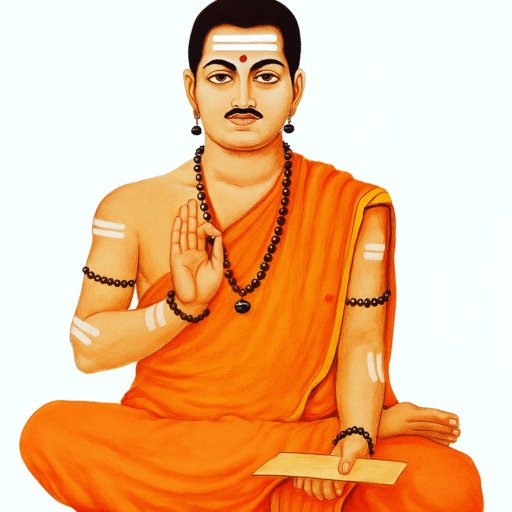
To behold the shining face of a Shiva-Sharana
the one in whom Your radiance
walks this earth
this alone fulfills the dignity
of being born human.
But without this inner rising,
without this seeing,
without truth ripening in the heart,
what offering, what chant,
what ritual could ever reach You,
O Kudalasangama Deva?
Summary When True Dawn Rises Within In this vachana, Basavanna transforms the idea of morning ritual into a profound spiritual sequence of awakening. The “threefold dawn” he describes is not simply the physical morning but a layered inner sunrise: Awakening from forgetfulness rising from the inertia of spiritual sleep. Touching the Linga within connecting with the living divine presence that beats in the heart. Seeing the face of the Sharana recognizing the Divine walking in human form in the realized being. Basavanna declares that this threefold awakening is the true purpose of human birth. Without such awareness, external ritual remains incomplete, unable to reach the Divine. Thus the vachana teaches:
- Dawn is not on the horizon but in consciousness.
- The Linga is not an object but the inner pulse of Being.
- The Sharana is the living embodiment of truth.
When these three awaken together, human life fulfills its divine possibility.
Spiritual Context
Core Spiritual Principle: Integrated Awakening (Trividha Bodha). Liberation is not a single event but a synchronized awakening on three interdependent levels: consciousness (from ignorance), being (to its source), and perception (of the divine in manifestation). Each dawn validates and strengthens the others.
Cosmic Reality Perspective: This is a non-dual mapping of the microcosm to the macrocosm. The physical dawn (the sun rising) is a reflection of the spiritual dawn (consciousness illuminating the mind). The inner Linga (Shiva as static consciousness) and the radiant Sharana (Shiva as dynamic expression in Shakti) are non-different. To perceive one is to align with the other; together, they complete the circuit of divine recognition.
Historical Reality (Anubhava Mantapa Context): This vachana provided the operational liturgy for the Lingayoga community. It codified the daily spiritual practice of a Sharana: to awaken not just to personal piety but to communal divinity. It made every member both a practitioner and a potential object of sacred perception, fostering a community where each person was reminded to see and be seen as a vessel of the divine.
Interpretation
1. “To awaken with the dawn not merely from sleep, but from the night of forgetting…” This is the awakening of subjectivity. “Forgetting” (avidyā) is the primal sleep where consciousness identifies with its contents (thoughts, body). To awaken is to re-cognize oneself as the witnessing space of awareness, prior to all objects. This is the foundation.
2. “To bow at the feet of the Linga not the stone shaped by hands, but the living flame quietly burning within…” This is the awakening of immanence. The “living flame” is the vibratory pulse of existence (spanda) within the heart. “Bowing at its feet” signifies the surrender of egoic control and the alignment of personal will with this divine rhythm. It is the interiorization of worship.
3. “To behold the shining face of a Shiva-Sharana…” This is the awakening of sacred intersubjectivity. The “shining face” is the inner light of the Linga reflected through a purified human form. This beholding is not passive seeing but an act of recognition that completes the circuit: the Linga within recognizes itself in the Linga expressed through another. This seals the awakening, making it relational and communal.
Practical Implications: Spiritual practice must be holistic, engaging body (the act of rising), mind (the turning inward), and heart (the reverent gaze upon another). These three are not sequential stages but interwoven strands of a single cord that lifts the seeker.
The Cosmic Reality
Anga (Human Dimension): The Anga is the practitioner of the trilogy. Its role is to consciously perform this synthesis daily: to vigilantly end its own forgetfulness, to diligently offer itself to the inner divine, and to humbly seek the darshan of those who embody the goal. It is the integrator.
Linga (Divine Principle): Kudalasangama is the unity of the three. It is the light of awareness that ends forgetfulness, the living flame within the heart, and the radiance shining through the face of the Sharana. It is the one reality appearing in three aspects of the seeker’s journey.
Jangama (Dynamic Interaction): The Jangama is the threefold dawn in motion. A true Jangama is this process incarnate: perpetually awake, perpetually bowed inward, and their very presence offers the “shining face” that ignites this triple awakening in others. They are the walking catalyst of the dawn.
Shata Sthala
Primary Sthala: Maheshwara. The pivotal action is “beholding the radiant face.” This is the practice of the Maheshwara, for whom the entire world becomes a mirror of the Divine. This vachana provides a specific, human-centered starting point for that all-encompassing vision.
Supporting Sthala: Bhakta. The consistent, devoted effort required to establish this threefold practice as a daily discipline is the work of the Bhakta. It is the structured devotion that prepares the ground for the flowering of transcendent sight.
Practical Integration
Arivu (Awareness Practices): Upon waking, before engaging with the world, practice the “Triadic Scan”: 1) Awareness: “I am awake as consciousness, not just as a body.” 2) Alignment: “I turn my inner attention to the source of life within.” 3) Intention: “Today, I will look for the divine signature in at least one person I meet.”
Achara (Personal Discipline): Create a “Dawn Sanctuary.” Dedicate the first moments of your day to this threefold practice in a quiet space. Let it be brief but profound a minute for each “awakening.”
Kayaka (Sacred Action): Infuse your work with the threefold principle: 1) Wakefulness: Perform tasks with full presence. 2) Offering: Dedicate the activity to the inner Linga. 3) Sacred Regard: Treat colleagues, clients, or customers as potential Sharanas, worthy of respectful and kind attention.
Dasoha (Communal Offering): In your spiritual community, begin gatherings by sharing a moment of silent inner awakening, followed by each member briefly sharing an experience where they saw the divine quality in another person that week. This practices the third dawn collectively.
Modern Application
Fragmented Awakening and Digital Dawn. We wake to smartphone notifications, not inner remembrance. Our “worship” is often scattered across productivity apps and self-improvement goals, lacking a central sacred core. Our perception of others is filtered through social media profiles, judgments, and transactional thinking, blinding us to their inherent radiance.
Crafting a Conscious Morning Ritual. The practice of Basavayoga today means reclaiming the first hour of the day. It involves a digital sunset/sunrise to protect the “dawn sanctuary.” It means using the commute or first tasks to touch the “living flame” through mindful breathing. It challenges us to replace automatic judgment with a deliberate, silent blessing when we look into another’s eyes, completing the threefold circuit that makes any day sacred.
Essence
The sun climbs the sky,
yet you remain in night.
You can polish the stone,
yet miss the inner light.
You can bow to a thousand icons,
yet pass a saint unseen.
O heart, your true morning
is a triple rising:
First, from the dream that you are only flesh.
Then, to the altar where your own pulse is the flame.
Finally, in the face of the one
who has traveled this path before
seeing in their grace
the morning star of your own soul.
This is the dawn that redeems the dark.
This is the worship that needs no temple.
This is the birth that fulfills all birth.
This vachana outlines a recursive algorithm for consciousness evolution. The three steps form a loop: Recursion Anchor (Awakening from Forgetfulness): The base condition is to exit the dormant state of identification. Recursive Call (Bowing to the Inner Linga): The function calls itself at a deeper level, seeking its own source code. Output/Validation (Beholding the Sharana): The result of the recursion is displayed in an external instance, which verifies the process and provides a template for the next iteration. Each successful execution of this “dawn function” refines the system’s self-recognition, moving it from a standalone program toward integration with the universal operating system (Shiva).
Imagine you are a seed. The first dawn is cracking your shell (awakening from sleep). The second dawn is sending a root down into the dark earth, finding nourishment and stability (touching the inner Linga). The third dawn is breaking the surface and seeing another fully grown, flowering tree of the same species (beholding the Sharana). That sight confirms your potential, shows you what you are meant to become, and gives you the blueprint for your own growth. All three are essential: without cracking the shell, no growth; without the root, no life; without seeing the mature tree, you might not recognize your own destiny.
We seek transformation but often attempt it in isolated, compartmentalized ways working only on the mind, or only on devotion, or only on service. Basavanna reveals that true transformation requires a simultaneous shift in our relationship to ourselves (awakening), to the absolute (worship), and to the other (perception). Our existential loneliness and sense of incompletion stem from fractures among these three. The threefold dawn heals these fractures by making the inner quest, the divine connection, and the human encounter different facets of the same jewel. We are not just individuals seeking God; we are nodes in a network of awakening, where recognizing the light in another is both the proof and the completion of finding it within ourselves.

Views: 2