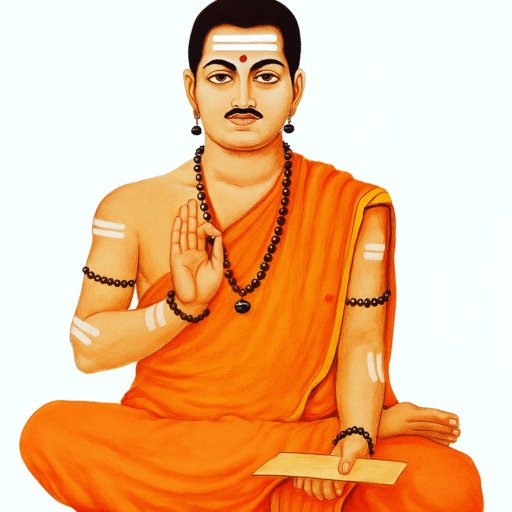

Poetic Rendering

What is a human,
if Shiva’s light has not dawned within?
In cow dung, countless tiny beings are born
does that make them divine, O Lord?
The herds of the forest stay together,
the cattle of the village move as one
is that what makes them human, O Hara?
But a land where the Sharanas do not dwell
where no heart burns with Kudalasangama’s truth
that place, though crowded,
is but a wilderness of bodies,
a village of breathing shadows.
Basavanna on the Difference Between a Crowd and a Civilization In this vachana, Basavanna asks a piercing question: What elevates a human beyond mere biological existence? He dismantles the idea that living in groups, reproducing, or organizing communities makes us human. Animals also live together, reproduce, and cooperate in herds. Insects thrive in dung. None of this implies spiritual nobility. Key insight: Humanity is not biologicalit is spiritual. Basavanna teaches that: Human birth alone does not confer humanity.
Human society alone does not create civilization. Living together does not make a community animals do the same. A place becomes truly civilized only when: Sharanas (awakened beings),those who live in Shiva-consciousness, those who embody compassion, truth, and inner freedom, are present. Without them, even a thriving city is spiritually barren a crowd without consciousness, a forest disguised as a settlement. Core Teaching Civilization is not built by numbers but by awakened hearts. A single realized person sanctifies a land more than a thousand unawakened minds. Basavanna redefines humanity as a state of consciousness, not an accident of birth.
Spiritual Context
Core Spiritual Principle: Consciousness as the Criterion for Humanity. The human form is a unique opportunity for divine self-recognition. To remain in unawakened, herd-like existence is to squander this birth. True human dignity and purpose arise from the conscious realization of one’s divine nature.
Cosmic Reality Perspective (non-dual, Shiva-Shakti dynamics): The cosmos is the self-expression (Shakti) of divine consciousness (Shiva). The human being is a microcosmic site where this self-expression can become self-aware. When Shiva recognizes itself within the human form, that being becomes a conscious agent of the divine (Sharana). A society without such agents is like a body without a nervous system a collection of cells without central awareness.
Historical Reality (Anubhava Mantapa context): This vachana was a direct challenge to caste society, which defined human worth by birth. Basavanna declares that birth in a human body is meaningless without spiritual awakening. It also defined the mission of the Lingayoga community: to create not just a social alternative but a “divine civilization” (Sharana Samaja) populated by awakened beings, transforming the very quality of collective life.
Interpretation
1.”What is a human, if Shiva’s light has not dawned within?”: This establishes the metaphysical definition. A human (Manava) is etymologically linked to Manas (mind). But here, Basavanna defines it by Chit (consciousness). Without the light (Prakasha) of Shiva (pure consciousness), the human is merely an intelligent animal.
2.The Example of Insects in Dung: This is a shocking reductio ad absurdum. Life emerges even in filth. Mere birth and proliferation do not indicate divinity or special status. It dismantles any sense of spiritual privilege based on biological human birth alone.
3.The Example of Animal Herds: Herding behavior represents social cohesion based on instinct and survival. Human societies that operate only on this level through tribalism, conformity, and material security are not essentially different. This critiques civilizations that pride themselves on social order while being spiritually vacant.
4.The Definition of True Civilization: “A land where the Sharanas do not dwell… is but a wilderness.” This inverts conventional valuation. A “wilderness” is not an uninhabited forest, but a populated place devoid of awakened consciousness. The Sharana is the true civilizer, not the builder of cities but the awakener of hearts.
Practical Implications: It calls for an existential audit: “Am I merely living a human life, or am I realizing my humanity?” It also demands that we evaluate our communities and societies not by wealth, power, or culture, but by the presence and influence of those who embody awakened, compassionate consciousness.
The Cosmic Reality
Anga (Human Dimension): The collective of unawakened individuals the “herd.” This Anga lives in Bhogabhumi (the realm of experience and consumption), mistaking social complexity for spiritual progress.
Linga (Divine Principle): The ever-present light of Shiva-consciousness, which is the true substrate of the human being. It is the potential divinity within each person, waiting to be recognized as one’s true identity.
Jangama (Dynamic Interaction): The transformative impact of the Sharana’s presence. The Jangama here is not just a wandering monk, but the very principle of awakened consciousness in action, which acts as a spiritual enzyme, catalyzing the transformation of “wilderness” into “divine civilization.”
Shata Sthala
Primary Sthala: Aikya (Union). The Sharana who defines civilization is one who has attained union. Their being is the light of Shiva made manifest in human form. Their presence is the benchmark.
Supporting Sthala: Bhakta (Devotion). The “heart that burns” is the Bhakta’s signature. This burning devotion is the fire that purifies the individual and prepares the ground for the community’s transformation. A civilization needs both the burning hearts (Bhakta) and the realized lights (Aikya).
Practical Integration
Arivu (Awareness Practices): Practice “The Dawn Check.” Each morning, ask: “Is Shiva’s light dawning in my awareness today, or am I operating on herd mentality?” Throughout the day, observe your actions: “Is this coming from conditioned response or conscious choice?” Cultivate the witness that distinguishes instinct from awareness.
Achara (Personal Discipline): Discipline yourself to break from “herd behaviors” unconscious consumption of media, blind conformity to social norms, tribal prejudices. Choose actions that reflect your conscious values, not just societal conditioning. This is the practice of becoming truly human.
Kayaka (Sacred Action): In your work, be a civilizing influence. Bring consciousness, integrity, and compassion to your workplace. Don’t just be part of the organizational “herd”; be a presence that elevates the quality of interaction and purpose around you.
Dasoha (Communal Offering): Dedicate yourself to building or nurturing communities that prioritize conscious awakening. Support gatherings (Satsang) and projects where the focus is on inner growth and selfless service. Be a contributor to a Sharana-influenced civilization, however small your sphere.
Modern Application
The Global Herd and Spiritual Vacuum. Modern global civilization, with its hyper-connectivity and consumer culture, often resembles a sophisticated, digital herd. We are connected as never before but often driven by algorithms, trends, and fear, lacking deep, shared spiritual purpose. We have populated landscapes but created spiritual “wildernesses” cities full of lonely, anxious people.
Become a Civilizing Center. Use this vachana to resist mass mentality. Practice Conscious De-assimilation: critically examine and opt out of cultural patterns that promote unconscious consumption, division, or fear. More importantly, strive to become a Sharana in your own context a node of awakened, calm, compassionate presence. Your conscious being can sanctify your family, your workplace, your online interactions. This is how divine civilization is built: not from the top down, but from the inside out, through individuals who have allowed Shiva’s light to dawn within.
Essence
A body shaped like a human is not the measure.
A crowd living together is not the proof.
The only thing that makes a land human
is the presence of those
in whom the great Light has turned inward,
recognized itself,
and now burns steadily,
turning wilderness into temple,
herd into community,
and biological chance into divine destiny.
This vachana outlines a metaphysical taxonomy of existence based on degrees of consciousness. It presents a hierarchy: 1) Inert matter, 2) Instinctual life (insects, herds), 3) Intelligent but unawakened humanity (the “herd-human”), 4) Awakened humanity (Sharana). The critical leap is from stage 3 to 4, which is a phase transition in consciousness, not an incremental improvement. A society’s place on this scale is determined by the density and influence of stage-4 beings within it.
Imagine a dark room full of sophisticated, intricately made lamps (human beings). If none are plugged in or switched on, it’s just a room full of objects a “wilderness of lamps.” The moment even one lamp is lit, the nature of the room changes; it becomes a place of illumination. The lit lamp is the Sharana. Basavanna says a city of unlit lamps, no matter how beautiful or well-arranged, is fundamentally a dark place. True civilization begins with the first lamp turning on.
We secretly fear that our lives are insignificant, that we are just smarter animals in a cosmic accident. This vachana confronts that fear with a staggering challenge and promise: our significance is not given but achieved through awakening. It tells us we are not just evolved apes but latent gods. The loneliness of the modern individual stems from living in a “wilderness of bodies” connected yet unrealized. The answer is not to find better companionship in the wilderness, but to become the light that transforms the wilderness into a home. It affirms that our deepest longing for meaning and connection is fulfilled only when we discover ourselves to be that which we seek the conscious light that makes all the difference.

Views: 0