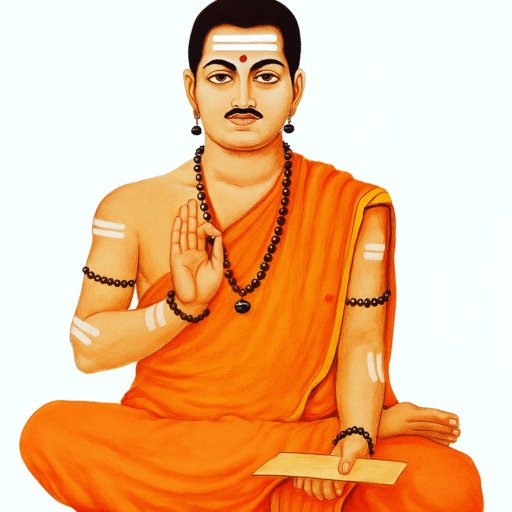

Poetic Rendering

Do not call me poor, Lord,
for I have no elephants, no treasure halls,
no horses stamping in their pride.
What poverty is that?
Once, I chased after a worldly bride,
wandering in desire
but that longing is dead now.
If ever I return to such dust,
let me be chained to my folly.
But if today I turn away a sharana in need,
then, O Kudalasangamadeva,
let my very life be reduced to dust.
Basavanna rejects the idea that material possessions define wealth. True poverty is not the lack of elephants or gold, but the presence of worldly craving and the failure to serve fellow sharanas. Worldly desire, once pursued like a “bride,” is now abandoned; real wealth lies in open-hearted service. To refuse a sharana is to fall into spiritual ruin, while generosity is the true treasure in the eyes of Kudalasangamadeva.
Spiritual Context
Core Spiritual Principle: True wealth is measured not by what one possesses, but by one’s capacity for selfless giving (Dasoha). The ultimate spiritual poverty is not a lack of material things, but a closed heart that refuses to share. The community of seekers (Sangha) is the true treasury.
Cosmic Reality Perspective: The Linga is the owner of all (Sarva Loka Maheshvara). Everything, including one’s wealth, is a temporary custodianship. To hoard is to deny this fundamental truth. To share is to align with the divine nature of boundless giving.
Historical Reality (Anubhava Mantapa context):This vachana establishes the economic ethos of the Lingayat community. It creates a society where social status is inverted: the most “wealthy” are the most generous, and the greatest sin is not poverty, but miserliness towards a fellow seeker. It ensures the community’s self-sustenance through mutual aid.
Interpretation
1. Rejection of Worldly Wealth: “elephants, treasure halls, horses” were the ultimate symbols of royal power and status in his time. By dismissing these, Basavanna severs the link between value and material display.
2. The Death of Desire: “that longing is dead now.” This indicates a profound inner transformation (Vairagya). The “worldly bride” is a metaphor for all external objects of craving. Their death is the birth of true freedom.
3. The Twofold Self-Curse: This is the most powerful part of the vachana, revealing his hierarchy of values.
Curse 1: For reverting to worldly desire: “let me be chained to my folly.” This is a curse of stagnation. It says, “If I fall back into ignorance, let me be trapped there, so I may learn the lesson fully.”
Curse 2: For refusing a Sharana: “let my very life be reduced to dust.” This is a curse of annihilation. It is exponentially more severe. Refusing a Sharana is not a regression; it is a active betrayal of the highest spiritual truth and the community’s sacred bond. It is a sin against the Divine present in the other.
4. The Implied Wealth: The unstated conclusion is that his true wealth is his awakened heart, his freedom from desire, and his unwavering commitment to Dasoha. This is the wealth that makes him rich in the eyes of God.
Practical Implications: The seeker must perform a personal audit: “Where is my treasure? In my bank account or in my capacity for generosity?” The practice is to give joyfully and to see every request as a divine opportunity to practice the highest virtue.
The Cosmic Reality
Anga (Human Dimension): The individual as a steward of resources. The transformed Anga sees itself not as an owner but as a channel for divine abundance.
Linga (Divine Principle): Kudalasangama Deva as the source of all abundance and the ultimate recipient of all offerings (through service to the Jangama).
Jangama (Dynamic Interaction): The Jangama (the Sharana in need) is the dynamic point where the spiritual principle of Dasoha is tested and enacted. Serving them is the practical worship that completes the sacred circuit between the Anga and the Linga.
Shata Sthala
Primary Sthala: Sharana. This vachana is the voice of a true Sharana, whose identity is so merged with the Sangha that their personal survival is less important than the integrity of the communal bond of service.
Supporting Sthala: Maheshwara. The fierce intensity of the self-curse reflects the absolute resolve and spiritual warriorhood of the Maheshwara stage.
Practical Integration
Arivu (Awareness): Cultivate the awareness that your possessions are not yours, but are resources entrusted to you by the Divine to be used for the well-being of all, especially your spiritual family.
Achara (Personal Discipline): Make it a non-negotiable rule to never turn away someone in genuine need, particularly a fellow seeker. Let your first impulse be “how can I help?” not “can I afford it?”
Kayaka (Sacred Action): Use your profession to generate not just personal income but a “Dasoha fund” resources specifically set aside for charitable giving and supporting the spiritual community.
Dasoha (Communal Offering): This vachana is the doctrine of Dasoha. Live it by being the first to give and the last to take. Your generosity becomes the living proof of your spiritual wealth.
Modern Application
We live in a culture that equates net worth with self-worth. We are taught to hoard, invest, and secure our future, often at the expense of present generosity. This leads to a mindset of scarcity, anxiety about money, and a life that is financially rich but spiritually impoverished.
This vachana liberates us from the anxiety of scarcity. It redefines security, showing that true security lies not in a large bank balance but in a generous heart and a supportive community. It invites us to experience the joy and freedom of giving, transforming our relationship with money from one of fear to one of trust and flow. It is the path from being a anxious owner to becoming a joyful instrument of divine abundance.
Essence
Call me not poor for lacking gold,
A greater wealth my heart does hold.
But if I shut my door, my hand,
Then let me be the barren sand.
Metaphysically, this vachana deals with the concept of Moha (attachment) and Tyaga (renunciation). Worldly wealth strengthens Moha. The “death of longing” is the state of Vairagya . However, Basavanna takes it a step further: the highest renunciation is not just non-possession, but the active redistribution of wealth as Dasoha. The self-curse is a powerful Sankalpa (spiritual resolve) that creates a karmic firewall against the two greatest failures: regression into ignorance (Moha) and active betrayal of the path (refusing Dasoha). This Sankalpa aligns his individual will with the cosmic will of the Linga, which is endless giving.
Your legacy will not be what you kept for yourself, but what you gave away to others. The richest life is a life of open-handed generosity. Measure your success not by your acquisitions, but by your contributions. The most profound poverty is a closed heart.

Views: 0