

Summary
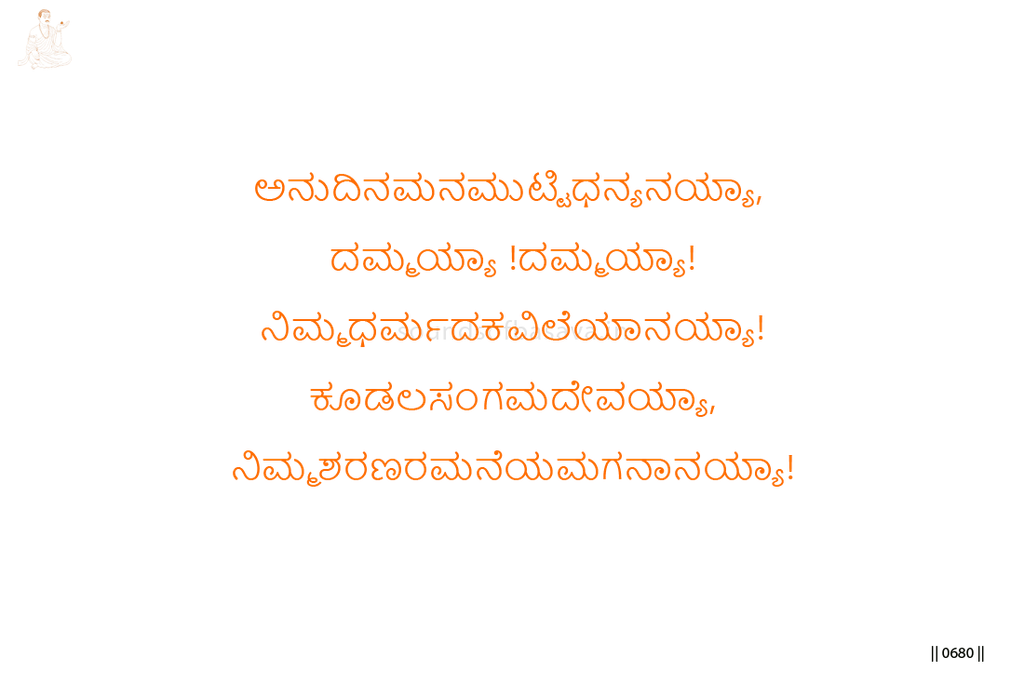
In this vachana, Basavanna says that day after day his heart is touched, and he is blessed.
He cries, “Mother, Mother,” and places himself as a small bird in Kudalasangama Deva’s Dharma.
He ends by naming his true belonging: he is the child of the house of the Lord’s Sharanas.
Imagery & Symbolic Relevance
Day after day is the first movement. The blessed state is not momentary; it is renewed continually.
The heart being touched gives the inward sign. Basavanna speaks from gratitude that has entered the mind and heart.
The repeated cry, “Mother, Mother,” brings tenderness into the vachana. The seeker does not stand before Dharma as a claimant, but as one nourished and sheltered.
The bird in the grove of Dharma is the central image. The bird is small, living, and dependent on the place that shelters it.
Kudalasangama Deva’s Dharma is the sustaining field. It is not merely rule or instruction; it is the living ground in which the seeker is kept.
The child of the Sharanas’ house is the final identity. Basavanna does not stand outside as observer or guest. He belongs inside the house of Kudalasangama Deva’s Sharanas.
Lingayoga
In Lingayoga, this vachana teaches practice through gratitude and belonging.
The practice-point is direct: let the heart be touched daily by Dharma, and live as one sheltered in the house of Kudalasangama Deva’s Sharanas.
For Sharana Sthala, this is childlike belonging in the Sharana household.
Editorial Commentary
The tenderness of the vachana is important. Basavanna has already spoken of service, burden, and visible humility; here the mood becomes grateful and sheltered. The child-image completes the movement from servanthood into belonging.
Related Vachana
Supporting Vachana
Pranalingi Sthala Vachana 742 — The Three Houses
Pranalingi Vachana 742 supports this teaching by showing Basavanna entering Māḍara Chennayya’s house, partaking of simple ambali, and living without pride. Vachana 358 gives the Sharana form of that nourishment: the seeker is no longer merely fed in the house of a Sharana, but lives as the child of Kudalasangama Deva’s Sharanas’ house.
Advancing Vachana
Aikya Sthala Vachana 1203 — The Cry of the Child
Aikya Vachana 1203 advances this teaching through the mother-child image, where the crying of the child is felt by the mother herself. Vachana 358 cries “Mother, Mother” and stands as the child of the Sharanas’ house; Aikya Vachana 1203 carries that tenderness into union, where the relation between the seeker and Kudalasangama Deva becomes inseparable intimacy.
