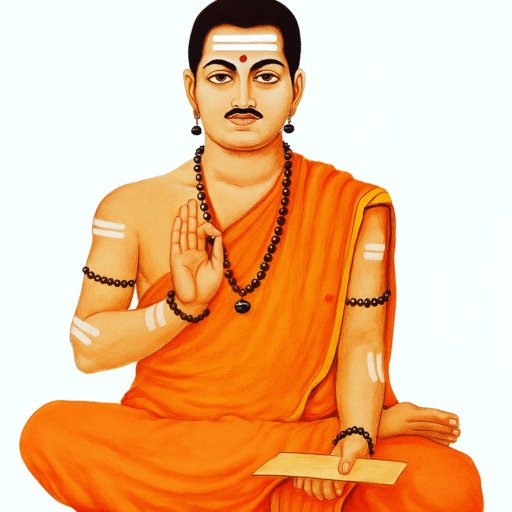

Poetic Rendering

Call him an outcaste who kills
but know this:
the one who devours others through harsh words,
cruel thoughts, or harmful intentions
is the greater outcaste still.
What worth is lineage without virtue?
What value is a family without compassion?
Those who nourish every being with goodwill,
who wish for the welfare of all
they alone are the true kin,
the rightful lineage of Kudalasangamadeva.
This vachana shifts the idea of purity and caste from birth and lineage to inner character and compassion. Basavanna challenges traditional judgments that condemn only those who shed physical blood, declaring that harming others through words, thoughts, or intentions is equally if not more destructive. True lineage is not inherited but earned through kindness and the commitment to uplift all beings. The ones who genuinely wish well for every soul embody the heart of spiritual community and become the true family of Kudalasangamadeva. Compassion, not ancestry, defines sacred belonging.
Spiritual Context
Core Spiritual Principle: Ethics as the true measure of spirituality. Your spiritual standing is determined not by your birth but by the quality of your consciousness as expressed through your thoughts, words, and deeds toward all beings. Compassion (karuna) is the active expression of non-dual awareness, recognizing the one divine life in all.
Cosmic Reality Perspective: This vachana reflects the all-pervasive, non-discriminating nature of Shiva. If Shiva is in all, then to harbor ill-will toward any being is to harbor ill-will toward a manifestation of Shiva. The “lineage of compassion” is thus the lineage of those whose consciousness is aligned with this non-dual reality, who see Shiva in everyone and act accordingly. Harmful thoughts create a vibrational dissonance with this unified field.
Historical Reality (Anubhava Mantapa Context): This is one of Basavanna’s most direct and powerful attacks on the caste system. It completely invalidates the concept of ritual purity and pollution based on birth. By defining the true “outcaste” as one with a harmful heart, he turns the social hierarchy on its head. It establishes the Lingayoga community as a new kind of family, bound not by blood but by a shared commitment to universal compassion and ethical conduct.
Interpretation
“Call him an outcaste who kills but know this: the one who devours others through harsh words… is the greater outcaste still.” This expands the definition of violence from the physical (sthula) to the subtle (sukshma). Mental and verbal violence is “greater” because it is more pervasive, often goes unpunished, and poisons the very source of interaction the mind.
“What worth is lineage without virtue? What value is a family without compassion?” These rhetorical questions dismantle the foundations of hereditary privilege. They state that an ethical life is the only true inheritance that matters; without it, noble birth is worthless.
“Those who nourish every being with goodwill… they alone are the true kin, the rightful lineage…” This establishes the new criterion for belonging. The “lineage of Koodalasangamadeva” is a spiritual aristocracy open to all, based solely on the active practice of maitri (loving-kindness) and karuna (compassion).
Practical Implications: The practitioner must engage in constant vigilance over their inner world. Spiritual practice is not just meditation but the active cultivation of benevolent thoughts, kind speech, and helpful intentions toward all, without exception.
The Cosmic Reality
Anga (Human Dimension): The Anga is the instrument that must be purified of all forms of violencephysical, verbal, and mental. Its sacred purpose is to become a conduit for compassionate energy, thus proving its belonging to the divine lineage.
Linga (Divine Principle): The Linga is the heart of compassion itself. Koodalasangamadeva is not a tribal god but the universal source of love. To be in this lineage is to have your heart beat in rhythm with this unconditional, inclusive love.
Jangama (Dynamic Interaction): The Jangama is the active, moment-to-moment choice to bless rather than curse, to help rather than hinder, to include rather than exclude. It is the dynamic process of “wishing for the welfare of all” that weaves an individual into the living fabric of the divine lineage.
Shata Sthala
Primary Sthala: Sharana (Total Refuge) Taking refuge means entering this “lineage of compassion.” A Sharana is one who has taken refuge in the principle of universal goodwill, and whose life is a testament to this commitment, severing ties with all exclusionary, birth-based identities.
Supporting Sthala: Bhakta (Devotee) The sincere Bhakta is one who aspires to this ideal. Their devotion is expressed not only in worship but in the earnest effort to uproot harmful tendencies and cultivate a heart of compassion for all of God’s creation.
Practical Integration
Arivu (Awareness Practices): Practice the “Compassion Scan.” Several times a day, check your mental activity. Are you harboring resentment, judgment, or ill-will toward anyone? Consciously replace those thoughts with a wish for their well-being.
Achara (Personal Discipline): Make right speech (satyam and ahimsa in communication) a core discipline. Pause before speaking to ensure your words are truthful, necessary, and kind. Extend this discipline to your digital communications.
Kayaka (Sacred Action): Ensure your work contributes to the welfare of others and does not cause harm. Let your profession be an expression of your commitment to nourishing every being.
Dasoha (Communal Offering): Build a community that actively practices this inclusive compassion. Make it a safe haven where everyone is seen as true kin, and where the community’s collective resources are used to “nourish every being with goodwill.”
Modern Application
Our world is fractured by ideological warfare, online hate speech, cancel culture, and deep social and political divisions. We often condemn “monsters” on the other side while being blind to the subtle violence in our own thoughts, words, and digital interactions. This creates a culture of toxicity and alienation.
This vachana provides the antidote to modern polarization. It calls us to a higher standard: to judge ourselves and others not by identity groups or inherited status, but by the quality of our compassion. It challenges us to build communities and a society based on this inclusive, active goodwill, breaking the cycles of hatred and creating a world where everyone can belong.
Essence
The killer’s branded, cast outside,
But who condemns the hate inside?
The cruel thought, the cutting word,
A sharper, more unseen sword.
No name, no birth, can truly bless,
Like a heart of kindliness.
The Deeper Pattern: This vachana describes a topological transformation of social and spiritual space. Caste and lineage create a space with rigid, inherited boundaries. Basavanna maps this onto a new topology where the only boundary is between compassion and harm. In this new space, anyone, from any background, can be a “nearest neighbor” to the Divine by embodying compassion, while those who cause harm, regardless of birth, are the most “distant.”
In Simple Terms: It is like redefining a “prestigious family.” The old definition is based on a dusty family tree locked in a vault. The new definition is based on a living tree that provides shade, fruit, and shelter to all who come near, regardless of who they are. The value of the tree is in its present, life-giving activity, not its past.
The Human Truth: The deep human need is to belong and to be considered “good.” We often try to meet this need by clinging to exclusive groups and looking down on others. The timeless truth here is that the only belonging that ultimately satisfies is one based on our shared capacity for love. The only “goodness” that counts is the active, practical goodness we extend to all beings. This is the lineage that truly honors the Divine in everyone.

Views: 6