

Summary
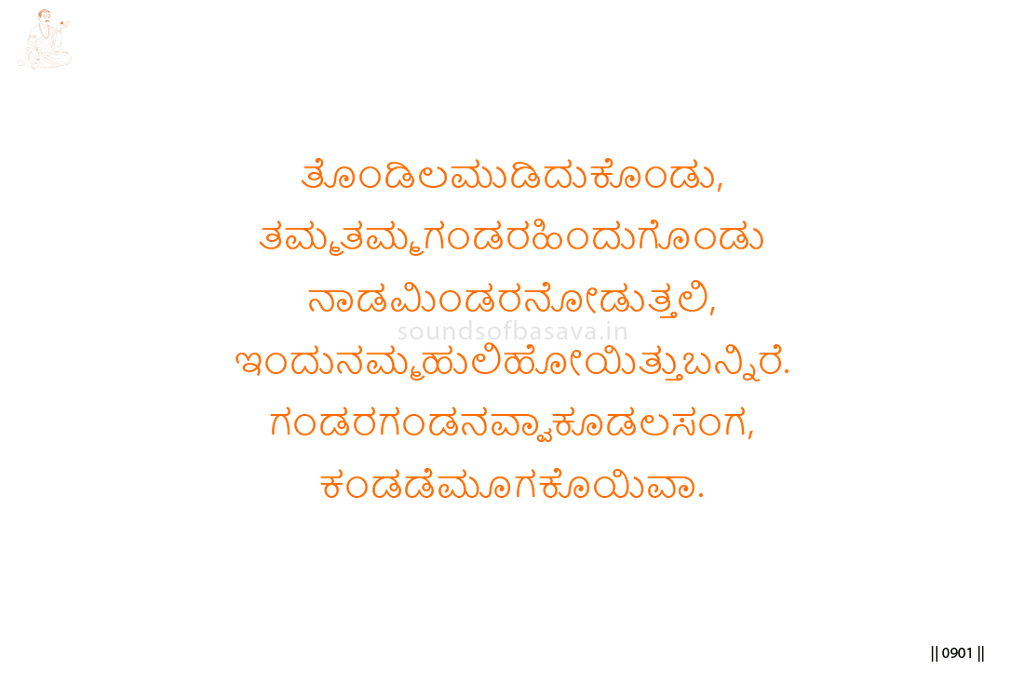
Basavanna exposes the emptiness of second-hand spiritual excitement. People may decorate themselves, follow the expected social path, watch the local claimers, and cry out, “Come, today our tiger has passed this way.” Yet proclamation is not realization.
The tiger is the central image of power, immediacy, and danger. It cannot be possessed by rumor, display, or public announcement. To say that the tiger has passed is not the same as seeing it.
The vachana then turns sharply to Kudalasangama, the Husband of husbands. If He is truly seen, He cuts the nose. True seeing does not strengthen pride; it destroys the face of false dignity.
The teaching is therefore severe but exact. False claimers speak loudly about what has passed. True seeing leaves no room for spiritual display. The one who truly sees Kudalasangama Deva is stripped of the pride that says, “I have seen.”
Imagery & Symbolic Relevance
The first image is flowers worn in the hair. Flowers may belong to devotion, beauty, and worship, but here they also suggest outward preparation and visible religious appearance.
The second image is following behind one’s own husband. This shows outward conformity to an accepted relation. The movement appears proper from outside, but Basavanna immediately complicates it.
The third image is looking at the local false claimers. The eye has turned toward those who perform, announce, and attract attention. The danger is not ordinary seeing, but fascination with spiritual pretension.
The fourth image is the cry, “Come, today our tiger has passed.” This is the voice of second-hand excitement. Something powerful is spoken of, but not inwardly known. The tiger has already passed; only the proclamation remains.
The tiger signifies the living force of realization. It is not a tame object, not a doctrine, and not an ornament of religious speech. One cannot capture it by saying that it came this way.
The phrase “Husband of husbands” gives Kudalasangama Deva the final authority over all lesser claims and relations. Before Him, borrowed excitement and false seeing cannot stand.
The cutting of the nose is the decisive image. The nose suggests pride, honor, social face, and self-importance. If Kudalasangama is truly seen, that pride is cut away. True seeing does not produce display; it destroys the one who would display.
Lingayoga
In Lingayoga, this vachana teaches the difference between proclamation and direct seeing. The seeker must not mistake outward decoration, religious excitement, or repeated claim for realization.
For Sharana Sthala, the practice-point is direct: do not announce the tiger’s passing if you have not seen. Do not follow spiritual performers whose strength lies in display. Let the need to proclaim be cut.
The real test is not whether one can speak of Kudalasangama Deva, but whether seeing Him has removed pride. Where the nose of self-importance remains intact, the seeing is still suspect.
Editorial Commentary
The tiger image should remain sharp and concrete. It should not be softened into a general symbol of inspiration. Basavanna contrasts loud announcement with direct seeing. The final cutting of the nose is not incidental; it is the sign that genuine realization destroys spiritual pride and public self-display.
Related Vachana
Supporting Vachana
Pranalingi Sthala Vachana 979 — Without Experience, Nothing Ripens
Pranalingi Vachana 979 supports this teaching by making Anubhava the test of Bhakti, Linga, Prasada, and knowledge. There, Basavanna says that without Anubhava nothing can be rightly known, and that Divine Anubhava cannot be reduced to the churning of words. This prepares Vachana 1208 directly. In Vachana 979, speech and association are insufficient without lived inward realization; in Vachana 1208, Basavanna exposes those who loudly proclaim the tiger’s passing while lacking the direct seeing that cuts pride before Kudalasangama Deva.
Advancing Vachana
Aikya Sthala Vachana 1383 — Where Is Anubhava?
Aikya Vachana 1383 advances this teaching by testing realization through transformation rather than claim. There, Basavanna asks where Anubhava can be if self-praise, slander, falsehood, pride, jealousy, and the inner enemies remain. This is the natural Aikya fulfillment of Vachana 1208. In Sharana Vachana 1208, the false claimant announces the tiger without being transformed by seeing; in Aikya Vachana 1383, Anubhava is shown to exist only where the claimant has been purified and the marks of pride no longer remain before the Sharanas of Kudalasangama.
