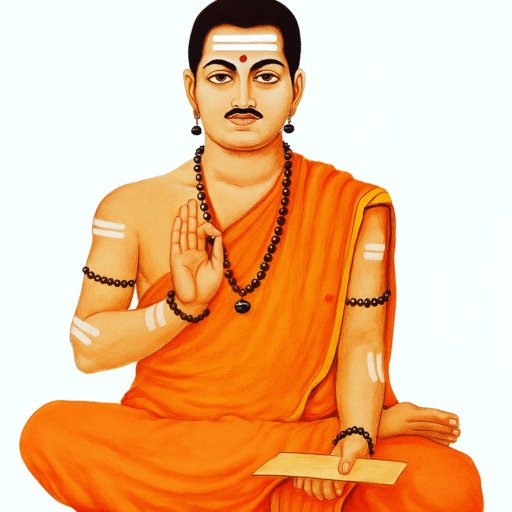

Poetic Rendering

In waking, in dream, in deep sleep
if I think of another, strike me down!
In laughter, in joy
if I forget you, strike me down!
If ever I turn from you,
O Koodalasangama,
let punishment fall upon me!
This vachana is Basavanna’s fiery vow of exclusive devotion. It moves beyond gentle remembrance to a passionate, uncompromising demand for constant, unbroken awareness of the Divine. He defines spiritual failure not as a moral lapse, but as the simple act of forgetting Shiva, even for a moment. For Basavanna, every thought, emotion, or experience that does not originate in and return to the Divine is a form of self-betrayal, a “wound to the soul.” This is the ultimate expression of the Bhakti path: a love so intense that any separation from the Beloved is perceived as a living death.
Spiritual Context
Core Spiritual Principle: True devotion is not a part-time observance but an all-consuming, uninterrupted state of consciousness. The highest spiritual discipline is to maintain unbroken awareness of the Divine (Shiva) across all states of being and all human experiences.
Cosmic Reality Perspective: This is a non-dual imperative from the perspective of the individual soul (Anga). It recognizes that the only reality is Shiva (Linga), and any perception of “another” is a fundamental error (Maya) that creates the suffering of separation. The vachana seeks to burn away this tendency toward duality through the fire of one-pointed devotion.
Historical Reality (Anubhava Mantapa Context): In a religious landscape often dominated by ritualistic and transactional piety, Basavanna redefines devotion as an internal, relentless, and deeply personal commitment. This vachana sets a radical standard for the Sharanas, emphasizing that spiritual integrity means allowing no other allegiance social, ritual, or personal to compete with the direct experience of the Divine.
Interpretation
“In waking, in dream, in deep sleep…”: This tripartite structure claims the entirety of the subtle and causal bodies for the Divine. It is a vow to colonize consciousness itself with the presence of Shiva, leaving no domain for the autonomous ego to operate.
“In laughter, in joy…”: This is the most profound insight. The enemy of remembrance is not only suffering but also secular joy, which can delude the soul into a temporary sense of completeness without God. The prayer is for protection from this subtle form of spiritual pride.
“Strike me down!… let punishment fall upon me!”: This is not masochism but the highest form of spiritual self-interest. The “punishment” of divine correction is understood as a merciful intervention, a painful but necessary grace to realign the soul with its source, which is far preferable to the slow, soul-wounding death of forgetfulness.
Practical Implications: The path of Lingayoga requires constant self-vigilance (Arivu). It is a commitment to continually redirect one’s attention from the myriad objects of the world back to the singular Subject, the Ishtalinga, until that redirection is no longer necessary because the union is permanent.
The Cosmic Reality
Anga (Human Dimension): The devotee who experiences the fluctuating states of consciousness and the seductive pull of worldly attachments and identities. The Anga here is acutely aware of its own fragility and propensity to wander.
Linga (Divine Principle): The principle of absolute, undivided Awareness. The Linga is the only “real” substance; all else is a fleeting appearance within it. To be outside this awareness is to be in a state of unreality.
Jangama (Dynamic Interaction): The fierce, loving tension of the relationship. It is the grace that “strikes down” forgetfulness, the vigilant prayer that acts as a constant check, and the transformative process by which the Anga’s consciousness is purified of all “otherness” until it rests stably in the Linga.
Shata Sthala
Primary Sthala: Bhakta This vachana is the quintessential expression of the Bhakta stage, characterized by intense emotional fervor (bhakti) and a sense of personal relationship with the Divine. The language is not yet that of serene union (Aikya) but of a lover desperately fearing separation from the Beloved.
Supporting Sthala: Maheshwara The intensity of the Bhakta’s devotion is proportional to their understanding of Shiva’s supreme, all-pervading nature (Maheshwara). One only demands total remembrance because one has recognized the totality of the Divine. The devotee’s vow mirrors the greatness of the Lord.
Practical Integration
Arivu (Awareness Practices): Practice the moment-to-moment mindfulness of “Is this thought, feeling, or sensation taking me closer to the awareness of Shiva or away from it?” Use the Ishtalinga as a constant touchstone for reality-checking throughout the day.
Achara (Personal Discipline): Create personal vows (vratas) of remembrance. This could be a commitment to mentally offer every meal, every conversation, and every task to Koodalasangamadeva before engaging in it, ensuring no action is “outside Shiva.”
Kayaka (Sacred Action): Infuse your work with this spirit of vigilance. See your labor as an active form of remembrance. When distraction arises, view it as the “other” and gently but firmly return your focus to the sacred nature of the action itself.
Dasoha (Communal Offering): Offer the gift of this profound teaching to the community. Remind fellow seekers that the goal is not just ethical living but radical, unbroken consciousness of the Divine, and support each other in this demanding but Liberative practice.
Modern Application
We live in an age of perpetual distraction the “attention economy” that deliberately fragments our awareness across a thousand different digital, professional, and social demands. This creates a shallow, reactive consciousness, constantly “thinking of another,” and thus perpetually wounded, never whole.
This vachana is an antidote to the fractured modern self. It calls for a “digital dasoha” a conscious withdrawal of attention from the trivial and a radical re-investment of it in the foundational reality (Shiva). It teaches that mental clutter is not just inefficient but soul-damaging, and that single-pointed focus on the Divine is the ultimate cure for existential anxiety and fragmentation.
Essence
Let no breath be separate,
No joy a forgetful island.
If my heart wavers,
O Union itself, shatter the illusion!
This vachana describes the fundamental quantum of spiritual energy: a “bit” of consciousness is either coherent (aligned with the Linga/Singularity) or decoherent (scattered into the world of “others”). From this perspective, every decoherent thought is a literal wound, a loss of energy and integrity from the system of the soul, moving it from a state of pure potential (Shiva-consciousness) to a collapsed, limited identity.
Imagine your mind is a perfectly tuned radio receiving a single, beautiful, all-encompassing signal (Shiva). Every thought “of another” is like tuning to a different station full of static. The static isn’t just noise; it actively hurts the sensitive receiver you are. Basavanna is praying, “If I ever change the station, break my dial so I can only ever hear You!”
The universal human experience is the pain of a divided heart and a distracted mind. We seek wholeness but are pulled in a million directions. This vachana names the cause and offers the cure: wholeness is found not in managing the distractions, but in a fierce, uncompromising commitment to the One Source from which all else emanates. Any deviation from this is self-betrayal.

Views: 6