Poetic Rendering

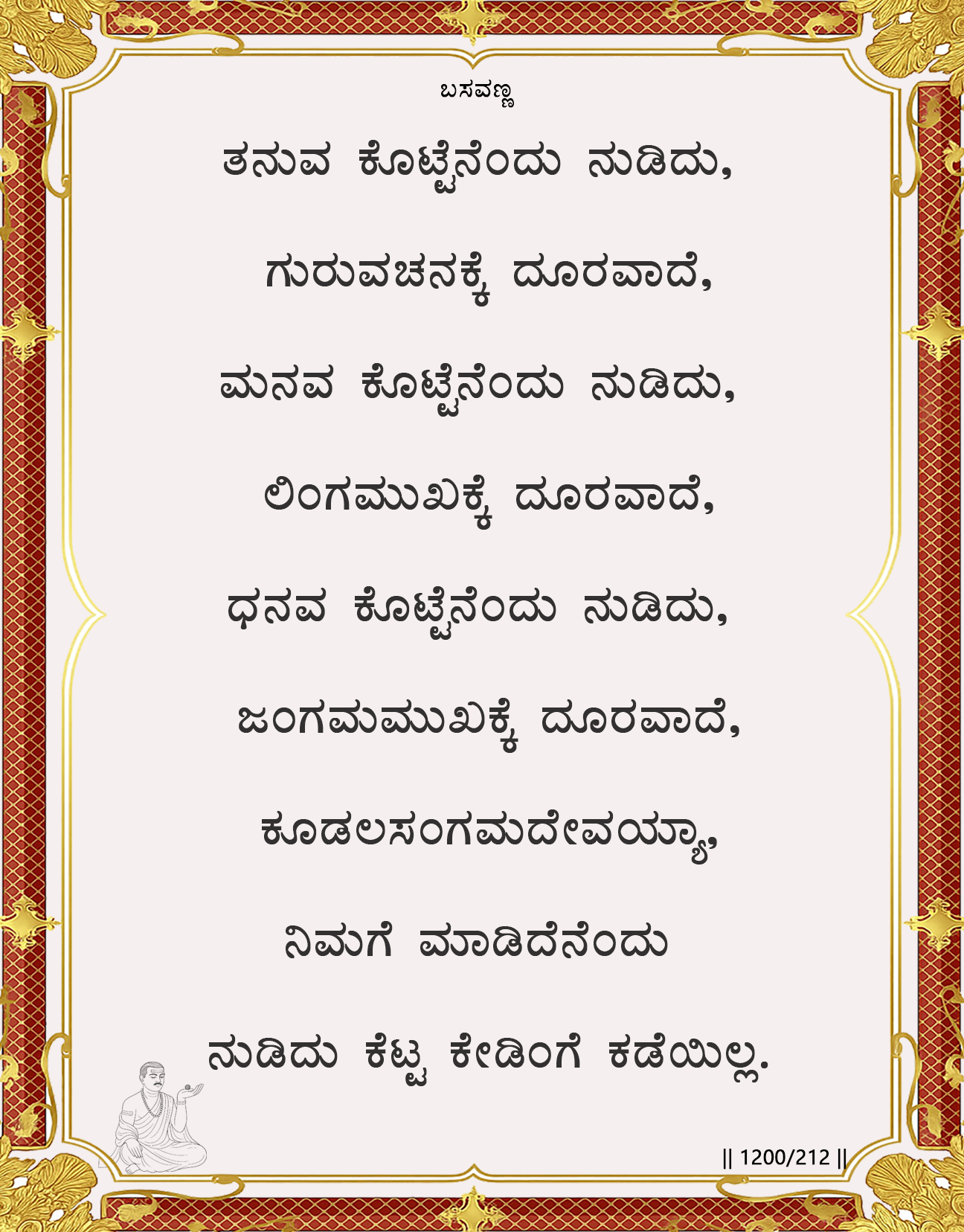
“I offered my body,” I say
but if my mind strays from the Guru’s word,
that single thought of giving
builds a wall within me.
“I offered my mind,” I say
but if I lose sight of the Linga within,
the memory of my offering
becomes the veil that hides You.
“I offered my wealth,” I say
but the moment ‘mine’ arises again,
the gift dissolves,
and I bind myself once more.
O Kudalasangama
the very notion I have given
is the subtlest deceit,
for the instant the mind claims the act,
giver and receiver appear as two
though they have never been separate.
What offering remains to boast of,
when nothing is mine,
and all has always been Yours?
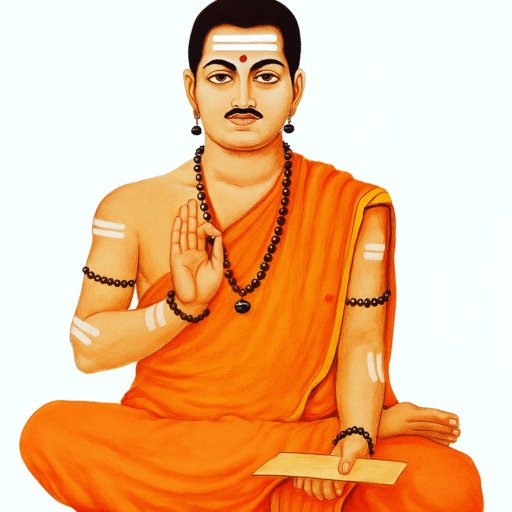
Basavanna teaches that true offering is silent and egoless. The moment one remembers, “I gave,” the ego arises and creates the illusion of separation between giver and receiver. All offerings done with the sense of “I” are false because they originate in ownership yet nothing ever belonged to us; it is the Divine who is both the giver and the receiver. Real surrender occurs only when the mind does not claim the act, for then the unity of Guru, Linga, Jangama, and self remains unbroken.
Spiritual Context
Core Spiritual Principle: The final barrier to liberation is not the body or the world, but the subtlest notion of a spiritual “I” that claims ownership of spiritual actions. True surrender (atma-nivedana) is the offering of the very sense of being the offeror. In reality, the Divine is the only giver, the only receiver, and the gift itself.
Cosmic Reality Perspective: From the absolute (pāramārthika) standpoint, only Shiva exists. All actions, including the act of surrender, are modifications of the divine energy (Shakti). For the individual soul to claim, “I surrender,” is for a wave to claim, “I am offering myself to the ocean.” It is a logical absurdity that reveals a residual ignorance.
Historical Reality (Anubhava Mantapa Context): This vachana represents the ultimate refinement of the Lingayoga path. After establishing the necessity of the threefold offering (Vachana 211), Basavanna now deconstructs the very psychology of offering to prevent the seeker from building a spiritual identity around it. It ensures that the path of action (Kriya) culminates in the wisdom (Jnana) of non-doership.
Interpretation
“‘I offered my body,’ I say but if my mind strays… that single thought of giving builds a wall”: The initial claim of offering is immediately negated by the mind’s subsequent straying. The “wall” is the duality re-established by the memory of being the giver, which separates the self from the Guru’s ongoing presence.
“the very notion I have given is the subtlest deceit”: This is the core revelation. The deceit is not in the action, but in the foundational thought “I gave.” This thought is the seed of the ego, creating the triad of giver, gift, and receiver where only unity exists.
“What offering remains to boast of, when nothing is mine, and all has always been Yours?”: This rhetorical question points to the absolute truth. The entire drama of offering is predicated on the false premise of ownership. When this premise is seen through, the question of offering becomes moot. All that remains is the recognition of what is.
Practical Implications: The highest practice in Lingayoga is to perform all actions service, worship, charity with such total absorption that the sense of a separate doer does not arise. The action should flow as naturally as breathing, without leaving a trace of “I did this” in the mind.
The Cosmic Reality
Anga (Human Dimension): The sense of being a discrete entity that performs actions and makes offerings. This is the final vestige of ignorance to be surrendered.
Linga (Divine Principle): The sole reality and the only true Agent (Karta). It is the source from which the impulse to offer arises and the ground into which the act dissolves.
Jangama (Dynamic Interaction): The spontaneous, unselfconscious flow of life and service. It is action purified of the actor, the final state where the Anga has become a perfectly transparent instrument for the Linga, leaving no residue of a separate self.
Shata Sthala
Primary Sthala: Aikya The perspective of this vachana is that of accomplished union. It is not advising how to offer, but exposing the illusion inherent in the concept of offering from the standpoint of one who abides in non-dual awareness, where giver, giving, and gift are one.
Supporting Sthala: Maheshwara The intellectual and discerning power to understand this subtle truth is the function of Maheshwara. This stage involves the “great” (maha) analysis that deconstructs all spiritual concepts, preparing the ground for the silent, conceptualess state of Aikya.
Practical Integration
Arivu (Awareness Practices): Practice witnessing the arising of the thought “I am doing this” during service, meditation, or giving. See it as the final obstacle, a ghost claiming ownership of a life that is not its own. Let the action continue without reinforcing this thought.
Achara (Personal Discipline): Cultivate the discipline of “forgetting the good.” After performing a virtuous act, consciously release it from your memory. Do not allow it to become part of your spiritual resume. Let your inner state be one of not-knowing what good you have done.
Kayaka (Sacred Action): Engage in your work so fully that you disappear into it. The ideal Kayaka is one where only the work is visible, not the worker. This is the practical embodiment of non-doership.
Dasoha (Communal Offering): In the community, foster a culture where actions are valued, but actors are not celebrated. Let the focus be on the collective well-being and the divine principle being served, not on the individuals contributing to it.
Modern Application
In an age of curated social media personas and the commodification of mindfulness, the ego has become adept at spiritual branding. We track our meditation streaks, publicize our charity, and build identities around “conscious living,” thereby strengthening the very ego that spirituality aims to transcend.
This vachana offers the ultimate freedom from spiritual performance. It invites us to act ethically, serve compassionately, and meditate deeply, but to do so anonymously, even to ourselves. It liberates us into the joy of action for its own sake, without the need for a self-congratulatory narrative. This is the path to authentic, unshakeable peace, found only when the need to be a “somebody” even a spiritual somebody is finally extinguished.
Essence
The wave cannot offer itself to the sea.
The sun cannot give light to the sky.
I, who was never other than You,
what could I possibly give?
There is only You, giving to Yourself.
The claim “I offered” is a meta-error. It is the fundamental consciousness waveform (the Linga/Unified Field) momentarily patterning itself into a localized, self-referential knot (the ego/Anga) that then claims to be interacting with the field from which it arose. This is a logical and ontological impossibility. True offering is the dissolution of this localized knot, allowing the energy that was bound up in it to simply rejoin the field without a trace a process of energetic recalibration rather than a transaction.
Imagine the universe is a single, vast body of water. An offering is like a whirlpool forming and moving a pebble from one part of the riverbed to another. For the whirlpool to then say, “I moved that pebble,” is absurd. The whirlpool is just a temporary pattern of the water, and the movement of the pebble was an action of the water upon itself. The enlightened view is to see only the water.
The desire to be the “author” of our lives and virtues is our deepest conditioning. This vachana points to the breathtaking freedom on the other side of this conditioning: the realization that we are not the limited authors of a small story, but are the boundless awareness in which all of life’s story is spontaneously unfolding. This is the end of the burden of selfhood and the beginning of true, effortless being.

Views: 9