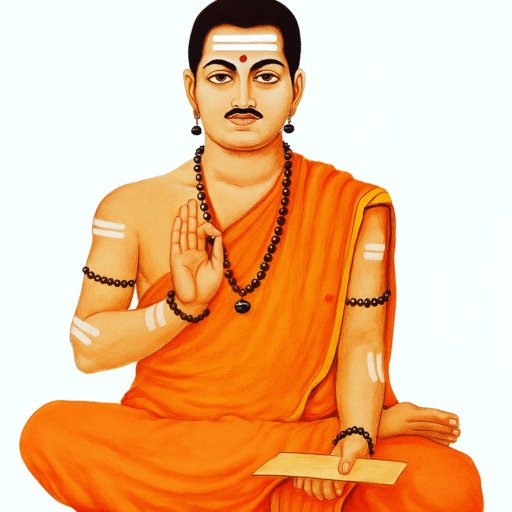

Poetic Rendering

Clay must exist before the pot can be shaped;
gold must shine before ornaments can be made.
So too, before one walks the path of Shiva,
the Guru must arise within one’s life.
And before knowing Koodalasangama himself,
one must first dwell in the fellowship
of those who already burn with His truth.
In this vachana, Basavanna illuminates the sacred sequence underlying all transformation both material and spiritual. Just as clay comes before the pot and gold before jewelry, the subtle foundation of spiritual life must precede its flowering. This is not a hierarchy of authority but a recognition of cosmic order: substance precedes form, essence precedes expression, preparation precedes realization. The Guru represents the catalytic presence the one who awakens what already sleeps within the seeker. Before one can know Koodalasangama, the Infinite, Basavanna insists on the necessity of satsanga living companionship with saints and seekers whose hearts are already aligned with truth. Thus this vachana affirms that spiritual realization is not sudden or accidental; it unfolds according to a sacred inner order that begins with guidance and fellowship, culminating in direct union with the Divine.
Spiritual Context
Core Spiritual Principle: The Law of Spiritual Causality (Sādhanā Krama Nyāya). Genuine transformation follows an intrinsic, developmental logic. Inner readiness (adhikāra) is not arbitrary but is cultivated through specific causes and conditions, primarily authentic human connection with those further on the path.
Cosmic Reality Perspective: This is a non-dual understanding of spiritual evolution. The Shiva-Shakti dynamic is seen in the relationship between the unmanifest potential (Shiva as clay/gold) and the manifesting power (Shakti as the potter’s hands, the goldsmith’s craftembodied by the Guru and satsangha). The One reality manifests the many (teachers, community) to guide the many back to conscious unity with the One.
Historical Reality (Anubhava Mantapa Context): This vachana served as the constitutional blueprint for the Anubhava Mantapa itself. It legitimizes the Guru-disciple relationship and sanctifies the community of seekers (Sangha) as essential institutions of the Lingayoga path. It countered solitary asceticism by asserting that realization happens through relationship, not by escaping it. The Mantapa was the living embodiment of the “fellowship of those who burn with His truth.”
Interpretation
1. “Clay must exist before the pot can be shaped; gold must shine before ornaments can be made.” This establishes the principle of primacy of substance over form. The “clay” and “gold” represent the seeker’s fundamental, albeit latent, divinity (ātman). The “pot” and “ornament” represent the realized statethat same divinity consciously expressed and fully functional. The form cannot be sustained without the substance; realization cannot be fabricated without the raw material of pure consciousness.
2. “Before one walks the path of Shiva, the Guru must arise within one’s life.” The “path of Shiva” is the structured journey of transformation. The Guru is not an external controller but the catalytic intelligence that recognizes the “clay” as clay and the “gold” as gold. The Guru provides the vision, the heat, and the skillful means (upāya) to shape and refine. “Arises within one’s life” suggests this meeting is a destined, grace-filled event in the soul’s journey.
3. “Before knowing Koodalasangama himself, one must first dwell in the fellowship of those who already burn with His truth.” Direct knowledge (jñāna) of the Divine is the culmination. The “fellowship” (satsangha) is the alchemical container where transformation occurs. It provides reflection, support, friction, and the living transmission of energy (śaktipāta). To “burn with His truth” is to be a living Jangama. Dwelling in such company tunes one’s frequency to the reality they seek to know.
Practical Implications: This demystifies the spiritual quest. It provides a clear, sequential map: First, seek genuine company (satsangha). Within that, recognize and surrender to a true guide (Guru). Then, walk the path they illuminate. It removes the pressure for instant enlightenment and validates the gradual, human dimension of awakening.
The Cosmic Reality
Anga (Human Dimension): The Anga is the potential awaiting actualization. Its role is to be receptive, humble, and diligentthe good clay that is pliable, the pure gold that is willing to be melted. The Anga must value the process (the shaping) as much as the product (the pot).
Linga (Divine Principle): Koodalasangama is both the source material and the finished masterpiece. The Linga is the essential “clay-ness” in all clay and the perfected “pot-ness” of the pot. The journey is from unconscious identification with form to conscious recognition of the essential substance, which is the Linga itself.
Jangama (Dynamic Interaction): The Guru and satsangha are the living Jangamathe divine in its dynamic, guiding, and formative aspect. They are not separate from the Linga but are its active intelligence in motion, working to awaken the Linga within the Anga. They represent spirituality as a transmitted, living flame.
Shata Sthala
Primary Sthala: Bhakta. This entire vachana describes the Bhakta stage’s necessary environment. The bhakta (devotee) is one who has found the Guru and entered the satsangha. Their devotion is the fire that melts the gold of their being, making it ready for the shaping hands of grace. Without these prerequisites, what is called bhakti may be mere sentiment.
Supporting Sthala: Maheshwara. The Maheshwara is one who sees the Great Lord in all. This vachana provides the developmental prerequisite for that vision: one must first learn to see the Great Lord in the Guru and in the sanctified community. This focused reverence prepares the consciousness for universal recognition.
Practical Integration
Arivu (Awareness Practices): Practice “Recognizing the Guru-Principle.” Look for the catalytic intelligence in your lifenot just in a person, but in moments, books, challenges, and relationships that awaken deeper understanding. Cultivate gratitude for these as forms of guidance.
Achara (Personal Discipline): Make the conscious choice to spend time in “fellowship that burns.” This might mean regularly attending a study group, serving in a community, or simply being in the presence of those whose integrity and devotion inspire you. Protect this time as sacred.
Kayaka (Sacred Action): Let your work be an offering to your Guru and satsangha. See your daily duties as part of the collective crafting of consciousness, contributing to the container that holds everyone’s transformation.
Dasoha (Communal Offering): Actively contribute to creating and sustaining authentic spiritual community. Offer your skills, resources, and presence to nurture a space where others can find the “fellowship” Basavanna deems essential. Be part of the “clay” for the community-pot.
Modern Application
The DIY Enlightenment Fantasy and Spiritual Loneliness. The modern myth of the self-made individual has infected spirituality, promoting the idea that one can awaken alone through apps, books, and isolated practice. This leads to stagnation, narcissism (“my unique journey”), and profound loneliness, as the essential container of satsangha is missing.
Re-Sacralizing Mentorship and Community. The practice of Shivayoga today requires consciously rebuilding the Guru-śiṣya and satsangha principles in new forms. It means seeking out mentors (not celebrities), committing to small, accountable practice communities, and valuing embodied transmission over informational consumption. It is to understand that your transformation is a communal project and to humbly accept your need for a guiding hand and a reflective community.
Essence
The seed does not debate the soil,
nor the sapling the rain.
It is the law of becoming:
the vessel is dreamed in the clay,
the path is born in the meeting of feet.
Do not ask for the fruit
while scorning the tree.
First, find the orchard
where the ripe ones glow.
Then you will know
what it is to be sun.
This vachana describes the holographic and fractal nature of spiritual transmission. The Guru (a realized fragment) contains the pattern of the whole (Linga). The satsangha is a holographic field where each member reflects and amplifies the divine pattern. The Anga (seeker) is a fragment that has forgotten its wholeness. By immersing in the holographic field (satsangha) and aligning with a clear fragment that remembers (Guru), the Anga’s latent wholeness is activated and remembered. The sequence is the method of downloading the complete pattern from a stable source.
You can’t learn a language from a dictionary alone. You need a teacher (Guru) to hear the pronunciation and correct you, and a class (satsangha) to practice conversation and build confidence. Only then can you finally “know” the language well enough to think and dream in it (union with Koodalasangama).
We are inherently social, mimetic beings. We become what we behold. Basavanna’s genius is to channel this fundamental human trait toward liberation, not bondage. We naturally look to others to learn how to be. This vachana directs that gaze wisely: look to those who are free to learn how to be free. Our deepest growth is always relational it happens in the space between souls where truth is mirrored, challenged, and reflected back until we recognize it as our own.

Views: 14