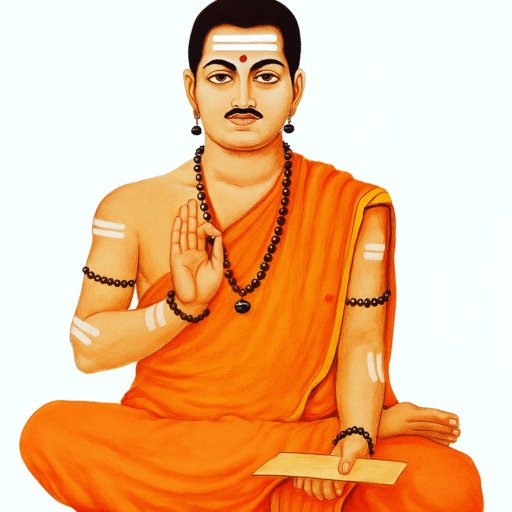

Poetic Rendering

When the living Linga dwells on your body,
you cannot bow to lifeless gods of stone.
Would one leave his own man for a stranger?
If, with the Lord in your palm,
you bow to an earth-set idol,
Koodalasangamadeva says
you fall into hell.
When one has the living, conscious Linga upon their body, worshipping an inert, external idol is irrational and faithless. It is compared to abandoning one’s own spouse for a stranger. Such an action, possessing the supreme reality yet bowing to a lesser image, is a spiritual transgression.
Spiritual Context
Core Spiritual Principle: True devotion requires unwavering, exclusive focus on the one, living Divine principle realized within. To divert worship to external forms after this realization is a regression into ignorance and a betrayal of the highest truth.
Cosmic Reality Perspective: The non-dual (Advaita) reality is all-pervading consciousness. The Ishta Linga is a direct, personal manifestation of this singular reality. Worshipping fragmented, limited external forms (idols) denies this fundamental unity and perpetuates duality.
Historical Reality (Anubhava Mantapa context): This is a foundational vachana of the Virashaiva revolt against ritualistic Brahminism and idol worship. It democratizes spirituality, asserting that the individual’s direct, personal connection to the Divine through the Linga is superior to any external, priest-mediated ritual.
Interpretation
1. “When the living Linga dwells on your body…”: This establishes the supreme value of the Ishta Linga. It is not an idol but a “living” (Chaitanya) focal point of the formless Divine, making the body its temple. This is a state of grace and realization.
2. “…you cannot bow to lifeless gods of stone.”: “Cannot” implies both logical inconsistency and spiritual incapacity. Once the ocean is known, one does not chase droplets. The seeker who has known the living God finds idol worship empty and meaningless.
3. “Would one leave his own man for a stranger?”: This uses a powerful domestic analogy. The “own man” (spouse) is the intimate, known, and beloved Linga. The “stranger” is the unknown, external idol. The analogy underscores the intimacy and commitment of the relationship.
4. “If, with the Lord in your palm… you fall into hell.”: “Hell” is not a place of fire but the inner state of self-betrayal, confusion, and spiritual regression. It is the “hell” of forgetting one’s true nature and reverting to a lower level of understanding, thus breaking the sacred covenant of awareness.
Practical Implications: For a Lingayat, spiritual practice is the constant remembrance and worship of the Ishta Linga as the singular reality. It demands an inward turn, cultivating a personal, unmediated relationship with the Divine that renders all other external spiritual supports unnecessary.
The Cosmic Reality
Anga (Human Dimension): The human as the consecrated ground, the temple that hosts the ultimate truth. The Anga’s role is to honor this sacred indwelling by refusing to divert its reverence elsewhere.
Linga (Divine Principle): Kudalasangama Deva as the personal, living Ishta Linga. It is the non-dual reality made accessible and intimate, the “spouse” in the sacred marriage of soul and God.
Jangama (Dynamic Interaction): The dynamic is the act of unwavering, focused devotion (Saranagati). The Jangama is the flow of love and awareness that moves exclusively between the Anga and the Linga, rejecting all other distractions. It is the integrity of this relationship in action.
Shata Sthala
Primary Sthala: Maheshwara. This vachana exemplifies the Maheshwara stage, characterized by steadfastness, courage, and the resolute focus on the One. The devotee here has the strength to reject lower forms of worship and remain true to the highest realization.
Supporting Sthala: Bhakta. The vachana tests the quality of the Bhakta’s devotion. Is it mature, exclusive, and intelligent, or is it still fickle, external, and prone to distraction?
Practical Integration
Arivu (Awareness): Cultivate a constant and exclusive awareness of the Linga as the source and substance of all reality. See the one Linga in all, rather than seeing all as separate gods.
Achara (Personal Discipline): The primary discipline is loyalty. Just as one is faithful in a marriage, maintain fidelity to your Ishta Linga. Let your spiritual practice be focused and undivided.
Kayaka (Sacred Action): See your work as an offering to your Ishta Linga alone. Do not perform actions for external validation or to appease societal gods of status and power.
Dasoha (Communal Offering): Share the understanding of the living God within. The greatest Dasoha is to help others recognize the “stranger” as a projection and turn to their own “spouse” the indwelling Divine.
Modern Application
The Modern Malady: We live in an age of spiritual consumerism and fractured attention. We “bow” to countless “idols” brands, ideologies, social media influencers, political figures, and the relentless pursuit of external validation. We have forgotten our “own spouse,” our core values and inner truth, chasing after strangers that promise fulfillment but leave us empty.
The Liberative Application: This vachana calls for radical integrity and focus. It liberates by urging us to identify the one “Linga” our highest principle, whether it be truth, compassion, or the divine self and to stop “bowing” to the myriad distracting and lifeless idols of modern life. Hell is the inner fragmentation of trying to serve too many masters.
Essence
The Living God upon your frame,
Why chase a stone, a hollow name?
To trade the Sun for a spark’s faint glow,
Is the only hell the faithful know.
Metaphysical & Multidimensional Details: Metaphysically, this vachana maps the journey from Saguna (worship with form) to Nirguna (realization of the formless) worship. The “earth-set idol” represents a limited, tangible form (Sthavara). The “living Linga” is the formless absolute (Nirguna Brahman) made personally accessible without losing its universality. The “hell” is the metaphysical error of regressing from a non-dual understanding back into a dualistic subject-object relationship with the Divine.
Universal Human Message: Ultimate fulfillment is found not in collecting more experiences, beliefs, or possessions, but in the profound, exclusive commitment to the one truth that gives meaning to all else. Loyalty to your deepest, most authentic self and its core principle is the highest virtue; betrayal of it is the source of all inner conflict.

Views: 3