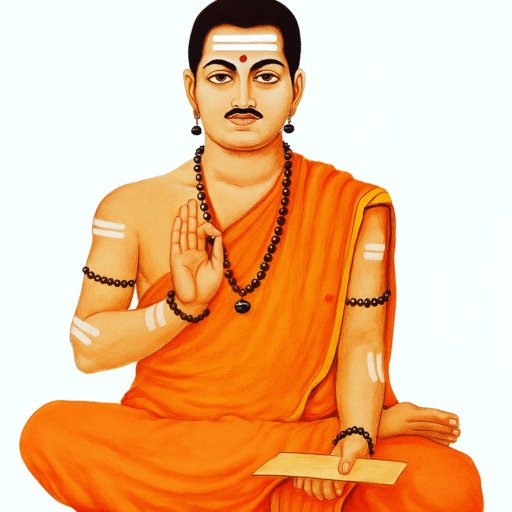

Poetic Rendering

If arrogance fills the house of the mind,
where can the Linga dwell?
The body must become the Linga itself,
leaving no room for pride.
Only where ego is absent
does the nearness of God shine,
O Koodalasangamadeva.
This vachana presents a simple, non-negotiable spiritual law: the Divine and the ego cannot occupy the same space. Using the powerful metaphor of a house, Basavanna declares that the human body-mind complex is the only possible dwelling for God (Liṅga). However, if this “house” is already filled to the brim with the furniture of arrogance, self-importance, pride, and the sense of “I” and “mine” then there is literally no room for the Divine to enter. The solution is not to rearrange the furniture, but to empty the house completely, so that the very structure becomes the sacred presence it was meant to host.
Spiritual Context
Core Spiritual Principle: The fundamental prerequisite for divine realization is the dissolution of the ego (Ahamkara). The Linga, as the universal consciousness, cannot coexist with the limited, separatist identity of “I” and “mine.” The spiritual path is essentially a process of self-emptying.
Cosmic Reality Perspective: The Cosmic Reality is a non-dual, all-pervading expanse. The individual ego is a contraction, a localized knot of ignorance that creates the illusion of separation. For the cosmic reality (Linga) to be realized as one’s own being, this contraction must be released.
Historical Reality (Anubhava Mantapa context): This vachana cuts to the heart of the Lingayat path’s radical egalitarianism. If God can only dwell where arrogance is absent, then no one Brahmin or Shudra, king or beggar can claim superiority. The only true nobility is humility, which creates the space for God in all.
Interpretation
1. “If arrogance fills the house of the mind…” : The “house” is the human body-mind complex, the only possible locus for spiritual experience. “Arrogance” represents the entire structure of the ego pride, self-importance, opinions, and the sense of doer ship.
2. “…where can the Linga dwell?” : This is not a real question but a definitive statement. It declares the absolute incompatibility of the ego and the Divine. They are mutually exclusive tenants.
3. “The body must become the Linga itself…” : This is the ultimate goal and the solution. It is not that the Linga comes to occupy a cleaned-out house. Rather, in the total emptiness of the ego, a profound alchemy occurs: the vessel itself is transubstantiated . The seeker does not possess God; the seeker becomes the divine presence. The distinction between the container and the content dissolves.
4. “Only where ego is absent does the nearness of God shine…” : This is the final, clear declaration of the law. “Nearness” implies intimacy and ultimately, non-separation. This shining is not an external light but the dawning of the innate light of consciousness, previously obscured by the ego.
Practical Implications: The seeker’s entire effort must be directed toward self-observation and the relinquishment of egoic patterns. Practices are not for accumulating spiritual merit but for burning away the arrogance that blocks the truth. Every moment of letting go of a selfish thought, a judgment, or a desire for recognition is an act of clearing space for the Linga.
The Cosmic Reality
Anga (Human Dimension): The human as the “house” or potential sacred space. Its purification involves the radical removal of all egoic contents (arrogance).
Linga (Divine Principle): Kudalasangama Deva as the luminous, formless reality that is ever-present but only revealed when the obscuring clouds of ego disperse.
Jangama (Dynamic Interaction): The Jangama is the active process of “becoming the wilderness” the fierce, dynamic work of self-inquiry, surrender, and discipline that empties the Anga, allowing it to be utterly permeated by and identified with the Linga.
Shata Sthala
Primary Sthala: Maheshwara. This vachana describes the core sadhana of the Maheshwara stage: the courageous and relentless battle against the inner enemy of arrogance. It requires the strength to face and dismantle one’s own ego.
Supporting Sthala: Aikya. The state described “the body must become the Linga itself” is the very definition of Aikya, the final stage of union where the seeker and the Sought are one.
Practical Integration
Arivu (Awareness): Practice witnessing the ego in action. Notice thoughts of superiority, inferiority, defensiveness, and pride as they arise. Simply label them “arrogance” and let them pass without identifying with them.
Achara (Personal Discipline): Actively cultivate humility. Seek out tasks that are “beneath you.” Welcome criticism. Practice being a learner in every situation. Consciously put others first.
Kayaka (Sacred Action): Perform your work without attachment to the role or the result. See yourself as a humble instrument, not as the important “doer.” Let the work itself be the offering that burns up pride.
Dasoha (Communal Offering): In the Sangha, practice seeing everyone as an equal manifestation of the Linga. Relinquish any sense of spiritual seniority or achievement. Serve others without a trace of condescension.
Modern Application
Contemporary culture, particularly through social media and corporate ladder-climbing, actively cultivates and rewards the ego. We are taught to build a “personal brand,” to assert ourselves, and to see life as a competition. This constant self-promotion fills our “house” with so much noise and clutter that the silence of the divine is inaudible, leading to a deep sense of emptiness and existential anxiety.
This vachana offers a radical antidote to the modern crisis of the self. It liberates by revealing that our suffering comes from being full of ourselves. The path to peace is not self-affirmation but self-emptying. It invites us to stop trying to build a impressive ego and instead, to courageously dismantle it, discovering in the resulting spaciousness a peace and power that the ego could never provide.
Essence
This house of self, so full and loud,
Leaves for the Truth no space, no cloud.
But empty it, and you will find,
The house itself is God’s own mind.
Metaphysically, this vachana describes the process of Jnana (knowledge) through negation. The ego (Ahamkara) is an upadhi (limiting adjunct) that seems to confine the infinite Atman (Linga). The question “where can the Linga dwell?” points to the fact that the Linga/Atman is already the true substance of the “house.” The practice is to remove the upadhi through Neti-Neti (not this, not this) “I am not the body, not the pride, not the mind.” When all upadhis are negated, what remains is the Linga itself, which was the substratum all along. The “nearness” is the recognition of this ever-present identity.
The greatest obstacle to peace, love, and wisdom is our own self-importance. The most profound transformation occurs not by adding more knowledge, possessions, or achievements, but by subtracting the ego. True freedom is found not in being somebody, but in being nobody a clear, empty space through which the divine can manifest unimpeded.

Views: 16