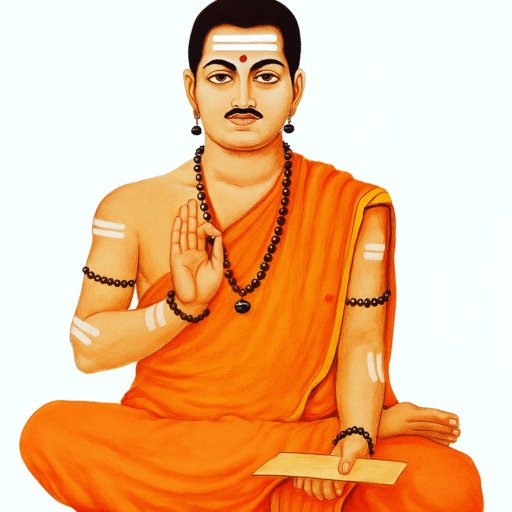

Poetic Rendering
The One remains undivided
only our own notions scatter it
into signs, seasons, and imagined destinies.
Can past births determine your readiness?
Can moon or star influence
the Eternal who existed before all things?
So let the seeker begin the inner journey now
let the Lord’s grace turn them inward
and free them from delay and wandering.
“Kudala” the present moment,
“Sangama” the merging within,
“Deva” the awakening of the inner light.
And know this:
the fruit of that union is yours,
and yours alone,
O Kudalasangamadeva.
Basavanna dismantles the belief that spiritual readiness depends on astrology, past births, or auspicious timings. He insists that the Divine is beyond all such calculations, and that the true moment of transformation is now the instant one turns inward with sincerity. He urges the seeker to begin the inner journey at once, guided by divine grace rather than excuses or delays. In naming the deity “Kudala–Sangama–Deva,” Basavanna reveals the path itself: the present moment (Kudala), the inner merging (Sangama), and the awakening of divinity within (Deva). Ultimately, he teaches that the fruit of this inner union is deeply personal: the benefit is yours, and yours alone.
Spiritual Context
Core Spiritual Principle: Liberation is not an event in the future conditioned by external factors, but a potentiality inherent in the present moment. The only “auspicious time” (shubha muhurta) is the instant of sincere, inward turning, catalyzed by grace.
Cosmic Reality Perspective: The Linga (Divine Principle) is the eternal, unchanging “Now.” Concepts of past karma, astrological time, and future attainment are all projections of the mind (manas) upon this timeless reality. To realize the Linga is to step out of the stream of conceptual time and abide in the immediate presence of “Is-ness.”
Historical Reality (Anubhava Mantapa Context): This is a radical critique of the Brahmanical orthodoxy of Basavanna’s time, which controlled spiritual access through complex rituals, astrological calculations, and caste-based notions of purity. It asserts the path of immediate, direct experience (Anubhava) available to all, here and now.
Interpretation
1. “The One remains undivided only our own notions scatter it…”: This establishes the fundamental problem: ignorance (avidya) creates fragmentation. The mind projects divisions of time (auspicious/inauspicious) and identity (past births) onto the non-dual Whole.
2. “Can past births determine your readiness? Can moon or star influence the Eternal…?”: This is the logical deconstruction of superstition. The cause (the Eternal) cannot be bound by its own effects (time, planets, karma). To believe so is to remain trapped in the relative world.
3. “Let the seeker begin the inner journey now…”: This is the urgent, core instruction. The imperative is to act now. The “turning inward” is the fundamental reorientation of attention from the external, conditional world to the internal, unconditional consciousness.
4. Etymological Revelation (“Kudala-Sangama-Deva”): This is not just a name but a map of the path: Kudala (Confluence/Now): The meeting point is not a geographical place but the ever-present moment of awareness.
Sangama (Union/Merging): The union is the convergence of the individual mind with this present-moment awareness. Deva (Divine/Light): The result is the awakening of the divine light of consciousness itself.
5. “the fruit of that union is yours, and yours alone…”: This emphasizes the non-transferable, deeply personal nature of realization (pratyaksha). No priest, planet, or past life can give you this; it must be directly tasted.
The Cosmic Reality
Anga (Human Dimension): The Anga is the seeker who has been procrastinating, looking for signs and permissions outside themselves. The Vachana calls this Anga to awaken to its own agency and immediate potential.
Linga (Divine Principle): The Linga is “Koodalasangamadeva” as the ever-present, timeless reality that is the very substance of the “now.” It is the ground upon which all concepts of time are superimposed.
Jangama (Dynamic Interaction): The Jangama is the act of seizing the present moment to turn within. It is the dynamic, instantaneous shift from seeking God in the future to recognizing God in the immediacy of one’s own awareness. This is grace in actionthe intelligence that cuts through procrastination.
Shata Sthala
Primary Sthala: Bhakta Sthala. This Vachana is the quintessential call to become a true Bhakta. The first act of devotion is to stop delaying and to start the journey now, with total reliance on the ever-present grace of the Lord.
Supporting Sthala: Prasadi Sthala. The ability to recognize and act upon the “now” as the auspicious moment is itself the greatest expression of grace (Prasada). It is the divine gift of clear seeing that dispels the darkness of superstition and delay.
Practical Integration
Arivu (Awareness Practices): Practice moment-to-moment mindfulness. Use the breath as an anchor to the “Kudala” (present moment). In any situation, ask: “What is the reality of this present moment, stripped of all my concepts about it?”
Achara (Personal Discipline): Discipline yourself to act on spiritual impulses immediately. If you feel the urge to meditate, do not schedule it for later; sit for even one minute now. If you feel remorse, correct the behavior now. Eradicate the habit of “spiritual procrastination.”
Kayaka (Sacred Action): Infuse your daily work with the sanctity of the present moment. Do not work for a future reward; let the action itself, performed with full attention in the now, be your offering and your fulfillment.
Dasoha (Communal Offering): The greatest gift to the community is to embody this urgency and presence. Encourage others to begin their practice now, regardless of their perceived flaws or past. Create an environment that values immediate, sincere effort over perfect conditions.
Modern Application
Spiritual Procrastination and the “Someday” Syndrome. The modern seeker often falls into the trap of waiting for the “right time” after retirement, when the kids are grown, when they are less busy, or when they find the “perfect” teacher. This is compounded by a consumerist spirituality that promotes endless preparation (courses, books, workshops) without ever diving into the core practice.
This Vachana is a powerful antidote to this paralysis. It liberates one from the tyranny of “someday” and the illusion of external prerequisites. It empowers the individual to claim their spiritual authority and start the real work immediately, right where they are, with whatever they have. It transforms spirituality from a future goal into a present-moment practice.
Essence
Why wait for stars to align?
This moment itself is the divine.
The confluence is here, the merge is within,
Now is the moment to finally begin.
The fruit is for you, and you alone to taste,
Do not let this sacred present go to waste.
1. The Collapse of Psychological Time: The “auspicious moment” is not a point on a calendar but a state of consciousness. It occurs when the mind’s compulsive projection into the past (karma) and future (goals) ceases, and awareness collapses fully into the “specious present.” In this collapsed state, the seeker and the sought coexist; the path and the goal are one. Koodalasangamadeva is this state of collapsed, unified awareness.
2. Grace as the Catalyst for Temporal Collapse: The “Lord’s grace” that turns the seeker inward is the catalytic intelligence that disrupts the ego’s linear timeline. It is a sudden, non-linear event that allows the individual to step out of the karmic narrative of “I will start when…” and into the direct experience of “I Am Here Now.”
3. Jangama as the Eternal Confluence: The Jangama relationship is redefined as the perpetual convergence (Sangama) of the individual awareness with the timeless present (Kudala). This is not a one-time event but a continuous, dynamic abidance. The “fruit” that is “yours alone” is the dawning of this abidance as your permanent, non-personal state (Deva). It is ineffable because it is the realization of the Subject itself, which cannot be objectified or shared, only been.
You are waiting for a permission that you alone can give. The perfect time to change your life, to find peace, to discover who you are, is not tomorrow or next year. It is this very instant. All the power of the universe is concentrated in the present moment. Stop delegating your awakening to the stars, your past, or your future self. Your liberation is waiting for you not in a distant heaven, but in the profound simplicity of the here and now. Begin.

Views: 1