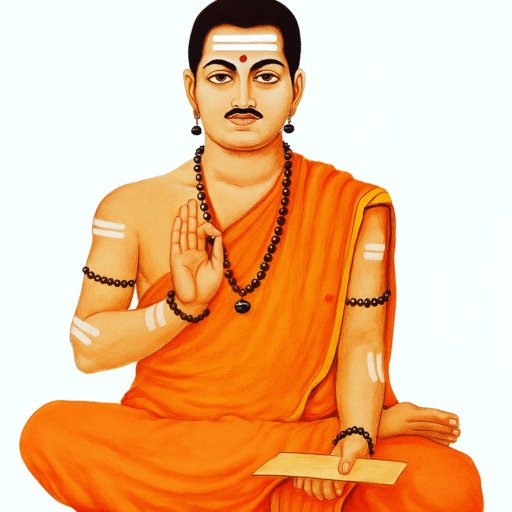

Poetic Rendering
As a child longs for its mother,
so I ache in longing for You.
O Lord, shine with grace upon my mind.
Dwell in my heart as its only home.
Grant mercy, mercy without end.
You alone are my refuge,
Mother, Mother
O Koodalasangamadeva.
This vachana is a pure, uncorrupted expression of Bhakti as total, childlike dependence. Basavanna sheds all pretenses of spiritual achievement, intellectual understanding, and personal strength, positioning himself as a helpless infant whose very life depends on the compassionate presence of the Divine Mother. This is not a philosophy but a raw, emotional cry from the core of the soul. It reveals that the highest form of devotion is not powerful yoga but vulnerable love, where the soul’s only act is to ache for God and its only prayer is a repeated cry for mercy and indwelling presence.
Spiritual Context
Core Spiritual Principle: The most potent force on the spiritual path is not rigorous discipline or intellectual knowledge, but the raw, helpless love and longing of the soul for its source. This state of conscious dependence and vulnerability is the quickest means to attract divine grace.
Cosmic Reality Perspective: The Cosmic Reality is not a distant ruler but an intimate, nurturing presence the Divine Mother. The individual soul (Jiva) is eternally a part of this reality, and its feeling of separation is a painful but necessary state that fuels the longing for reunion.
Historical Reality (Anubhava Mantapa context): This vachana embodies the essence of the devotional (Bhakti) stream within the Lingayat tradition. It demonstrates that the path is accessible to all, regardless of learning or social status, requiring only a genuine and heartfelt emotional connection to the Divine.
Interpretation
1. “As a child longs for its mother, so I ache in longing for You.” : This establishes the core relationship. The child symbolizes purity, helplessness, and an innate, biological-level need. The “ache” is not an intellectual concept but a visceral, emotional reality that consumes the seeker.
2. “O Lord, shine with grace upon my mind.” : This is a prayer for internal illumination. The “mind” is the seat of confusion and duality. He asks for grace (Prasada) to dispel this darkness, indicating that clarity itself is a gift from God.
3. “Dwell in my heart as its only home.” : This moves from illumination to indwelling. The “heart” is the center of emotion and being. He is not asking for a visit, but for a permanent residence a total takeover of his inner space by the Divine.
4. “Grant mercy, mercy without end.” : The repetition of “mercy” emphasizes the totality of his dependence. He offers nothing and claims no merit. His entire case rests on the unconditional compassion of the Divine.
5. “You alone are my refuge, Mother, Mother…” : This is the ultimate surrender. All other supports ego, wealth, family, knowledge are abandoned. The final cry of “Mother” reinforces the intimacy, safety, and unconditional love he seeks.
Practical Implications: The seeker is encouraged to connect with their own feeling of spiritual need and vulnerability. Instead of striving from a place of strength, one should pray from a place of heartfelt longing, cultivating a personal, loving relationship with the Divine as a child with a parent.
The Cosmic Reality
Anga (Human Dimension): The human as a helpless child, aware of its own incompleteness and total dependence on a source beyond itself. This conscious vulnerability is its greatest strength.
Linga (Divine Principle): Kudalasangama Deva as the compassionate, responsive “Mother,” the source of all grace and comfort, who answers the cry of the soul.
Jangama (Dynamic Interaction): The Jangama is the current of love and longing itself the “ache” and the subsequent cry for mercy. This emotional current dynamically bridges the gap between the soul and God, compelling the descent of grace into the heart.
Shata Sthala
Primary Sthala: Bhakta. This is the essence of the Bhakta stage a devotion so pure it is stripped of all other qualities but love and longing. The Bhakta here is the perfect devotee, whose only identity is that of God’s child.
Supporting Sthala: Prasadi. The entire vachana is a plea for Prasada. The illumination of the mind, the indwelling in the heart, and the mercy are all forms of grace that cannot be earned, only received as a gift.
Practical Integration
Arivu (Awareness): Become aware of the inner feeling of spiritual emptiness or longing. Instead of avoiding it, lean into it. Use this “ache” as the foundation of your prayer.
Achara (Personal Discipline): The discipline is the cultivation of humility (Vinaya). Practice letting go of the ego’s pretense of control and self-sufficiency, consciously adopting the inner stance of a dependent child before the Divine.
Kayaka (Sacred Action): Perform all actions as an extension of this cry. Offer your work as a plea, not an achievement. Work with the feeling, “I can do nothing without Your grace.”
Dasoha (Communal Offering): Share your vulnerability. In the Sangha, it is a great Dasoha to be authentic, to express one’s spiritual struggles and longing, giving others permission to connect with their own heartfelt devotion.
Modern Application
Modern humanity, despite its independence and capability, often feels a deep, existential loneliness and anxiety a spiritual “ache” that we try to numb with consumerism, entertainment, or substance abuse. We are taught to be strong and self-reliant, leaving no room for healthy vulnerability or surrender.
This vachana offers liberation through the embrace of vulnerability. It tells us we can stop trying to be spiritually “strong” and simply admit our deep, childlike need for a higher source of love and meaning. The path to peace is to acknowledge our helplessness and cry out for the Divine Mother/Father to fill us with grace and make our heart its home.
Essence
A child’s cry in the silent night,
For the one source of its light.
Not by strength, but by this plea,
My soul finds its way to Thee.
Metaphysically, this vachana describes the process of the Jivatman (individual soul) returning to the Paramatman (universal Soul) through the power of love (Bhakti). The “mind” is the antahkarana that must be purified by grace to become a reflector of consciousness. The “heart” is the seat of the ego, which must be vacated so the Linga may reside there as the true Self. The cry is the spontaneous activity of the heart once it recognizes its true nature is to be united with the Divine.
In the face of life’s ultimate fragility, our greatest strength lies in embracing our innate dependence. The most powerful prayer is not a complex ritual, but the sincere, repeated cry of a heart that knows it is incomplete without its source. This raw, emotional honesty has the power to dissolve the greatest of distances and invoke the divine presence directly.

Views: 7