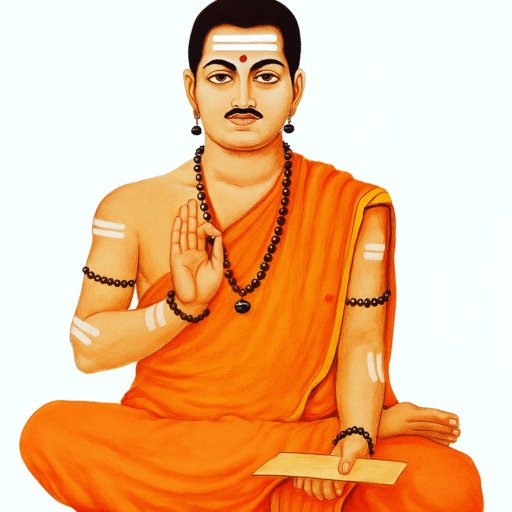

Poetic Rendering
They boast of lineage,
and speak of another’s sin
thus sharing in it,
smearing their own hands with the same dirt.
What worth is devotion by birth?
What worth are rituals without true bhakti?
When Machaladevi is carved from bamboo,
can she claim a sacred lineage?
When a golden cow, born of Ravana’s branch,
is pressed for milk and oil,
what true nourishment can it give?
If the fire of religion is kindled
from such borrowed, tainted sources,
how can its light be pure?
I do not believe in a faith built on pride and inheritance
O Kudalasangamadeva,
only You are my refuge.
This vachana exposes the emptiness of religious pride rooted in birth, caste, or inherited tradition. Basavanna denounces those who claim spiritual authority through lineage while engaging in judgment and hypocrisy, showing that such behavior only corrupts them further. External symbols, rituals, and ancestral claims like bamboo idols or golden cows cannot produce genuine spiritual nourishment when their source is impure or ego-driven. True spirituality arises not from heredity or ritual performance but from inner sincerity and direct experience of the Divine. For Basavanna, only the transforming grace of Kudalasangamadeva grants authentic spiritual worth.
Spiritual Context
Core Spiritual Principle: The primacy of inner authenticity over external religious identity. Spiritual value is conferred solely by sincere devotion and the transformative touch of grace, never by birthright, social status, or the performance of empty rituals. Judging others is a sure sign of an impure, ego-driven consciousness.
Cosmic Reality Perspective: This vachana addresses the tamasic (inert) and rajasic (passionate) distortions of Shakti. When divine energy becomes bound to ego (ahamkara), it manifests as pride in lineage and the hypocrisy of judgment. This bound energy is as useless as a “golden cow” or a “bamboo idol”it has the form but none of the living, nourishing essence (Shiva) that makes spirituality real.
Historical Reality (Anubhava Mantapa Context): This is a direct and blistering attack on the Brahminical orthodoxy of 12th-century Karnataka, which based spiritual authority on birth (janma) and ritual purity (shouchya). Basavanna, as a revolutionary, dismantles this entire structure, declaring that a religion rooted in pride and hierarchy is fundamentally false. It establishes the Lingayoga path as one of individual merit and direct divine connection, utterly rejecting the caste system.
Interpretation
“They boast of lineage… smearing their own hands with the same dirt.” The act of judging another is itself a karmic defilement. By focusing on another’s “sin,” one becomes stained by the very energy of negativity and separation, nullifying any claim to purity.
“What worth is devotion by birth? What worth are rituals without true bhakti?” This is the core rhetorical challenge. Bhakti (devotion) is an internal flame that cannot be inherited. Rituals (kriya) are empty shells without the inner substance of love and surrender.
“When Machaladevi is carved from bamboo… When a golden cow, born of Ravana’s branch…” These are masterful metaphors for invalid spiritual sources. A “bamboo idol” signifies something common and perishable masquerading as sacred. A “golden cow from Ravana’s branch” symbolizes something that appears valuable and spiritual but originates from a demonic (egoic, arrogant) source. Neither can yield true spiritual nourishment (“milk”).
“I do not believe in a faith built on pride and inheritanceonly You are my refuge.” This is the final, triumphant renunciation. The sharana completely severs ties with a corrupted religious establishment and takes sole refuge in the direct experience of the Divine.
Practical Implications: The practitioner must vigilantly examine their own motivations for pride, judgment, and reliance on external identities. Spiritual practice must be rooted in humility, self-awareness, and a constant turning towards the inner source of grace, rather than using religion to bolster a sense of superiority.
The Cosmic Reality
Anga (Human Dimension): The Anga is the field where the seeds of either ego or devotion are sown. When identified with social and religious constructs (caste, lineage), the Anga becomes a barren field producing only the thorns of hypocrisy and judgment. Its true purpose is to be a vessel for grace.
Linga (Divine Principle): The Linga is the ultimate, non-dual reality that transcends all man-made hierarchies and distinctions. It is the only true source of purity and value. It cannot be owned, inherited, or approached through pride.
Jangama (Dynamic Interaction): The Jangama is the conscious movement of rejecting false refuges (caste, lineage) and embracing the true refuge (Linga). It is the dynamic, often disruptive, process of spiritual honesty that clears away the debris of inherited religion to make space for a living faith.
Shatsthala
Primary Sthala: Bhakta (Devotee) The vachana defines the authentic stance of the Bhakta. A true devotee is not one who is born into a tradition, but one who consciously chooses the path of sincere devotion, free from the hypocrisy and pride that poison faith.
Supporting Sthala: Prasadi (Recipient of Grace) The concluding declaration, “only You are my refuge,” positions the speaker as a Prasadi. One becomes a true recipient of grace only after renouncing all other false supports and ego-based claims to spirituality.
Practical Integration
Arivu (Awareness Practices): Cultivate the awareness to catch yourself in acts of judgmentof others’ spirituality, behavior, or status. See this judgment as the “dirt” that stains your own hands, and immediately turn your focus inward to your own connection with Koodalasangamadeva.
Achara (Personal Discipline): Make humility and self-scrutiny a core discipline. Consciously renounce any sense of spiritual superiority derived from your knowledge, practices, or background. Let your identity be rooted solely in your status as a sharana.
Kayaka (Sacred Action): Ensure your work and service are free from the desire for recognition or status. Let your Kayaka be an offering that diminishes the ego, rather than a performance that builds it up.
Dasoha (Communal Offering): Build a community that values inner sincerity over external credentials. Celebrate those who embody genuine devotion, regardless of their background, and gently challenge any manifestations of pride or hierarchy within the sangha.
Modern Application
Modern society is rife with “spiritual branding,” elitism, and judgment. We see it in the commodification of wellness, the inflation of guru lineages, and the subtle hierarchies within spiritual communities. Social media amplifies the performance of piety, where image often trumps substance. This leads to inauthenticity, community fracture, and a deep, unacknowledged hypocrisy.
This vachana liberates us from the tyranny of spiritual materialism and performance. It calls us to a raw, honest spirituality where our worth is measured by the depth of our sincerity, not the impressiveness of our credentials. It empowers the individual to seek God directly, freeing them from the need to conform to or judge any external religious structure.
Essence
They judge the sin, and boast the line,
And miss the sacred, true design.
A bamboo god, a gilded cow,
Can never to the real allow.
So let this pride be burned and cleared,
Till only You, my God, are feared.
The Deeper Pattern: This vachana describes a fundamental rule of spiritual information theory: the output (spiritual merit) cannot be of a higher quality than the input (the consciousness of the practitioner). If the source code is corrupted by ego and pride (the “Ravana branch”), the resulting program (religious practice) will be computationally barren, no matter how golden its appearance. A true output of divine realization requires a source code purified of ego and compiled with the language of sincere devotion.
In Simple Terms: It is the difference between a seed from a healthy, open-pollinated plant and a sterile, genetically modified seed that looks perfect but cannot reproduce. The religion of pride and lineage produces beautiful but sterile plants they have the form but no living, regenerative spiritual power. Only the seed of sincere devotion, planted in the soil of a humble heart, can grow into a tree that bears the fruit of genuine liberation.
The Human Truth: The universal human weakness is to seek validation and status, even in our spiritual lives. We are tempted to wear our spirituality as a badge of honor. The timeless truth here is that this very desire for superiority is the very thing that blocks the grace we seek. True spiritual power is found only in the radical humility that acknowledges one’s total dependence on the Divine, and in the integrity that refuses to judge a fellow traveler.

Views: 0