Poetic Rendering

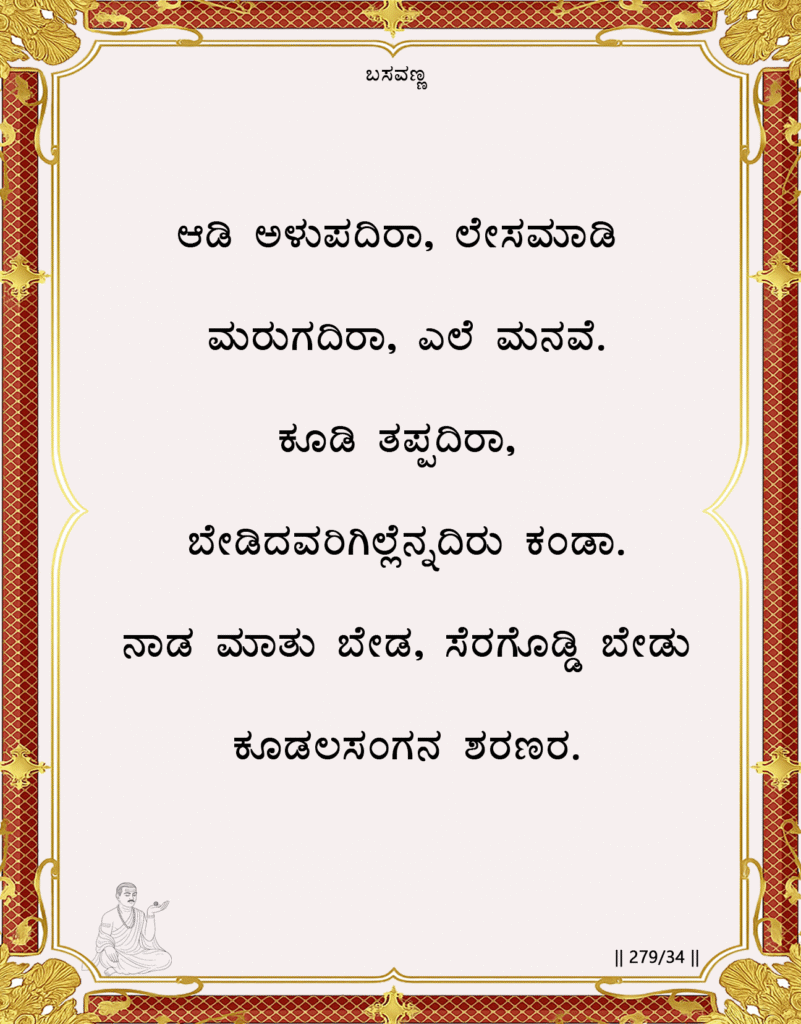
O mind, do not weary with play,
do not falter with ease.
Do not err when together,
Speak not of worldly things,
but with folded hands seek
the sharanas of Koodalasangama.
Basavanna directly commands his own mind: do not tire from play, do not falter in ease, do not err in company, and do not praise yourself when asked . He instructs it to avoid worldly talk and to instead seek, with folded hands, the Sharanas of Kudalasangama.
Spiritual Context
Core Spiritual Principle: The mind is the primary battlefield of the spiritual path. Liberation requires the conscious stewardship of mental energy, redirecting it from dissipating worldly channels including the subtle ego-gratification of self-praise toward a singular, divine-focused aim.
Cosmic Reality Perspective: The Linga is the silent, attribute less reality. The ego’s need for self-promotion (Ahamkara) is a loud assertion of a separate self that obscures this silent reality. Discipline is the process of quieting this assertion.
Historical Reality (Anubhava Mantapa context): This vachana provides a practical code of conduct that fosters a community ethos of humility and substance over self-promotion and image. It ensures the Sangha remains a place for genuine growth, not spiritual competition.
Interpretation
1. “Do not weary with play…” : Warns against exhausting the mind with frivolous sensory distraction.
2. “…do not falter with ease.” : Warns against the spiritual stagnation of comfort and laziness (Alasya).
3. “Do not err when together…” : Warns against moral compromise and losing one’s spiritual center under social pressure.
4. “…do not boast when questioned.” : This is the crucial correction. It targets the root of the ego: self-aggrandizement. Even when given an opportunity to speak about oneself (when asked), one must avoid praise and boastfulness. This cultivates profound humility (Vinaya).
5. “Speak not of worldly things…” : Guides the purification of speech away from trivialities that dissipate mental focus.
6. “…but with folded hands seek the sharanas…” : Provides the positive alternative. The energy saved is to be channeled into seeking the company of the enlightened (Satsangha). “Folded hands” symbolizes surrender, reverence, and a heartfelt plea for guidance, the direct opposite of self-praise.
Practical Implications: The seeker must be vigilant not only against obvious distractions but also against the subtle energy leak of the ego. In conversation, practice listening and speaking about principles or the Divine, rather than promoting one’s own achievements or status. Let your actions speak for themselves, and direct all credit toward the Divine grace that enables them.
The Cosmic Reality
Anga (Human Dimension): The human mind and ego, which must be disciplined away from self-promotion and toward humble seeking.
Linga (Divine Principle): Kudalasangama Deva as the ultimate goal, whose glory makes all personal boasting irrelevant.
Jangama (Dynamic Interaction): The active process of seeking the Sharanas while embodying humility. It is the living practice that replaces the ego’s narrative with a story of divine seeking.
Shata Sthala
Primary Sthala: Maheshwara. This vachana exemplifies the Maheshwara’s inner strength, which includes the power to subdue the ego and its desire for recognition.
Supporting Sthala: Bhakta. The attitude of “folded hands” and the avoidance of self-praise is the essence of a humble devotee.
Practical Integration
Arivu (Awareness): Notice the impulse to talk about yourself, your achievements, or your problems. See it as the ego seeking validation.
Achara (Personal Discipline): Cultivate the discipline of silence about your own accomplishments. When asked, be factual and brief, and redirect praise to God or others.
Kayaka (Sacred Action): Perform your work excellently but without attachment to the credit. Be a silent instrument.
Dasoha (Communal Offering):Use your speech in the community to uplift others and discuss spiritual truths, not to build your own profile.
Modern Application
We live in a culture of personal branding, CV-padding, and social media boasting, where self-promotion is often rewarded. This fuels anxiety, comparison, and a fragile sense of self-worth built on external validation.
This vachana liberates from the exhausting need to self-promote. It offers the profound peace that comes from humility the understanding that your true worth is intrinsic and divine, not something that needs to be constantly proven. It allows you to engage in the world from a place of quiet confidence and authenticity.
Essence
From play and ease, O mind, refrain,
In company, let truth remain.
Let not your tongue your self applaud,
But seek the Saints, and trust in God.
Metaphysically, this vachana targets Ahamkara (ego-sense). Self-praise is the vocal expression of Ahamkara. The discipline of refusing to boast is a practical method of “neti, neti” (not this, not this), negating identification with the ego’s achievements. This creates the inner space (the “folded hands”) for the grace of the Linga to enter, which then reveals the true Self that requires no praise.
True strength and character are demonstrated not by telling others who you are, but by silently being who you are. Let your actions and your humility speak for you. The most powerful presence in any room is often the quietest one, the one whose focus is on a higher purpose, not on themselves.

Views: 2