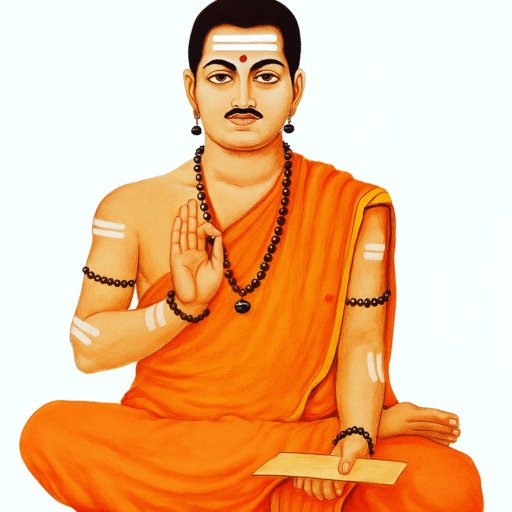

Poetic Rendering
When the cuckoo sits in a cage at home,
does it forget the wild forest song?
When the elephant is bound in the courtyard,
does it forget the vast freedom of the hills?
So too, O Kudalasangama,
though the sharana is born to the dust of earth,
how can he forget
the eternal Linga that breathes within?
Basavanna’s revelation of the soul’s unbroken memory the eternal song that continues even in bondage This vachana reveals the fundamental nature of awakened consciousness as inherently unforgettable. Basavanna demonstrates that true spiritual realization is not a temporary experience but an eternal recognition that cannot be erased by physical confinement, worldly circumstances. The teaching establishes that the soul’s memory of its divine source is more fundamental than any temporary bondage just as a cuckoo’s song and an elephant’s majesty are intrinsic to their being, not conditioned by their environment.
Spiritual Context
Core Spiritual Principle: The Indestructibility of Awakened Recognition (Pratyabhijna). True Self-realization is not a fragile mental state but the rediscovery of one’s eternal, unchanging nature. Once recognized, this knowledge (Jnana) becomes as inseparable from the soul as a bird’s song is from its being.
Cosmic Reality Perspective (non-dual, Shiva-Shakti dynamics): From the non-dual view, the Jiva (individual soul) is a contracted form of Shiva itself. The “cage” or “courtyard” is the play of Maya-Shakti that creates the appearance of limitation. However, the essential nature (Svabhava) of Shiva consciousness and bliss shines unimpeded within that appearance. The “unforgettable song” is the vibration of Chit-Shakti (consciousness-power) expressing itself perpetually.
Historical Reality (Anubhava Mantapa context): This vachana served as a powerful affirmation for the Sharanas living under social oppression and persecution. It reminded them that their inner spiritual victory the recognition of the indwelling Linga could never be taken away by caste-based exclusion, political power, or physical threat. It fortified the community’s resolve by rooting their identity in an unassailable, internal divine reality.
Interpretation
1.The Caged Cuckoo’s Song: The cuckoo (Kokila) is renowned for its melodious call. The cage represents Deha Bandhana (bodily confinement) and Samskara (conditioning). The “wild forest song” symbolizes Anahata Nada, the unstruck divine sound or the soul’s natural expression of bliss (Ananda). Metaphysically, this establishes that the essence (Svarupa) is independent of its container (Upadhi).
2.The Bound Elephant’s Memory: The elephant (Gaja) symbolizes majestic strength, intelligence, and spiritual wisdom (Gajendra). Being bound in a courtyard represents confinement by Karma and worldly duties (Samsara). The “vast freedom of the hills” represents Moksha, liberation. This illustrates that the potential for liberation is innate (Sahaja) and cannot be lost.
3.The Sharana’s Inherent Remembrance: “Born to the dust of earth” acknowledges the reality of Bhuloka (earthly plane) and Prakriti (matter). The rhetorical question”how can he forget?”is a thunderous declaration of Aham Brahmasmi (I am Brahman). It asserts that for one who has truly become a sharana (surrendered one), the Linga-consciousness is not an object of memory but the very subject of awareness. Forgetfulness (Vismriti) is ontologically impossible at this stage.
Practical Implications: This eliminates spiritual anxiety about “losing” grace or realization. The practice shifts from attaining remembrance to trusting and celebrating the remembrance that is already and always present. It turns every moment of apparent limitation into an opportunity to hear the “unforgettable song” within.
The Cosmic Reality
Anga (Human Dimension): The experiencing self that feels confined by body, mind, circumstances, and time. It is prone to the fear of forgetting, of spiritual failure, and of being defined solely by its “cage.”
Linga (Divine Principle): The immutable, ever-present reality of Sat-Chit-Ananda (Existence-Consciousness-Bliss) that constitutes the Anga’s true being. It is the “forest” and the “hills” the boundless, natural state.
Jangama (Dynamic Interaction): The living truth of non-separation itself. It is the dynamic wherein the very question of forgetfulness reveals the presence of remembrance. The Jangama is the continuous proof that the cage does not define the bird; the bird’s song redefines the cage.
Shata Sthala
Primary Sthala: Bhakta (Devotion). The cuckoo’s ceaseless song is the perfect metaphor for the Bhakta’s innate, loving devotion (Sahaja Bhakti). This devotion is not a mood but their core nature, which persists effortlessly through all states.
Supporting Sthala: Aikya (Union). The vachana logically rests on the truth of Aikya. One can only be incapable of forgetting something from which one is not separate. The rhetorical question points to this already-accomplished unity as the foundation of the soul’s unwavering memory.
Practical Integration
Arivu (Awareness Practices): Practice “Listening for the Song in the Cage.” In moments of felt limitation stress, illness, failure pause and ask: “What in me is aware of this confinement?” That aware presence is the “cuckoo” that is never caged. Identify with that listening awareness, not with the circumstance.
Achara (Personal Discipline): Discipline yourself to distinguish between reaction (the cage shaking) and essence (the song). When worldly pressures arise, consciously anchor in the “unforgettable” truth of your divine nature through a mantra or breath, refusing to let the condition dictate your inner reality.
Kayaka (Sacred Action): Perform your duties as the cuckoo sings not because of the cage, but in spite of it. Let your work be an expression of your inner freedom and innate divinity, transforming the “courtyard” of daily labor into a field where the memory of the “hills” is enacted.
Dasoha (Communial Offering): Offer the gift of this unwavering remembrance to others. Your stable, unshakable recognition in the face of life’s bondages becomes a living testimony that frees others to remember their own song. You become a mirror reflecting their own unforgettable divine core.
Modern Application
Spiritual Amnesia and Conditional Identity. We live in a culture that defines us by our achievements, social metrics, and external validation. We easily forget our intrinsic worth, leading to anxiety, depression, and a fragile sense of self. We also suffer “spiritual amnesia” in religious contexts, reducing faith to a fragile set of beliefs that can be “lost” rather than a rediscovery of an indestructible truth.
Cultivating Unshakable Self-Recognition. Use this vachana as an anchor for Identity Sovereignty. When feeling diminished by criticism, failure, or social media comparison, invoke Basavanna’s question: “Can the cuckoo forget its song?” Declare: “My worth is not conditional. My essence consciousness, love, creativity is innate and cannot be revoked by any external event.” This builds psychological resilience and a form of spirituality that is immune to doubt or circumstance.
Essence
The cage may hold the form,
but never stills the song.
The rope may bind the limb,
but not the freedom remembered long.
O Unifier of the Bound and Free,
This earth-born dust is just a ground
where Your eternal note is found
a song this heart could never not recall.
This vachana illustrates the metaphysical principle of non-local consciousness. The cuckoo’s song and the elephant’s memory are phenomena not generated by or contained within their immediate, local environment (the cage, courtyard). They are expressions of a non-local, field-like reality (the forest, the hills). Similarly, the sharana’s remembrance of the Linga is an expression of consciousness that is non-local to the body-mind complex. It is a direct participation in the timeless, spaceless divine field, proving that consciousness transcends its apparent physical locus.
It’s like a Wi-Fi device. Even if you put your laptop in a basement (the cage), it doesn’t forget the Wi-Fi signal or its ability to connect. The connection might be weaker or obscured, but the device’s fundamental nature and capacity to link to the network remains. Basavanna says the sharana is like a perfectly tuned device: once connected to the Linga (the divine network), that connection is its very nature; it cannot “forget” the signal, even in the basement of worldly life.
Beneath our fluctuations of mood, fortune, and self-esteem, there is a core of being that remains untouched and constant. We deeply fear that our true self can be lost, damaged, or invalidated by life’s hardships. This vachana speaks directly to that fear, asserting that our most essential identity as conscious, loving beings connected to a boundless source is unforgettable. It is not an achievement to be maintained but a truth to be realized as already and always secure. This provides the ultimate psychological and existential safety net.

Views: 0