

Summary
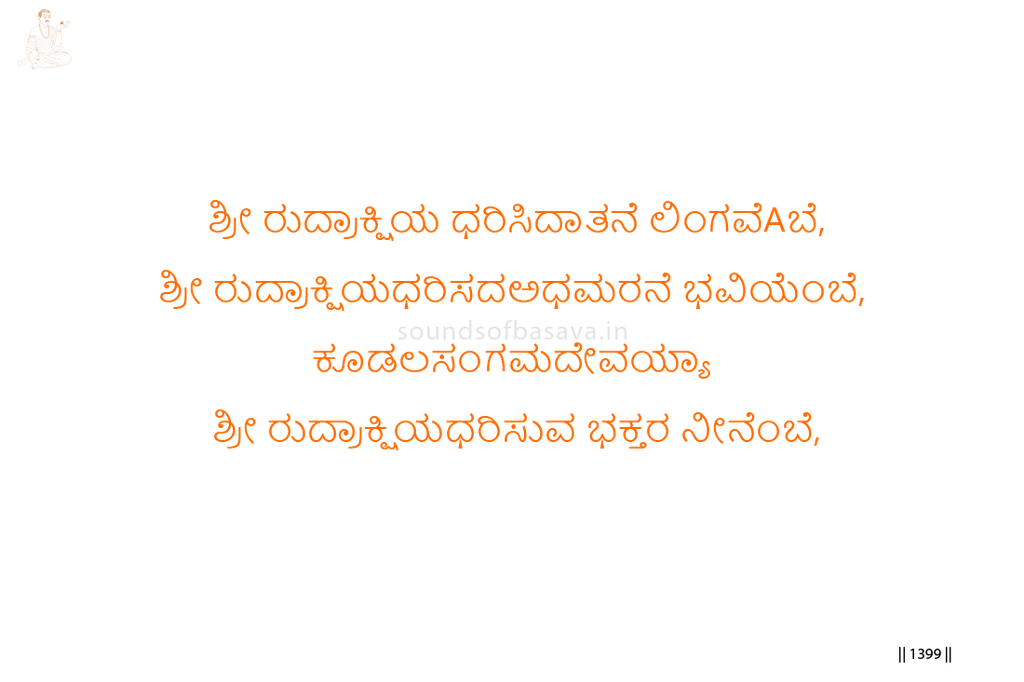
Basavanna calls the one who bears Shri Rudrakshi Linga. The sacred emblem reveals a life that has become established in remembrance, belonging, and relationship with Linga.
The one who does not bear Shri Rudrakshi and remains governed by Bhava is called Bhavi—one whose life continues within worldly becoming.
The Vachana culminates in Basavanna’s declaration to Kudalasangama Deva: You Yourself are the Bhaktas who wear Shri Rudrakshi. The Lord is recognised in the living devotees whose embodied lives bear the sacred sign of Linga.
Imagery & Symbolic Relevance
The Vachana moves through three direct identifications:
the Rudrakshi-bearer as Linga;
the one remaining in Bhava as Bhavi;
Kudalasangama Deva in the Rudrakshi-bearing Bhaktas.
Bearing Shri Rudrakshi
Rudrakshi is worn upon the body. It makes the devotee’s orientation toward Linga visible in embodied life.
The word Shri gives the Rudrakshi reverence and sacred distinction. It is not presented as an ordinary bead or personal ornament. It belongs to the devotee’s accepted relationship with Shiva and Linga.
To bear Rudrakshi is to allow the body itself to carry remembrance. The sacred relation is no longer confined to inward feeling or occasional worship; it is openly borne through life.
The Wearer Is Called Linga
Basavanna does not say that the wearer merely resembles Linga. He calls the wearer Linga.
The statement reveals the fulfilled meaning of the sacred emblem. In the authentic Bhakta, Rudrakshi, remembrance, conduct, and Linga-relation have become one living orientation.
The embodied devotee becomes the field in which Linga-presence is recognised. His body carries the sign, while his life reveals the truth to which the sign belongs.
The name Linga therefore marks realised identity through sacred relationship. The wearer does not claim personal greatness; he is recognised through the Linga that governs and shines through his life.
The One Who Does Not Wear Is Called Bhavi
The second line establishes the contrast.
The one who does not bear Shri Rudrakshi and remains in the lower condition of Bhava is called Bhavi.
Bhavi is the person whose life continues to be governed by becoming, worldly identity, and separation from Linga. The term describes a spiritual condition rather than merely assigning social inferiority.
The contrast is exact:
the Rudrakshi-bearer is recognised through Linga;
the Bhavi remains recognised through Bhava.
One is established in sacred remembrance; the other continues within conditioned becoming.
“You Yourself Are Those Bhaktas”
The final line turns from the individual wearer to the community of Bhaktas.
Basavanna addresses Kudalasangama Deva and declares that the Bhaktas who bear Shri Rudrakshi are You Yourself.
The plural is important. The Lord’s presence is recognised not only within an isolated individual but through the living fellowship of Rudrakshi-bearing devotees.
Kudalasangama Deva does not become a private possession of any Bhakta. Rather, the devotees become transparent to His presence. In seeing them, Basavanna recognises the Lord whose sacred identity they bear.
The movement is therefore complete:
Rudrakshi reveals Linga-orientation;
the authentic wearer is called Linga;
in the Rudrakshi-bearing Bhaktas, Kudalasangama Deva Himself is recognised.
Lingayoga
In Lingayoga, the body must participate in remembrance. Bearing Rudrakshi establishes a visible and continuous relationship with Linga throughout daily life.
The sacred emblem calls the practitioner to bring inward devotion, outward conduct, worship, and embodied identity into agreement. What is borne upon the body must also govern speech, action, relationship, and remembrance.
The Aikya recognition expressed here belongs to the fulfilled Bhakta. The practitioner prepares for it by bearing Rudrakshi reverently and allowing its sacred meaning to become living Achara.
As this relation matures, the devotee is no longer measured merely as an individual wearing a sacred sign. He is recognised as the living field of Linga-presence.
Editorial Commentary
Shri Rudrakshi means the sacred and revered Rudrakshi borne within the path of Shiva devotion.
Dharisida means worn, borne, or carried upon oneself. In the Vachana, bodily bearing and spiritual orientation belong together.
Linga in the first line identifies the realised Rudrakshi-bearer through the Divine presence established in him.
Bhavi means one remaining within Bhava—conditioned becoming, worldly identity, and separation. It describes the state opposed to established Linga-orientation.
The final declaration, “You Yourself are those Bhaktas,” recognises Kudalasangama Deva through the living devotees. The Bhaktas do not become independent gods; the Lord’s presence is revealed through them.
Related Vachana
Supporting Vachana
Sharana Sthala Vachana 1381 — Beyond the Masquerade of Devotion
Sharana Vachana 1381 distinguishes the outward appearance of devotion from the true path of the Sadguru. Sacred marks and devotional association attain their meaning when body, mind, wealth, conduct, and offering have become inwardly consecrated.
It prepares Vachana 1368 by clarifying what authentic bearing requires. Rudrakshi reaches its fulfilled significance when the sacred sign and the devotee’s lived orientation are one.
Vachana 1381 removes devotional appearance without inward truth. Vachana 1368 presents the positive fulfilment: the true Rudrakshi-bearer is called Linga, and Kudalasangama Deva is recognised in such Bhaktas.
Advancing Vachana
Aikya Sthala Vachana 793 — Beyond Mortality
Vachana 1368 recognises the Rudrakshi-bearing Bhakta as Linga and beholds Kudalasangama Deva through the community of such devotees.
Vachana 793 advances this recognition through Sharana-Anubhava. It asks whether those who have truly known the lived experience of Kudalasangama’s Sharanas can again be called merely mortal.
The body continues in its natural condition, but the person’s identity is no longer exhausted by bodily appearance. Sharana-Anubhava has entered so deeply that the former mortal measure cannot contain the transformed life.
Thus the living Divine recognition of Vachana 1368 advances into irreversible experience in Vachana 793. The one who bears and recognises the Sharana’s truth can no longer return unchanged to the ordinary identity of Bhava.
