

Summary
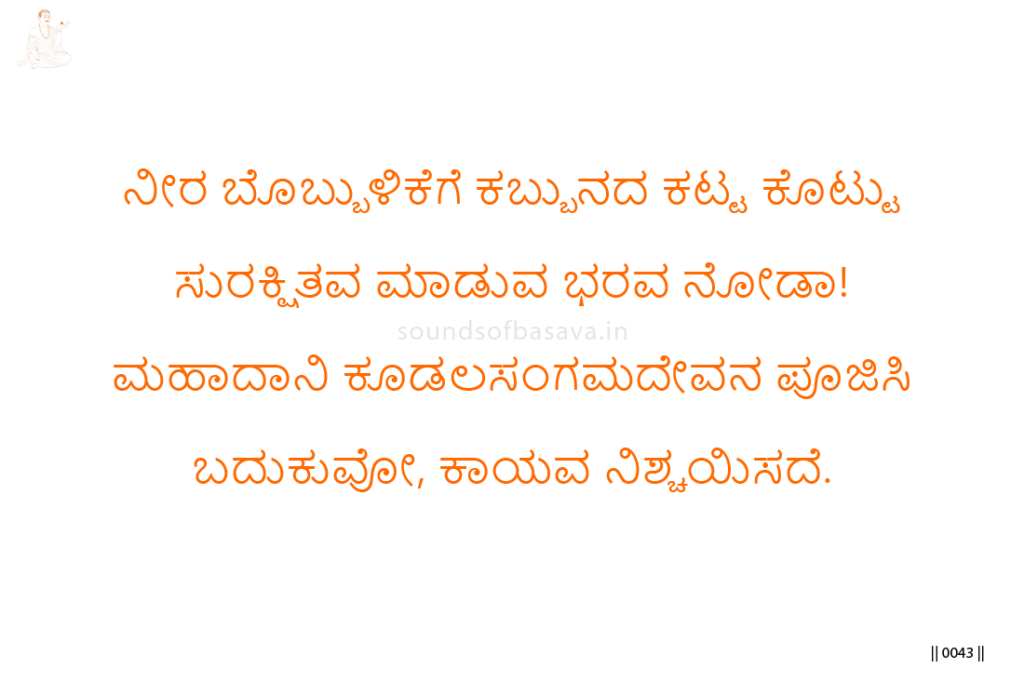
In this vachana, Basavanna compares human life within the body to water-froth protected by an iron covering. The covering may be strong, but the froth itself remains fragile.
The image shows the uncertainty of embodied life. One may guard the body, but the life within it cannot be made certain.
Basavanna therefore calls the seeker to worship Mahadani Kudalasangayya and live rightly. Since life is unstable, it must be turned toward Kudalasangama Deva while it remains.
Imagery & Symbolic Relevance
Water-froth is the central image. It appears briefly, trembles, and vanishes. Basavanna uses it to suggest the fragility of life within the body.
The iron covering represents bodily protection and worldly effort to secure life. It is strong, but its strength cannot change the nature of what it protects.
The contrast gives the vachana its force. Iron cannot make froth permanent. In the same way, no amount of bodily safeguarding can make the life within the body certain.
The instruction to worship Kudalasangayya follows from this recognition. The seeker should not spend life only in preserving its outer shelter.
The living opportunity must be used for worship before it dissolves.
Lingayoga
In Lingayoga, the body is the field of practice, but the life within it is uncertain. The Anga must recognize both truths.
The body may be cared for, but care is not the same as spiritual use. The fragile life-current must be directed toward Linga.
This vachana asks the practitioner to turn from mere preservation to consecration. Life is not secured by protection alone; it becomes meaningful through worship.
Practice matures when the seeker uses the living breath for remembrance, worship, and surrender before Kudalasangama Deva.
Editorial Commentary
This vachana distinguishes bodily protection from spiritual use of life.
Basavanna’s image warns that the fragile life within the body cannot be guaranteed by outer strength.
Related Vachana
Supporting Vachana
Vachana 161 — The Call Before the Last Breath
Vachana 161 urges worship before bodily decline overtakes the seeker. Vachana 162 continues the urgency by showing that life within the body is as fragile as water-froth.
Advancing Vachana
Maheshwara Vachana 46 — The Ten Obstructions and the Consecration of the Senses
The fragile life within the body in Vachana 162 advances into the bodily responsibility of Maheshwara Vachana 46. Since life cannot be secured permanently, the body must be used rightly before Kudalasangama Deva.
