

Summary
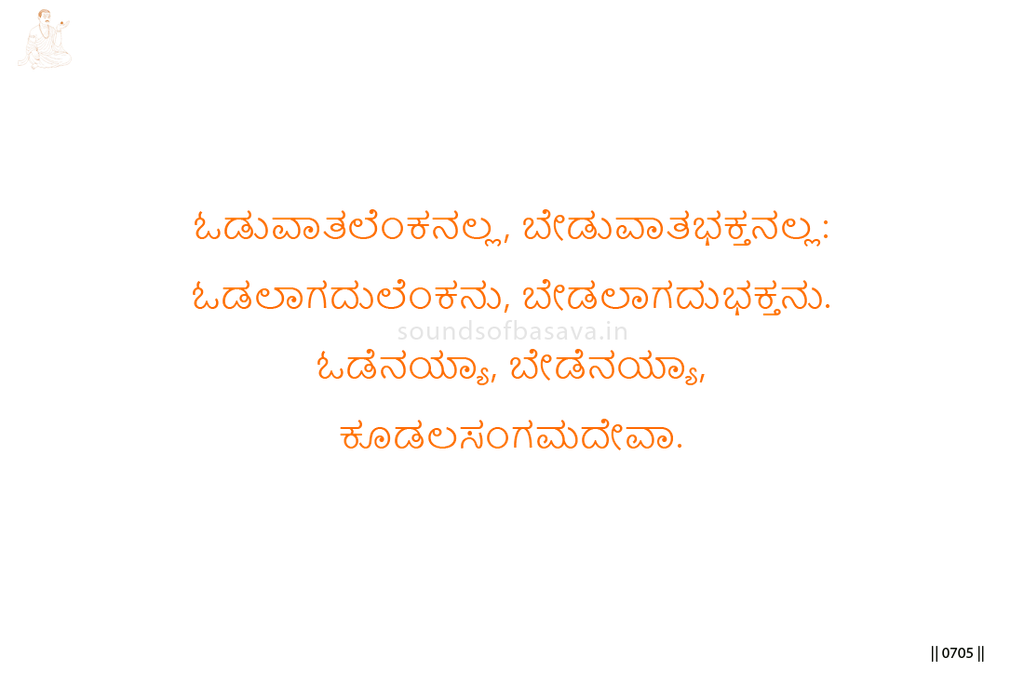
In this vachana, Basavanna says that one who runs is not a warrior, and one who begs is not a bhakta.
He then states the positive form of the teaching: a warrior does not run, and a bhakta does not beg. Courage and devotion are both tested by steadiness.
Basavanna concludes before Kudalasangama Deva: “I shall not run; I shall not beg.” The teaching is direct: the true devotee does not flee from the path and does not reduce devotion to petition or bargaining.
Imagery & Symbolic Relevance
The warrior is the first image. A warrior is defined by not running from the field. If he flees, he is no true warrior.
The bhakta is the second image. A devotee is defined by not begging. If devotion becomes only asking, it has not reached steadiness.
Running represents retreat. In the movement of the vachana, it shows failure to stand firm when tested.
Begging represents devotional dependence based on asking and receiving. Basavanna does not reject devotion, prayer, or surrender; he rejects a bhakti reduced to request.
The final declaration, “I shall not run; I shall not beg,” gives the vachana its vow-like force. Basavanna places both courage and devotion before Kudalasangama Deva as steadfastness.
The imagery therefore moves from warrior, to devotee, to the refusal of flight, to the refusal of begging. True bhakti stands.
Lingayoga
In Lingayoga, this vachana teaches steadiness without retreat and devotion without bargain.
The practice-point is direct: do not flee when the path tests courage, and do not turn devotion into a request for gain. Stand before Kudalasangama Deva without running and without begging.
For Sharana Sthala, this is fearless devotional steadiness. The Sharana does not abandon the field, nor does he approach the Divine as a trader in need. He remains.
Editorial Commentary
The brevity of this vachana should be preserved. Its force lies in the paired contrast: the warrior who runs is no warrior, and the bhakta who begs is no bhakta. The final line is the seal of the teaching: Basavanna does not explain further; he makes the vow before Kudalasangama Deva.
Related Vachana
Supporting Vachana
Pranalingi Sthala Vachana 437 — The Arrow That Has Already Flown
Pranalingi Vachana 437 supports this teaching by showing that what has arisen and passed should not be chased again through renewed desire. There, Basavanna sees the movements that arise but refuses to continue after what has already spent itself. Vachana 442 carries this into Sharana Sthala as steadiness: the devotee no longer runs after what has passed, nor begs from lack, but stands firm before Kudalasangama Deva.
Advancing Vachana
Aikya Sthala Vachana 443 — The Sufficiency of Sacred Company
Aikya Vachana 443 advances this teaching by showing what the steadfast devotee discovers: the present field of Kayaka, Linga, Sharana company, and Kudalasangama Deva is already sufficient. Vachana 442 refuses flight and begging; Aikya Vachana 443 carries this into Aikya, where the need to wander elsewhere or ask for more dissolves in realized presence.
