

Summary
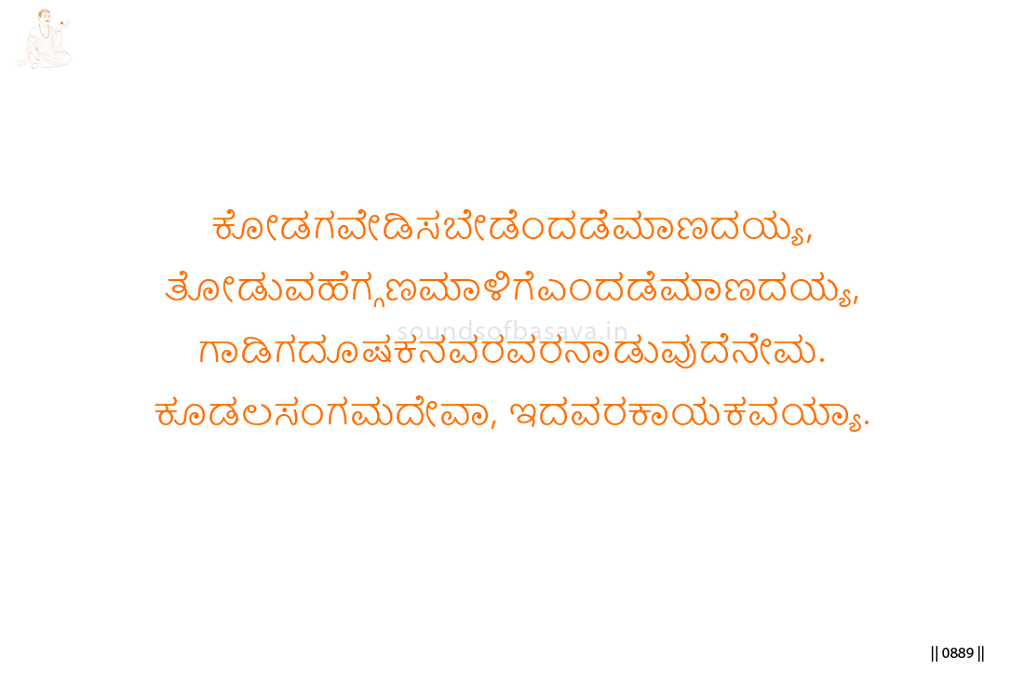
Basavanna observes the fixed habit of those who search for faults. If they are told not to seek defects, they do not listen. If they are warned not to stir up a wasp’s nest, they do not listen. Their speech continues toward blame, slander, and accusation.
The vachana does not ask the seeker to spend his life correcting such people. It asks him to recognize the nature of that movement. Some minds are drawn repeatedly toward exposing faults and creating disturbance.
The image of the wasp’s nest is important. Fault-finding is not harmless speech. It provokes agitation, releases pain, and draws others into unrest. Those who stir it cannot later complain of being stung.
The final line gives Basavanna’s restraint: “That is their work.” He does not make their conduct his burden. He places the matter before Kudalasangama Deva and refuses to let the work of slander become the work of the Sharana.
Imagery & Symbolic Relevance
The first image is fault-seeking. This is more than noticing a real error. It is the habit of looking for defects, feeding attention on what can be criticized, and turning perception toward blame.
The second image is refusal to listen. Basavanna says that even when such people are advised, they do not receive the advice. The problem is not lack of warning, but attachment to the habit.
The third image is the wasp’s nest. A wasp’s nest may remain quiet if left undisturbed. But one who pokes and stirs it creates danger for himself and for those nearby. Basavanna uses this image to show the social and spiritual consequence of provocative speech.
The fourth image is slander and accusation passing from one person to another. Speech becomes contagious. One fault-finder produces another, and blame circulates as though it were useful work.
The word “habit” gives the teaching its realism. Basavanna does not romanticize such conduct, nor does he become consumed by correcting it. He names it clearly.
The final image is “their work.” This is not praise. It is discernment. The seeker must know what belongs to others and what belongs to his own path. The Sharana’s work is not to join fault-finding, defend against every slander, or become inwardly disturbed by those who live by blame.
Lingayoga
In Lingayoga, this vachana teaches restraint before the speech of fault-finders. The seeker must not let another person’s slander determine his inward state.
For Sharana Sthala, the practice-point is direct: do not join the search for faults, do not stir the wasp’s nest, and do not make the work of slander your own work.
This does not mean abandoning discernment. It means refusing the egoic pleasure of blame. True discernment protects truth; fault-finding feeds agitation. Basavanna places such speech before Kudalasangama Deva and remains apart from its current.
Editorial Commentary
The phrase “that is their work” should be read with restraint. Basavanna is not approving slander or fault-finding. He is identifying it so that the seeker does not become entangled in it. The vachana teaches non-participation: recognize the habit, refuse the agitation, and remain turned toward Kudalasangama Deva.
Related Vachana
Supporting Vachana
Pranalingi Sthala Vachana 403 — The Heart’s Hidden Truth
Pranalingi Vachana 403 supports this teaching by warning against quick judgment of another’s inward state. There, Basavanna asks who can know what truly lies in another person’s heart, and he refuses to label a Shiva-bhakta simply as good or bad by surface judgment. The decisive line is that Jangama is Linga. This prepares Vachana 1164 directly. In Vachana 403, the seeker is restrained from judging the hidden heart of the devotee; in Vachana 1164, Basavanna shows the opposite tendency—the habit of fault-finding, slander, and provocation—and refuses to make that the work of the Sharana.
Advancing Vachana
Aikya Sthala Vachana 1341 — Where There Is Slander, There Is No Linga
Aikya Vachana 1341 advances this teaching by showing the state in which slander no longer has a place. There, the Lingavanta is described as one in whom the presence of Linga has dissolved the motive to blame. This is the natural Aikya fulfillment of Vachana 1164. In Sharana Vachana 1164, Basavanna recognizes fault-finding and slander as the work of those who will not listen; in Aikya Vachana 1341, the presence of Linga is so established that slander cannot remain at all before Kudalasangama Deva.
