
Summary
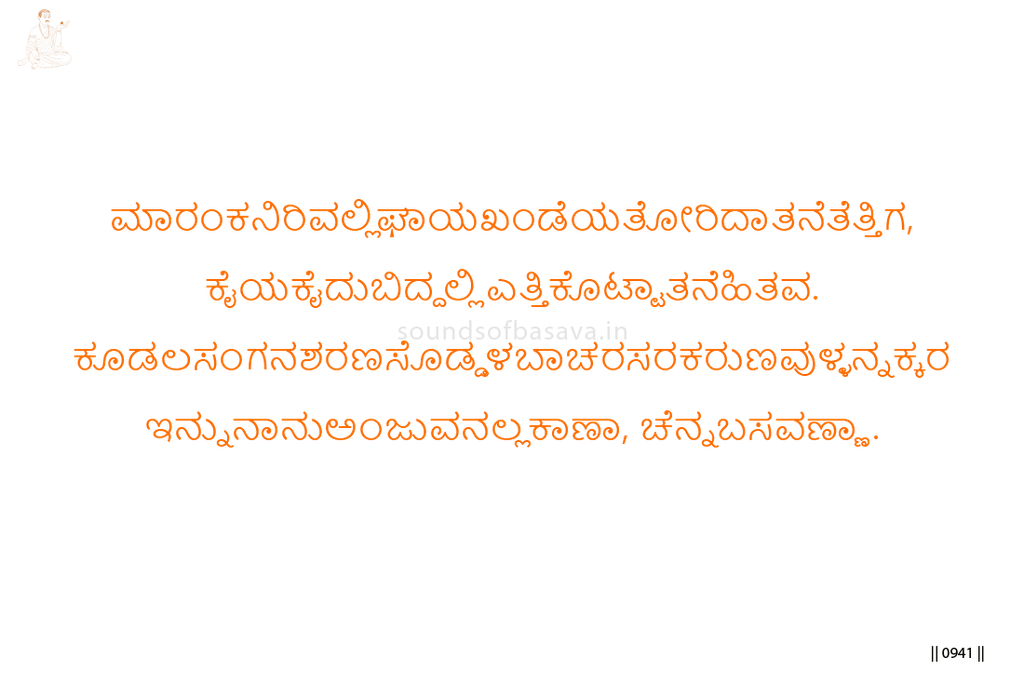
Basavanna speaks from trust in the compassion of the Sharana. When flesh is torn from a wound, the attendant does not turn away; he cleans and tends it. When a weapon falls from the hand, the trusted one lifts it and returns it. Compassion does not abandon the wounded or mock the fallen.
The vachana then names the source of this fearlessness: the compassion of Bacharasa of Soddala, the Sharana of Kudala Sangama. Because such compassion is present, fear loses its ground. Basavanna does not claim strength in himself. He rests in the assurance that the true Sharana restores, protects, and does not withdraw when weakness appears.
Imagery & Symbolic Relevance
The first image is flesh torn from a wound. Basavanna begins with a raw image of pain and vulnerability. A wound is not hidden here; it is exposed. The seeker’s weakness, injury, and inward brokenness are brought into view.
The second image is the attendant who tends the wound. The true attendant does not recoil from torn flesh. He cleans, dresses, and cares for it. This shows the nature of compassion: it draws near precisely where there is pain.
The third image is the weapon slipping from the hand. A weapon suggests strength, capacity, readiness, and responsibility. When it falls, the one who held it is no longer steady. The image points to failure, loss of firmness, or inability to continue by one’s own power.
The fourth image is the trusted one who lifts and returns the fallen weapon. He does not condemn the one who dropped it. He restores what was lost. Compassion here is not mere sympathy; it gives back strength.
The fifth image is the compassion of Bacharasa of Soddala, the Sharana of Kudala Sangama. Basavanna names a living embodiment of such mercy. Bacharasa’s compassion becomes the reason the devotee need not fear exposure, weakness, or failure.
The final image is the question addressed to Chennabasavanna: “Why should I fear any longer?” Fear disappears not because wounds and falls are impossible, but because compassionate refuge is certain.
Lingayoga
In Lingayoga, this vachana teaches that the seeker need not hide wounds or failures from the true Sharana. The Jangama who embodies compassion does not abandon the vulnerable; he tends, restores, and returns strength.
For Sharana Sthala, the practice-point is direct: do not base fearlessness on personal strength. Trust the compassion of the realized Sharana. When the wound is exposed and the weapon has fallen, receive the grace that cleanses and restores before Kudala Sangama Deva.
Editorial Commentary
This vachana should not be read as praise of weakness for its own sake. Basavanna does not glorify falling; he glorifies the compassion that does not abandon the fallen. The centre of the vachana is Sharana-karuṇe, compassion that tends the wound and restores the lost strength.
Related Vachana
Supporting Vachana
Pranalingi Sthala Vachana 824 — The Moment That Cannot Be Lost
Pranalingi Vachana 824 supports this teaching by showing how vital the relation with Jangama is to the seeker’s very prana. There, even a moment of rupture with Jangama is unbearable, because living sacred presence sustains the life of the path. This prepares Vachana 1318 by showing why the Jangama’s presence matters so deeply. In Vachana 824, the seeker cannot live apart from Jangama; in Vachana 1318, the compassionate Sharana-Jangama tends the wound, lifts the fallen weapon, and removes fear.
Advancing Vachana
Aikya Sthala Vachana 1103 — Where There Is No Death
Aikya Vachana 1103 advances this teaching by showing the fulfilled state of the very Sharana named here. In Sharana Vachana 1318, Bacharasa of Soddala is remembered as the compassionate one whose grace removes fear. In Aikya Vachana 1103, Soddala Bacharasa is seen as one who has entered and merged in the True Linga. Thus the compassion that protects the wounded in Sharana Sthala matures into the Aikya truth where such a Sharana cannot be spoken of as gone or lost, for he abides in Kudala Sangama Deva.
