

Summary
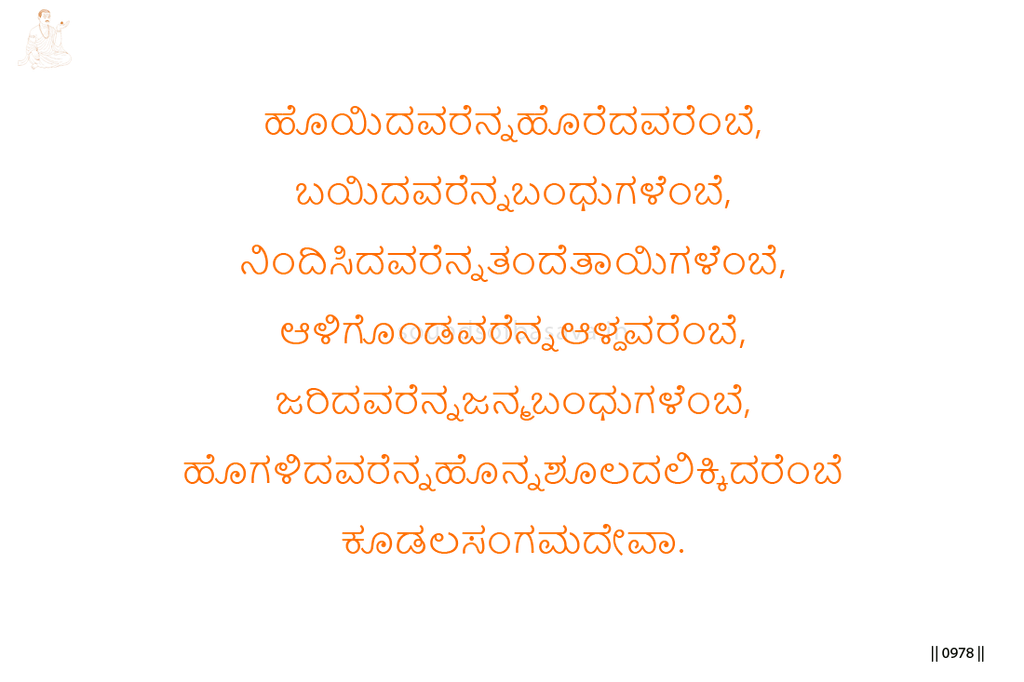
Basavanna reverses ordinary judgment. Those who rebuke, correct, criticize, discipline, and expose his faults are not treated as enemies. He calls them benefactors, companions, parents, guides, and true kin.
Praise, however, is treated with suspicion. The one who praises him is said to place a golden noose around his neck. The danger is not open hostility, but attractive bondage: praise that feeds self-importance and quietly strengthens the ego before Kudala Sangama Deva.
Imagery & Symbolic Relevance
The first image is rebuke becoming benefit. What usually feels painful becomes helpful when it removes pride and exposes hidden fault.
The second image is correction becoming companionship. The one who corrects does not stand outside the path as an enemy. Such a person walks beside the seeker by helping him remain truthful.
The third image is criticism becoming father and mother. Parents do not merely please the child; they shape and protect. Basavanna gives this parental dignity to those who criticize in a way that awakens truth.
The fourth image is discipline becoming guidance. Discipline may feel severe, but it prevents the seeker from wandering into self-delusion. The one who disciplines becomes a guide.
The fifth image is the exposer of faults becoming birth-kin. True kinship is not measured by pleasing speech. It is measured by the willingness to help remove what obstructs the path.
The final image is praise as a golden noose. Gold makes the noose attractive. Because it appears pleasant, valuable, and honourable, it is more dangerous than open insult. Praise can bind the seeker precisely because the ego welcomes it.
Lingayoga
In Lingayoga, this vachana teaches vigilance toward recognition. The seeker must not measure spiritual standing by approval, admiration, or public honour. The truer help may come through correction, exposure, and humbling words.
For Sharana Sthala, the practice-point is direct: receive correction as grace, and do not become intoxicated by praise. Let rebuke remove vanity, let criticism open self-knowledge, and let praise be tested before Kudala Sangama Deva. The Sharana must prefer transformation over admiration.
Editorial Commentary
The golden noose should remain central. Basavanna is not condemning every sincere word of appreciation. He is warning against praise that nourishes self-importance. Because such praise feels pleasant, it can bind more subtly than criticism.
Related Vachana
Supporting Vachana
Pranalingi Sthala Vachana 1117 — Teach My Mind, Not Merely My Speech
Pranalingi Vachana 1117 supports this teaching by showing the value of inward correction. There, Basavanna says that people taught him how to speak to others, but did not teach him how to speak to his own mind; Madivala Machayya corrected him for the sake of the mind. This prepares Vachana 1414 directly. In Vachana 1117, the true helper is the one who corrects the inner being; in Vachana 1414, Basavanna calls those who rebuke, criticize, discipline, and expose faults his benefactors and kin, while treating praise as a golden bond.
Advancing Vachana
Aikya Sthala Vachana 1415 — One Moment of Living Experience
Aikya Vachana 1415 advances this teaching by carrying freedom from praise into the value of direct experience. In Sharana Vachana 1414, Basavanna rejects the ego’s hunger for approval and honours those who help remove self-delusion. In Aikya Vachana 1415, even one moment of the living experience of Kudala Sangama Deva’s Sharanas surpasses long austerity, worship, Guru-service, and Jangama-satisfaction. Thus the Sharana-stage freedom from admiration advances into Aikya as direct participation in living realization, where praise and blame no longer define the seeker.
