

Summary
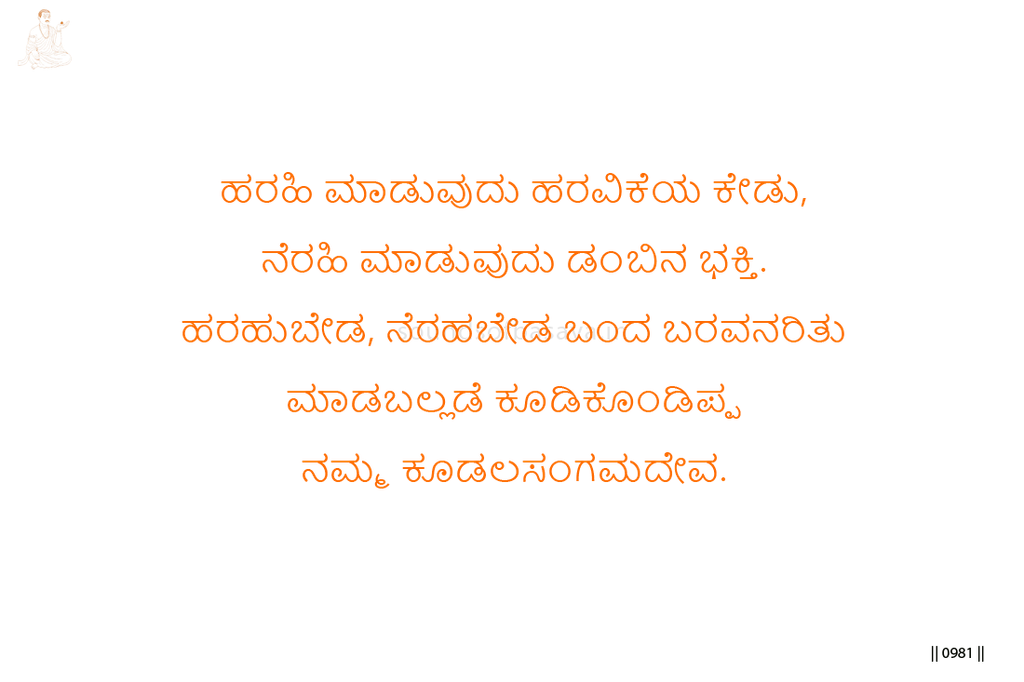
Basavanna warns against two distortions in spiritual action. To act by increasing, spreading, or enlarging beyond what is proper harms the purity of the act. To act by gathering or accumulating becomes the devotion of display.
He therefore gives a double instruction: do not increase, and do not accumulate. Know what comes and what goes, and act according to that understanding. When action is free from swelling, hoarding, and show, Kudalasangama Deva remains joined with the seeker.
Imagery & Symbolic Relevance
The first image is action through increase. Basavanna does not praise enlargement for its own sake. When something is expanded beyond its rightful measure, it becomes harmful.
The second image is action through accumulation. Gathering may appear careful or devotional, but when it becomes inward possession, it turns into ostentatious devotion.
The third image is the double restraint: do not increase, do not accumulate. The seeker is asked to remain free from both exaggeration and hoarding.
The fourth image is knowing what comes and what goes. This is the discernment at the center of the vachana. The Sharana does not hold what is passing as though it were permanent, nor does he enlarge what has merely come into his hand.
The final image is Kudalasangama Deva joined with the one who acts rightly. Divine nearness is not tied to increase, possession, or display. It is present where action follows the true measure of what comes and goes.
Lingayoga
In Lingayoga, this vachana teaches restraint in receiving, giving, and acting. Spiritual life must not become enlargement for visibility or accumulation for security.
For Sharana Sthala, the practice-point is direct: receive what comes without ownership, release what goes without fear, and act according to right understanding. Devotion becomes true when it is free from swelling, collecting, and display before Kudalasangama Deva.
Editorial Commentary
This vachana should not be read as a rejection of service, offering, or necessary provision. It rejects excess, possessive gathering, and devotion performed for appearance. The heart of the vachana is measured action: knowing the coming and going of things, and acting without turning them into self-importance.
Related Vachana
Supporting Vachana
Pranalingi Sthala Vachana 786 — Not a Blade of Grass Outside the Linga
Pranalingi Vachana 786 supports this teaching by refusing ownership at the smallest level. There, Basavanna will not take even a blade of grass unless it is Linga-arpita; receiving itself must remain in Linga-awareness and not become separate possession. This prepares Vachana 1419 directly. In Vachana 786, even the smallest taking must not become ownership; in Vachana 1419, Basavanna gives the Sharana form of the same discipline: do not increase, do not accumulate, but know what comes and goes and act rightly before Kudalasangama Deva.
Advancing Vachana
Aikya Sthala Vachana 1420 — From Devotion to Living Experience
Aikya Vachana 1420 advances this teaching by carrying freedom from accumulation into fearlessness amid the rise and fall of conditions. In Sharana Vachana 1419, Basavanna asks the seeker not to enlarge or gather, but to understand coming and going and act from that discernment. In Aikya Vachana 1420, even the great spiritual environment of Kalyana is seen as changing: devotion and Anubhava flourished, yet they do not remain in the same form. The Aikya state is therefore not dependence on accumulation, institution, or favorable circumstance, but moving and speaking without fear because Kudalasangama Deva is the unchanging center.
