

Summary
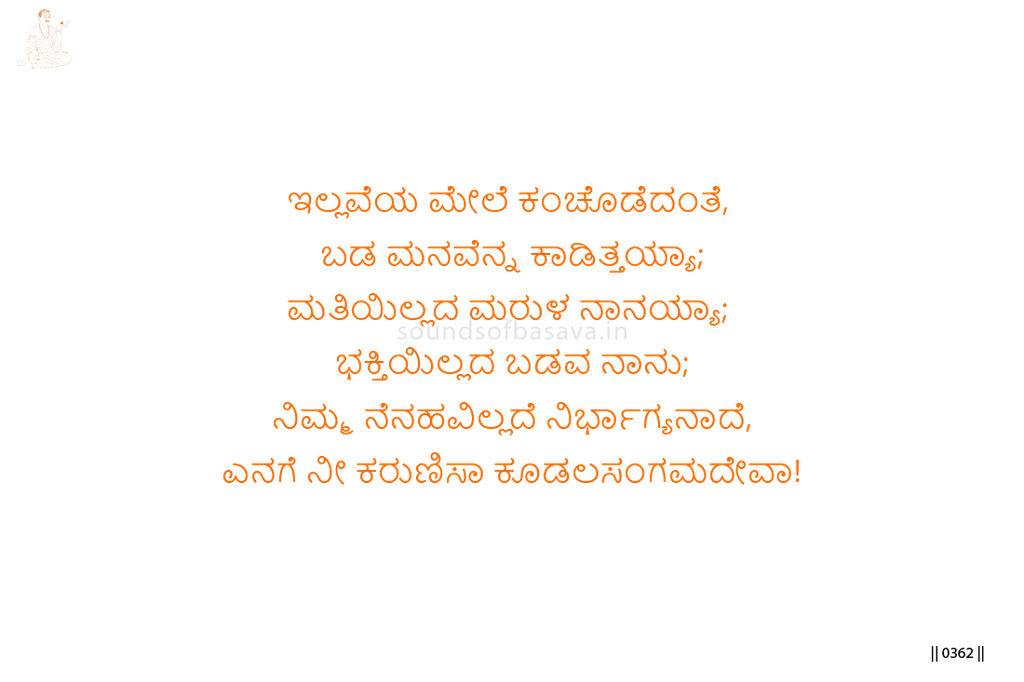
In this vachana, Basavanna confesses the condition of his own mind. Like bronze spread over the surface, the mind may show an outer shine, yet it remains poor within. Its brightness does not prove wisdom, devotion, or remembrance.
The speaker calls himself foolish, without true understanding. He also calls himself poor because Bhakti is absent. This poverty is not material poverty, but the inward poverty of one who lacks living devotion.
The deepest cause is forgetfulness. Without remembrance of Kudalasangama Deva, the speaker becomes unfortunate. He therefore does not praise his own effort or appearance. He asks only for compassion.
Imagery & Symbolic Relevance
The first image is bronze on the surface. Bronze may shine, but its shine can mislead. Basavanna uses this image for the mind that appears bright but remains inwardly mixed and unrefined.
The second image is the poor mind. The mind troubles the speaker because it does not rest in clear understanding. It carries surface movement without true steadiness.
The third confession is lack of mati, or sound understanding. Basavanna does not hide behind polished appearance. He names himself foolish where wisdom has not become real.
The fourth confession is lack of Bhakti. Without devotion, the speaker is poor, even if outwardly active or capable. Bhakti is the wealth that gives inward life its value.
The final image is loss through non-remembrance. Forgetting Kudalasangama Deva is the true misfortune. The speaker’s prayer for compassion arises from that recognition.
Lingayoga
In Lingayoga, this vachana shows the need for steady remembrance. The mind may shine, speak, reason, and move, but without remembrance of Kudalasangama Deva it remains spiritually poor.
For Prasadi Sthala, the relevance lies in honest receiving. The seeker receives the truth of his own condition without disguise. He does not mistake mental brightness for realization, nor outward capacity for Bhakti. He turns to Kudalasangama Deva for compassion.
Editorial Commentary
The bronze image should be understood as surface brightness without inner purity. Basavanna is not condemning the mind as useless; he is exposing the danger of mistaking shine for substance.
The word “poor” is used spiritually. The speaker is poor because Bhakti is lacking. In this vachana, the absence of devotion is a greater poverty than lack of material wealth.
Remembrance is the decisive point. Without Kudalasangama Deva’s remembrance, understanding weakens, devotion does not take root, and the mind remains restless. Basavanna therefore ends not with self-analysis, but with the prayer: “Have compassion on me.”
Related Vachana
Supporting Vachana
Maheshwara Sthala Vachana 272 — The Wavering Devotion
Maheshwara Vachana 272 supports this vachana by showing the instability of devotion when the inner condition is unsettled. In Vachana 257, Basavanna sees his mind as outwardly bright but inwardly poor, without understanding, devotion, and remembrance. In Maheshwara Vachana 272, devotion wavers under inner forces, and the tongue may speak while the mind trembles. The support is direct: both vachanas expose the gap between outward expression and inward steadiness before Kudalasangama Deva.
Advancing Vachana
Pranalingi Sthala Vachana 340 — The Vigilance of the True Sharanas
Pranalingi Vachana 340 advances this movement by showing the mature state opposite to forgetfulness. In Vachana 257, the speaker becomes unfortunate through lack of remembrance and asks Kudalasangama Deva for compassion. In Vachana 340, true Sharanas remain vigilant; even a slight lapse in remembrance is immediately felt and corrected through humility and the cry “Śiva! Śiva!” Thus the Prasadi confession of forgetfulness advances into Pranalingi as continuous remembrance guarded with humility.
