

Summary
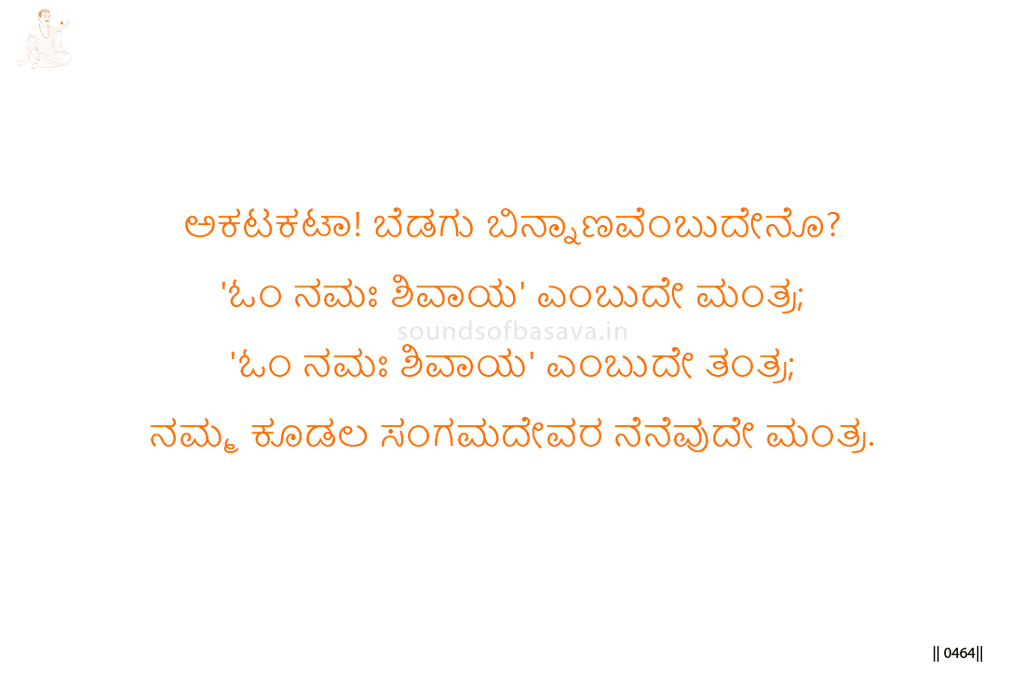
In this vachana, Basavanna rejects the display of cleverness and skill. He asks what use there is in such outward refinement when the path is already direct.
He then places “Om Namah Shivaya” at the center. This alone is mantra; this alone is tantra. What others may seek through special method or elaborate practice is gathered into the one sacred Name.
The final line brings the teaching to Kudalasangama Deva. Remembrance of the Lord itself is mantra. Basavanna does not multiply supports. He shows that the Name, held in remembrance, is sufficient.
Imagery & Symbolic Relevance
The first image is bedagu-binana: outward polish, cleverness, skill, or display. Basavanna does not admire it. His opening exclamation shows that such refinement can become unnecessary show when it distracts from direct remembrance.
“Om Namah Shivaya” is then named as mantra. The mantra is not presented as one option among many. Basavanna says this alone is mantra, making the Name the central sacred utterance.
The same “Om Namah Shivaya” is also called tantra. Here tantra means the method or means. Basavanna does not send the seeker toward a separate system. The Name itself is the means.
The final movement is remembrance of Kudalasangama Deva. This completes the vachana. The Name is not merely sound on the tongue; it is remembrance of the Lord. When remembrance is present, the mantra is alive.
Lingayoga
In Lingayoga, this vachana teaches simplicity of practice. The seeker need not depend on outward display, cleverness, or specialized spiritual skill.
The Name gathers the path into direct remembrance. “Om Namah Shivaya” is mantra because it centers the seeker. It is tantra because it becomes the means. Remembrance of Kudalasangama Deva is the living practice.
Editorial Commentary
“Bedagu-binana” should be understood as outward refinement or clever display. Basavanna’s question rejects reliance on such show when remembrance itself is available.
Mantra is the sacred utterance; tantra is the means. Basavanna identifies both with “Om Namah Shivaya” and then resolves them in remembrance of Kudalasangama Deva.
Related Vachana
Supporting Vachana
Prasadi Sthala Vachana 20 — The Antidote in the Bite
Prasadi Vachana 20 supports this vachana by showing “Om Namah Shivaya” as the turning point when the seeker is affected by the poison of samsara and the five sense-objects. There, the Name is uttered in danger. In Vachana 77, the same Name is no longer only an emergency cry; it is declared to be mantra and tantra. Thus the Prasadi use of the Name as antidote supports the Pranalingi certainty that the Name itself is the direct means.
Advancing Vachana
Sharana Sthala Vachana 79 — Refuge in the Name Alone
Sharana Vachana 79 advances this teaching by showing the Name as refuge. In Vachana 77, “Om Namah Shivaya” is mantra and tantra, and remembrance of Kudalasangama Deva is mantra. In Vachana 79, the same Name becomes refuge against the bondage of becoming and wrongdoing. Thus the sufficiency of the Name in Pranalingi advances into Sharana Sthala as complete surrender into the Name.
