

Summary
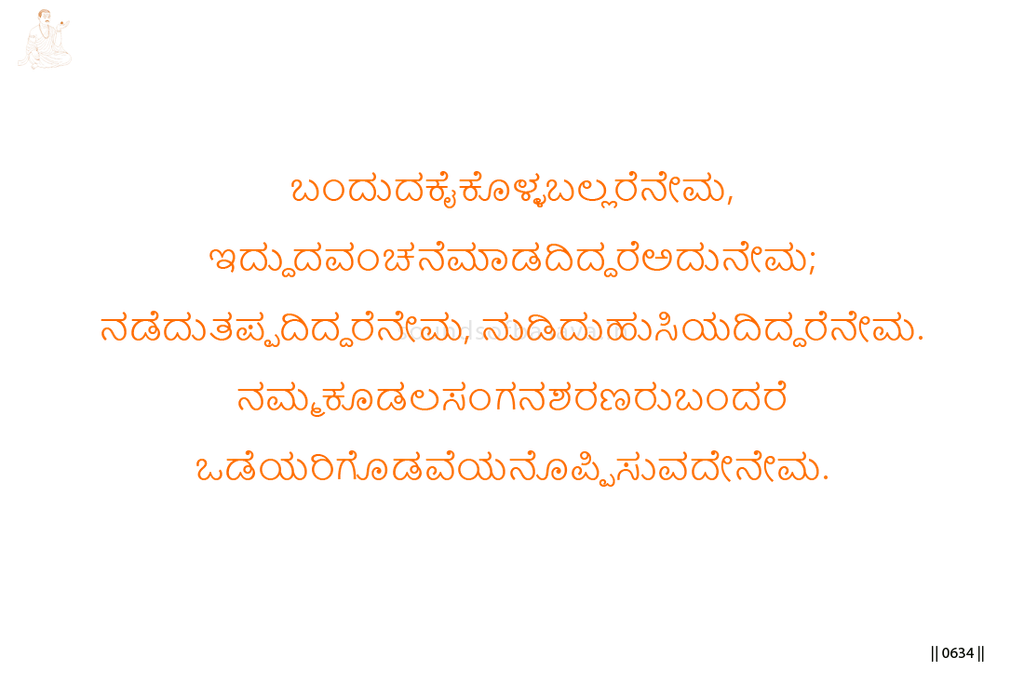
In this vachana, Basavanna defines Nema as disciplined integrity in ordinary life. Nema is to receive what comes rightly. It is to keep what is present without deceit. It is to walk without straying and to speak without falsehood.
The teaching moves through the whole field of conduct. What is received must not disturb the seeker through greed or complaint. What is held must not be handled through deception. Action must not deviate from the path, and speech must not become false.
The final test comes when Kudalasangama’s Sharanas arrive. What is held as wealth, possession, or precious belonging must be placed before the true Owner through them. This alone is Nema: disciplined life that remains truthful in receiving, holding, acting, speaking, and offering.
Imagery & Symbolic Relevance
Receiving what comes is the first movement. Basavanna does not define discipline as withdrawal from life. He begins with what comes into one’s hands and asks whether it can be received rightly.
What is already present is the second field. Discipline is not only about how one receives; it is also about how one handles what one already has. If what is held is managed with deceit, Nema is broken.
Walking is the third image. Walking stands for conduct and movement through life. To walk without fault means that action must not turn away from truth.
Speech is the fourth image. To speak without falsehood is Nema. Basavanna joins conduct and speech, showing that discipline is incomplete if the body moves one way and the tongue moves another.
The arrival of Kudalasangama’s Sharanas is the decisive test. Discipline is not proven merely by private restraint. It is tested when living sacred presence stands before the seeker.
The precious possession or wealth is the final image. What is valued must not remain locked within self-claim. When the Sharanas arrive, what is held should be recognized as belonging to the true Owner and offered without deceit.
Together, the images make Nema practical and exact. It is not merely ritual observance. It is truthful receiving, honest stewardship, straight conduct, truthful speech, and freedom from possessiveness before Kudalasangama’s Sharanas.
Lingayoga
In Lingayoga, this vachana makes discipline inseparable from daily conduct. Nema is not limited to a vow, rule, or outer practice. It must govern receiving, keeping, walking, speaking, and offering.
The practice-point is direct: receive without disturbance, hold without deceit, act without deviation, and speak without falsehood. Do not let discipline remain separate from ordinary dealings.
For Sharana Sthala, the final measure is offering before the Sharanas. The Sharana does not preserve self-ownership when Kudalasangama’s Sharanas arrive. Discipline becomes complete when what is held is placed back into the living field of truth.
Editorial Commentary
The word Nema should be explained here as disciplined observance expressed through integrity. The vachana does not restrict it to ritual practice. Basavanna defines it through concrete actions: receiving, keeping, walking, speaking, and offering. This makes the vachana especially relevant to householders and those entrusted with resources, because what is held must be governed without deceit and released when the Sharanas of Kudalasangama arrive.
Related Vachana
Supporting Vachana
Pranalingi Sthala Vachana 644 — The Unbroken Way
Pranalingi Vachana 644 supports this teaching by saying that truth, purity, and daily Nema must be practiced without break. It also warns that mere nearness, like fish, tortoise, and frog living in water, does not by itself yield fruit. Vachana 231 gives the Sharana form of that discipline: Nema must become truthful receiving, honest keeping, straight conduct, true speech, and offering before Kudalasangama’s Sharanas. Thus Pranalingi Vachana 644 supports the teaching by showing that Nema must be unbroken and lived, not merely named.
Advancing Vachana
Aikya Sthala Vachana 1162 — The Giver and the Receiver Are Kudalasanga
Aikya Vachana 1162 advances this teaching by dissolving the final pride of ownership in giving. In Vachana 231, Basavanna says that when Kudalasangama’s Sharanas arrive, what is held as precious must be placed before the true Owner; this is Nema. In Aikya Vachana 1162, the giver is Kudalasanga, the receiver is Kudalasanga, and Kudalasangayya alone gives to the three worlds. Thus the Sharana-stage discipline of truthful offering advances into Aikya as giving without personal claim before Kudalasangama Deva.
