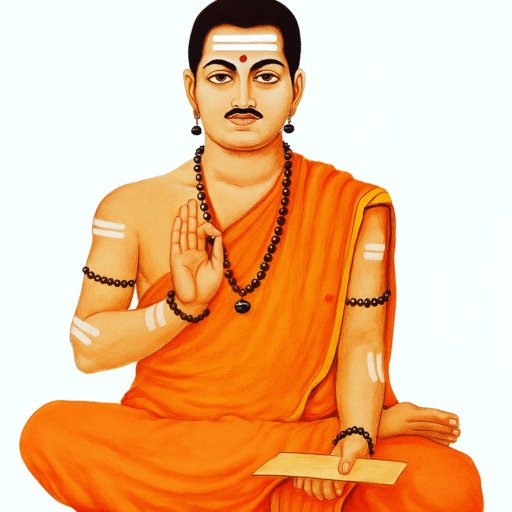

Poetic Rendering
What use is it to read, to listen, to labor in righteous acts,
if Your living presence does not stir within me?
“Shiva, Shiva!” I may cry
yet without Your grace, it is like an ornament
worn upon the ear, shining but useless,
bringing no change, no inner worth.
O Koodalasangamadeva,
all practice is hollow
when You do not awaken the heart.
Vachana teaches that spiritual effort study, listening to teachings, devotion, ritual, or service cannot transform the seeker unless it is infused with the living presence of divine grace. Basavanna exposes a subtle spiritual deception: we may “perform” the outer forms of practice while the inner being remains untouched. He compares this to an ornament that is worn every day yet brings no inner value; it adorns the body but does not elevate the soul. Likewise, practices done without awakening the inner Linga remain merely decorative: impressive from the outside but empty within. The vachana calls the seeker to honesty: without divine grace igniting the heart, all practice becomes a “broken vow,” a lifeless commitment. True transformation begins only when Koodalasangamadeva stirs the inner consciousness then every act, every word, every breath becomes real, alive, and meaningful.
Spiritual Context
Core Spiritual Principle: The efficacy of spiritual practice is not determined by its external correctness or intensity, but by the inner awakening and divine connection it facilitates. A practice devoid of the “living presence” of the Divine is a dead letter, a “broken vow” to the truth of one’s own soul.
Cosmic Reality Perspective: The Linga is dynamic, conscious Shakti (power). For spiritual practice to be real, it must become a circuit through which this divine energy flows. Mere mechanical performance is an open circuit; it completes the physical action but allows no spiritual current to pass, resulting in no inner transformation.
Historical Reality (Anubhava Mantapa Context): This is a continuation of Basavanna’s relentless critique of empty ritualism. It warns the Sharanas that even within their revolutionary path, one can fall into the habit of going through the motions of Kayaka and Dasoha without the inner fire of devotion, thereby creating a new orthodoxy as hollow as the old.
Interpretation
1. “What use is it to read, to listen, to labor…”: This enumerates the three primary paths of spiritual practice: Jnana (knowledge/reading), Bhakti (devotion/listening), and Karma (righteous action/labor). Basavanna declares that even these are useless if performed mechanically.
2. “if Your living presence does not stir within me?”: The key phrase is “stir within.” True practice is not about influencing God but about being stirred, moved, and transformed by God. The practice is the invitation; the “stirring” is the response of grace.
3. “like an ornament worn upon the ear…”: This is a masterful metaphor. The ornament is: External: It adorns the outer person but does not change the inner one. Inert: It may be valuable (gold, jewels) but it is lifeless. Useless: It serves no function for the wearer’s spiritual well-being. Similarly, a practice can be externally perfect, traditionally valuable, and impressive to others, yet be spiritually inert for the practitioner.
4. “all practice is hollow when You do not awaken the heart.”: This is the final, stark conclusion. The “heart” (hridaya) is the seat of consciousness and feeling. Its “awakening” is the moment practice ceases to be an action and becomes an experiencethe moment the vow is no longer broken but fulfilled from within.
The Cosmic Reality
Anga (Human Dimension): The Anga is the “wearer of the ornament.” It is engaged in the form of spirituality but remains disconnected from the substance. Its task is to move from performance to prayer, from doing to being stirred.
Linga (Divine Principle): The Linga is the “living presence,” the divine life-force itself. It is not a passive object of worship but the active subject that “awakens the heart” when invoked with true sincerity.
Jangama (Dynamic Interaction): The Jangama is the “stirring,” the “awakening.” It is the dynamic, life-giving connection where the Linga’s grace responds to the Anga’s sincere, albeit imperfect, offering, turning hollow ritual into a living communion.
Shatsthala
Primary Sthala: Bhakta Sthala. This Vachana is essential for the Bhakta, as it calls for a purity of intention that is the very foundation of devotion. It prevents the devotee from becoming a hypocrite.
Supporting Sthala: Prasadi Sthala. The “awakening of the heart” is the definitive mark of grace (Prasada). This Vachana describes the state of spiritual dryness that exists before the descent of grace, making the devotee ripe for its reception.
Practical Integration
Arivu (Awareness Practices): Before any spiritual practice, perform a “Heart-Check.” Sit quietly and ask: “Am I doing this to connect with the Divine, or out of habit, duty, or for spiritual prestige?” Wait until you feel a genuine spark of longing or sincerity before you begin.
Achara (Personal Discipline): The core discipline is sincerity over spectacle. Prefer a short, heartfelt prayer to a long, distracted ritual. If you find your mind wandering during practice, stop, recenter your intention on the “living presence,” and then continue.
Kayaka (Sacred Action): Infuse your daily work with this “living presence.” Don’t just perform tasks; offer them. Before starting, dedicate your work to the Divine. This simple internal act can transform mundane labor into a sacred offering that “stirs” your consciousness throughout the day.
Dasoha (Communal Offering): Build a community that values authenticity. Share struggles with spiritual dryness and hollow practice. Support each other in rekindling the inner fire, remembering that the goal is not perfect performance but a living connection with Koodalasangamadeva.
Modern Application
Spiritual Burnout and Religious Routine. Many modern seekers and religious adherents experience a sense of emptiness in their practice. They go to church, temple, or yoga class; they meditate and read spiritual books, but feel nothing. This leads to burnout, cynicism, and a feeling that spirituality “doesn’t work.” This is the modern “broken vow.”
This Vachana liberates one from the guilt and frustration of mechanical practice. It reframes the problem: it’s not that spirituality has failed, but that the approach has been externalized. It guides the seeker to shift their focus from perfecting the external form to cultivating the inner, receptive state of the heart, where the “stirring” of grace can be felt. It replaces the burden of duty with the joy of relationship.
Essence
I read, I serve, I sing the prayer,
And wear the forms with pious care.
But without Your stir, this heart of stone,
Performs for an audience, all alone.
Break the vow that’s made in name,
And set my practiced heart aflame.
1. The Circuit of Transformation: A spiritual practice is like a wire. The physical action (reading, labor) is the copper wire itself. The sincerity and longing of the heart are the insulation that prevents energy loss. The “living presence” of the Linga is the electrical current. Without the current, the wire is inert, no matter how well-constructed. The “awakening” is the moment the circuit is completed and the current flows, illuminating the entire system (the practitioner).
2. The Ornament as a Closed System: The “ornament” represents a closed metaphysical system. It interacts with nothing. It receives no energy and transmits none. It is a dead end. A practice performed without the intent of connection is a closed system, generating no spiritual evolution and producing only the “heat” of egoic effort (pride or frustration).
3. Jangama as the Completion of the Circuit: The functioning Jangama is the divine activity that completes the circuit. It is the responsive grace that flows into the practice when the Anga’s offering is made with a genuine, open heart (a worthy conductor). This grace is what “stirs” the heart, transforming it from a passive, ornament-like object into an active, vibrant participant in the divine play. In this state, the practice is no longer something the Anga does for the Linga, but something the Linga does through the Anga. The “vow” is no longer broken because it is no longer a vow of the individual self, but the eternal, fulfilled covenant of the Divine with itself.
Do not mistake the map for the journey, or the recipe for the meal. Your spiritual practices are meant to be a living dialogue with the Divine, not a monologue performed for an audience. If your heart remains unmoved and your character unchanged, your practice is an ornament, not a tool for transformation. Have the courage to stop and ask for the living presence to stir within you. For it is only when grace ignites the heart that the broken vow of empty ritual is mended into the sacred covenant of love.

Views: 7