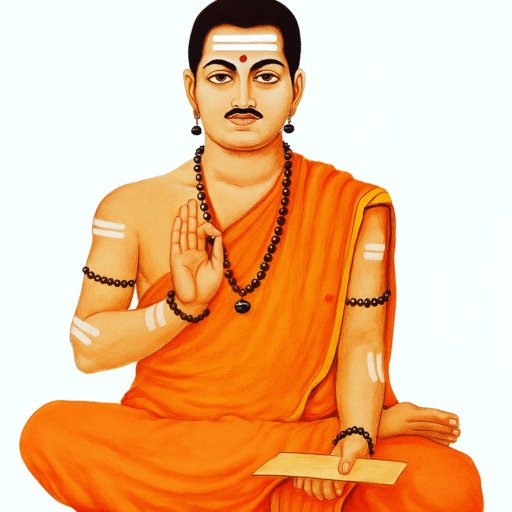

Poetic Rendering

“I am but a beggar
bereft of devotion, O Lord
So I went seeking, bowl in hand:
to the house of Kakkayya,
to the house of Chennayya,
to the house of Dasayya
begging for even a drop
of Your living truth.
But when these saints,
each a radiant flame,
gathered as one blazing light
and poured their grace into my bowl
my little vessel
could hold no more;
it overflowed
beyond boundaries, beyond form
O Kudalasangama Deva!”
In this Vachana, Basavanna expresses the highest form of spiritual humility. Though he is a towering figure in the Sharana tradition, he stands before the Divine as a “beggar without devotion,” acknowledging that even devotion itself is not his possession but a gift from grace. This confession reveals a profound truth: true spiritual greatness begins with total surrender of ego. Basavanna describes seeking the essence of divine experience from the “houses” of saints such as Kakkayya, Chennayya, and Dasayyanot literal homes, but symbolic realms of different spiritual qualities. Each saint embodies a distinct flavor of realization, a unique doorway into the mystery of Shiva.
The climax comes when these saints, like separate lamps merging into a single flame, gather as “one light.” In this unified field of spiritual intensity, their grace becomes so abundant that Basavanna’s inner bowl the heart emptied of ego cannot contain it. It overflows, dissolving the distinction between the giver, the receiver, and the gift.
Spiritual Context
Core Spiritual Principle: Grace as Communal Efflorescence (Sangha-Prasada). In Lingayoga, the fullest grace does not descend upon the isolated individual but erupts within the collective field of awakened beings. The seeker’s humble reception creates the condition, but the saints’ unified consciousness generates the catalytic overflow that shatters individual limitation.
Cosmic Reality Perspective: The non-dual Shiva-Shakti dynamic is illustrated here. Each saint is a distinct expression of Shakti (divine energy). Their gathering into “one light” represents the convergence of individual Shaktis into pure, undifferentiated Shiva-consciousness. The beggar’s bowl is the contracted Shakti (individual soul) that, when filled by this unified source, expands beyond its contracted form, realizing its true, boundless nature.
Historical Reality (Anubhava Mantapa Context): This vachana documents the experiential heart of the Anubhava Mantapa. Basavanna, its leader, models the core ethic: even the greatest teacher is first a beggar at the doors of other Sharanas. It validates the Mantapa as a grace-multiplier, where the combined spiritual resonance of diverse saints (like the cobbler Chennayya, the farmer Kakkayya) creates a force of awakening that no single path could generate alone.
Interpretation
1. “I am but a beggar bereft of devotion”: This is the ultimate spiritual honestythe surrender of even the identity of being devoted. It creates the perfect vacuum, the “bowl” that can receive.
2. “To the house of Kakkayya, Chennayya, Dasayya”: These are not physical places but the distinctive spiritual “addresses” or qualities of each saint. Seeking from each represents the integration of diverse facets of realization (e.g., unwavering faith, humble service, fierce wisdom).
3. “When these saints… gathered as one blazing light”: The individual “flames” of their realized consciousness synergize. This unity is greater than the sum of its parts; it is the manifestation of the singular Linga in communal form.
4. “Poured their grace into my bowlmy little vessel could hold no more; it overflowed”: The finite self (bowl) is designed to contain a limited sense of “I.” The infinite grace of the unified field cannot be contained by that construct. The overflow is the dissolution of the ego-vessel, not its destruction, but its expansion into boundlessness.
5. “Beyond boundaries, beyond form”: The result is the direct experience of the formless (Nirakara), non-localized reality. The begging “I” disappears into the overflow.
Practical Implications: Spiritual growth requires active, humble seeking from multiple sources of wisdom within the community. The goal is not to fill oneself with knowledge but to be placed in a collective field of grace so intense that one’s limited self-concept is effortlessly transcended.
The Cosmic Reality
Anga (Human Dimension): The contracted vessel of individuality. Its nature is to have a capacity, a limit. Its spiritual function is to consciously become empty (a beggar) to initiate the process.
Linga (Divine Principle): The boundless, luminous unity. It is the “one light” and the essential nature of the grace being poured. It is inexhaustible.
Jangama (Dynamic Interaction): The gathering, the pouring, and the overflowing. This is the sacred activity that mediates between the finite and infinite. The Jangama is the flow of grace that, when received from a unified source, performs the alchemy of transforming Anga’s very nature from a container into an unbounded expression of the Linga.
Shata Sthala
Primary Sthala: Bhakta. The entire drama begins from the Bhakta stagethe sincere admission of need and the active seeking from those further on the path.
Supporting Sthala: Aikya. The overflow is the experiential climax of Aikya, where separate identities (beggar, saints) merge in the unbounded grace of the Linga. The Bhakta’s journey finds its destination in this overflow.
Practical Integration
Arivu (Awareness Practices): Practice “Holding the Beggar’s Bowl.” In meditation, visualize your heart as an empty bowl. Invite the presence and qualities of spiritual mentors or saints you admire (not as personalities, but as embodiments of grace). Silently receive, allowing any sense of fullness to expand into a feeling of limitless space.
Achara (Personal Discipline): Cultivate “Intentional Spiritual Debt.” Regularly seek out and learn from individuals in your community who embody different spiritual strengths. Consciously acknowledge your dependence on this collective wisdom. Keep a journal not of your insights, but of the gifts received from others.
Kayaka (Sacred Action): Let your work be your “bowl.” Offer the fruits of your labor to the community (Dasoha) without attachment. In return, remain open to receiving the grace that flows back through the community’s appreciation, support, and shared purpose. This creates a cycle of overflow.
Dasoha (Communal Offering): Design community gatherings that are not about one teacher speaking, but about creating a collective “blazing light.” Use formats like circle sharing, collective chanting, or silent group meditation where the combined focus itself becomes the source of poured grace for all participants.
Modern Application
Spiritual Individualism and the Expert Syndrome. Modern seekers often approach spirituality as a solo self-improvement project or shop for a single guru/expert to follow. This reinforces the ego-bowl’s walls. We lack models for humble interdependence and for receiving from a diverse community, leading to fragmented growth and subtle competition.
Cultivate the Ecology of Grace. This vachana teaches us to build and rely on a spiritual ecosystem, not a single source. Seek wisdom from the “Kakkayya” (the practical doer), the “Chennayya” (the humble server), the “Dasayya” (the fierce renunciate) in your circles. Value the collective resonance of your sincere community more than any individual’s teachings. In such a field, your own limited seeking will be met with an overflow that transforms you.
Essence
A beggar’s plea, an empty bowl,
A seeking to make the fragment whole.
Not one flame, but merged they came
A sun without a name or claim.
What poured was more than cup could hold;
The story of the seeker told
Was lost in boundless, silent sea
The beggar drowned, and yet was free.
This vachana models the quantum-holographic principle of spiritual reception. The individual saints represent distinct holographic plates, each containing a complete but unique interference pattern of the Divine source (Linga). The beggar’s bowl is the classical, separatist selfa vessel defined by boundaries and a logic of scarcity (containment). When the saints unite as “one light,” their individual holograms superimpose, creating a laser-like beam of coherent grace. This coherent field does not interact with the bowl as a container to be filled, but as a boundary to be illuminated. The overflow is the inevitable holographic revelation: every part (the bowl, the beggar) is shown to already contain the whole (the cosmos). The bowl isn’t filled; its illusion of separateness is exposed and dissolved by the intensity of unified consciousness.
Imagine your sense of self as a clay cup. You go to different springs (saints) to collect water (wisdom) to fill it. But when those springs converge into a single, powerful waterfall and pour into your cup, the force doesn’t just fill itit shatters the cup. You suddenly find you are not holding water in a fragile container; you are standing in the river, inseparable from the flow. The saints’ unity didn’t give you more water; it revealed you were always part of the ocean. The begging was the necessary gesture that positioned your cup perfectly under the cataract of grace.
We are taught that growth means accumulation filling our cup with knowledge, virtue, and experience. This vachana reveals the paradox: fulfillment comes through the courage of declared emptiness. Our deepest longing is not to become a perfect, defended self, but to have our fragile, self-made container shattered by a force of love and truth so unified it can only be called divine. True enlightenment is not an achievement to claim, but a humble reception so complete that the receiver disappears into the gift. The beggar who admits “I have nothing” is not poor, but perfectly ready. When such humility meets the concentrated grace of conscious community, the individual is not elevated but undone and in that undoing, discovers they are the boundless universe they once begged to see.

Views: 0