

Summary
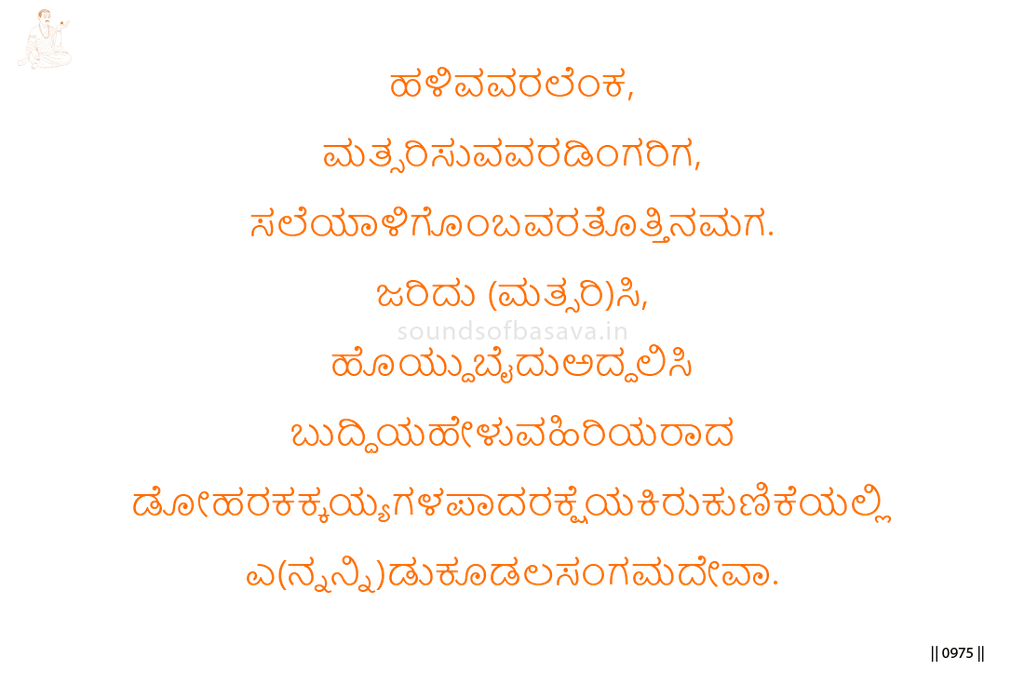
Basavanna asks Kudalasangama Deva not for honor, nearness, authority, or recognition, but for the smallest place near Dohara Kakkayya. He places himself below even those who revile, mock, and scorn. This is not weakness; it is deliberate humility before the realized Sharana.
The elder Kakkayya rebukes, corrects, strikes awake, shakes, and teaches wisdom. Basavanna receives this not as insult, but as grace. The closing image is the tiny loop of Kakkayya’s sandal. Basavanna does not even ask to stand at the feet; he asks to be placed at the fastening of the sandal that serves those feet.
Imagery & Symbolic Relevance
The first image is the servant of those who revile. Basavanna begins by taking the lowest position. He does not seek to be praised, defended, or respected.
The second image is the attendant of those who mock. Mockery usually wounds the ego, but Basavanna places himself beneath even that. The seeker who desires correction must be ready to lose the hunger for approval.
The third image is the son of one who serves the arrogant and scornful. The humility is not momentary. It is made into belonging. Basavanna speaks as one born into service, not as one temporarily performing humility.
The fourth image is Dohara Kakkayya rebuking and correcting. Kakkayya’s harshness is not cruelty. His rebuke exposes what praise would leave untouched.
The fifth image is being struck awake and shaken. The elder’s correction disturbs sleep, complacency, and self-importance. What the ego experiences as injury becomes awakening when received rightly.
The sixth image is wisdom being taught. The correction is not merely negative. Its purpose is instruction. The rebuke, the shaking, and the striking are all ordered toward wisdom.
The final image is the tiny loop of Kakkayya’s sandal. The sandal belongs to the feet of the realized Sharana, and the loop is only a small fastening of that sandal. Basavanna asks to be placed there, showing that the smallest nearness to realized humility is greater than any position of honor.
Lingayoga
In Lingayoga, this vachana teaches the discipline of receiving correction from the living Sharana. The path does not ripen through praise alone. The ego must be rebuked, exposed, shaken, and taught until it can receive wisdom.
For Sharana Sthala, the practice-point is humility before realized guidance. Do not seek the high seat. Do not resist correction. Ask only for a place, however small, near the feet of the Sharana whose wisdom can awaken the seeker before Kudalasangama Deva.
Editorial Commentary
The sandal-loop image should be preserved in its smallness. Basavanna does not ask for symbolic greatness; he asks for the least visible place of nearness. The vachana turns correction into grace and humility into spiritual fitness. Kakkayya’s rebuke becomes the medicine by which self-importance is broken.
Related Vachana
Supporting Vachana
Pranalingi Sthala Vachana 1117 — Teach My Mind, Not Merely My Speech
Pranalingi Vachana 1117 supports this teaching by distinguishing outward instruction from inward correction. There, Basavanna says that others taught him how to speak to people, but did not teach him how to speak to his own mind; Madivala Machayya corrected him for the sake of the mind. This prepares Vachana 1404 directly. In Vachana 1117, the realized Sharana corrects what the world neglects; in Vachana 1404, Dohara Kakkayya rebukes, shakes, and teaches wisdom, and Basavanna asks to remain at the smallest place near his feet.
Advancing Vachana
Aikya Sthala Vachana 1084 — The Revelation Within the Karasthala
Aikya Vachana 1084 advances this teaching by showing the fulfilled fruit of reverence toward the realized Sharanas. In Sharana Vachana 1404, Basavanna longs for the tiny loop of Kakkayya’s sandal, receiving the elder’s correction as grace. In Aikya Vachana 1084, the great Sharanas are beheld within the Karasthala-Linga itself, and the distinction between inner and outer disappears. Thus the Sharana-stage humility before the feet of realization advances into Aikya as direct vision of the Sharanas within the living field of Linga.
