

Summary
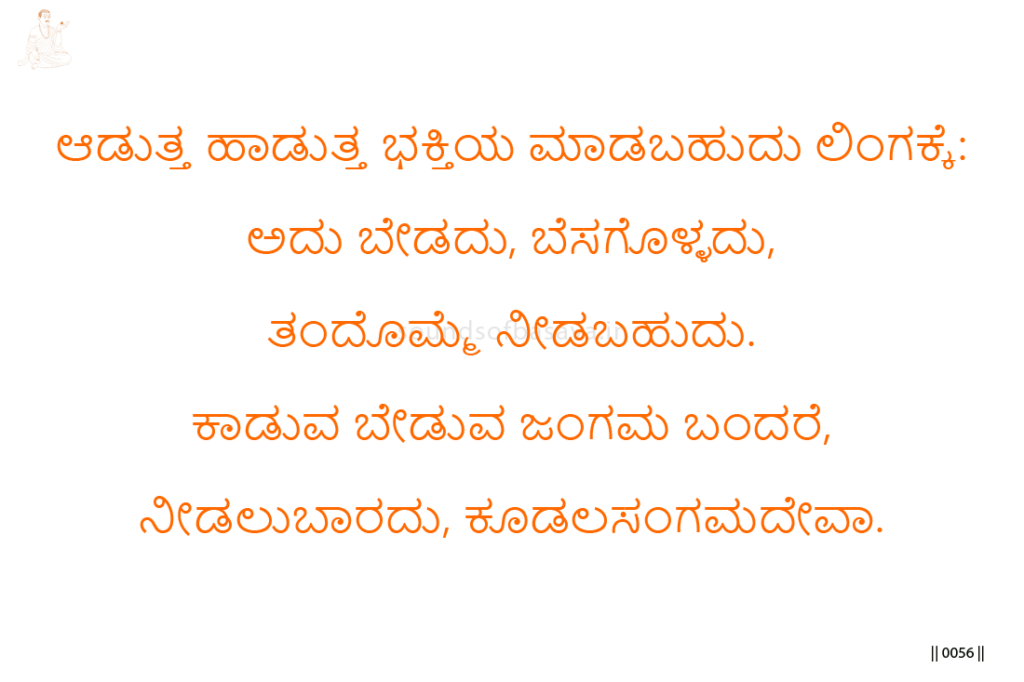
In this vachana, Basavanna allows that one may sing, dance, and offer bhakti to the Linga.
The Linga does not ask, demand, or stretch out its hand in hunger. One may offer to it according to devotion.
But when the Jangama comes hungry and asking, the devotee must not withhold. Worship becomes true when it responds to living need before Kudalasangama Deva.
Imagery & Symbolic Relevance
Singing and dancing show devotional expression. They bring voice, body, and feeling into worship.
The Linga is the sacred presence before which such devotion may be offered. Yet Basavanna marks a distinction: the Linga does not come begging or asking for food.
The Jangama arrives differently. He comes as living presence, hungry and in need. His arrival tests whether devotion has moved beyond chosen expression into responsibility.
To refuse the Jangama is to separate worship from compassion. The seeker may still sing before the Linga, but the living demand of devotion has been missed.
The vachana therefore shifts the altar from fixed form to living encounter. Kudalasangama Deva is served when the Jangama who asks is not turned away.
Lingayoga
In Lingayoga, devotion must move through the whole life of the Anga.
Song, movement, and inward worship gather the seeker before Linga. But the same awareness must remain awake when Jangama appears.
The hungry Jangama becomes the point where practice is tested. Awareness must recognize living presence and act without delay.
Lingayoga matures when worship before Linga becomes service to Jangama before Kudalasangama Deva.
Editorial Commentary
This vachana separates devotional expression from devotional responsibility.
Basavanna asks whether worship remains real when the sacred appears as need.
Related Vachana
Supporting Vachana
Vachana 188 — The Antidote to Empty Religion
Vachana 188 teaches that song, scripture, and learning are incomplete without worship of Linga and Jangama. Vachana 193 continues by showing that Jangama worship must become concrete response when the Jangama comes hungry and asking.
Advancing Vachana
Maheshwara Vachana 131 — The Disease of Becoming and the Deluded Tongue
The living altar of Vachana 193 advances into the fragrance of contact in Maheshwara Vachana 131. What is shown here as response to the Jangama becomes, in the next movement, transformation through living contact with Kudalasangama Deva’s devotees.
